
Queens condo prices hit a borough-wide median of around $760K in early 2026 — up roughly 12% year over year. That sounds steep until you compare it to Manhattan, where the same dollar buys you 30 to 40% less space. For buyers priced out of Manhattan but unwilling to give up a real deed, subway access, and a building with amenities, Queens condos are the equation that works.
If you're searching for condos for sale in Queens, NY — or typed "condos for sale near me" and landed here — you're entering a market with real upside but serious traps for the uninformed. Roughly 60 to 65% of Queens apartment listings are co-ops, not condos. The two look identical on Zillow. They are not identical at the closing table. Buyers who don't know the difference waste months chasing properties they can't finance or can't get board approval for.
This guide covers every Queens neighborhood by price tier, the condo vs. co-op decision, hidden costs like 421-a tax abatement expirations, closing cost math, the full buying timeline (updated for the August 2026 Fannie Mae rule change), and down payment assistance programs that could hand you up to $100,000. Whether you're comparing condo apartments, new condominium developments, or resale units across Queens, NYC, the same rules apply.
Queens Condo Market in 2026–2027: What the Data Shows
The Queens condo market entered 2026 with momentum. Borough inventory rose roughly 25% year-over-year, giving buyers more leverage than they've had in years — but prices kept climbing in premium neighborhoods. Understanding the bifurcation between tiers is essential before you set a search radius.
Three data points define the current market:
- Borough median: around $760K as of early 2026, up roughly 12% from the year before.
- Inventory: up ~25% YoY per StreetEasy's 2026 market analysis, giving buyers more leverage than in 2024 or 2025.
- Competition: roughly 24% of Queens homes sold above asking price in the first half of 2026 — concentrated in the $650K–$900K sweet spot.
For 2027, the consensus is modest continued appreciation (3–6% range) in well-transited neighborhoods, with value-tier areas like Jamaica and Woodhaven likely to outperform as affordability pressure filters outward from LIC. New development pipelines in Long Island City remain active, though no major new for-sale towers are expected to deliver before late 2027.
For a broader view of the Queens real estate landscape, the Queens home sales market report tracks quarterly data including single-family homes and co-ops.
Queens Condo Prices by Neighborhood: 2026–2027
You don't need to study every listing in Queens. You need to know which price tier fits your budget, then drill into those neighborhoods. Not sure how they all connect geographically? The Queens neighborhood map covers all 90+ areas with prices and transit by zone.
Premium Tier: Long Island City (~$1.05M to $1.15M)
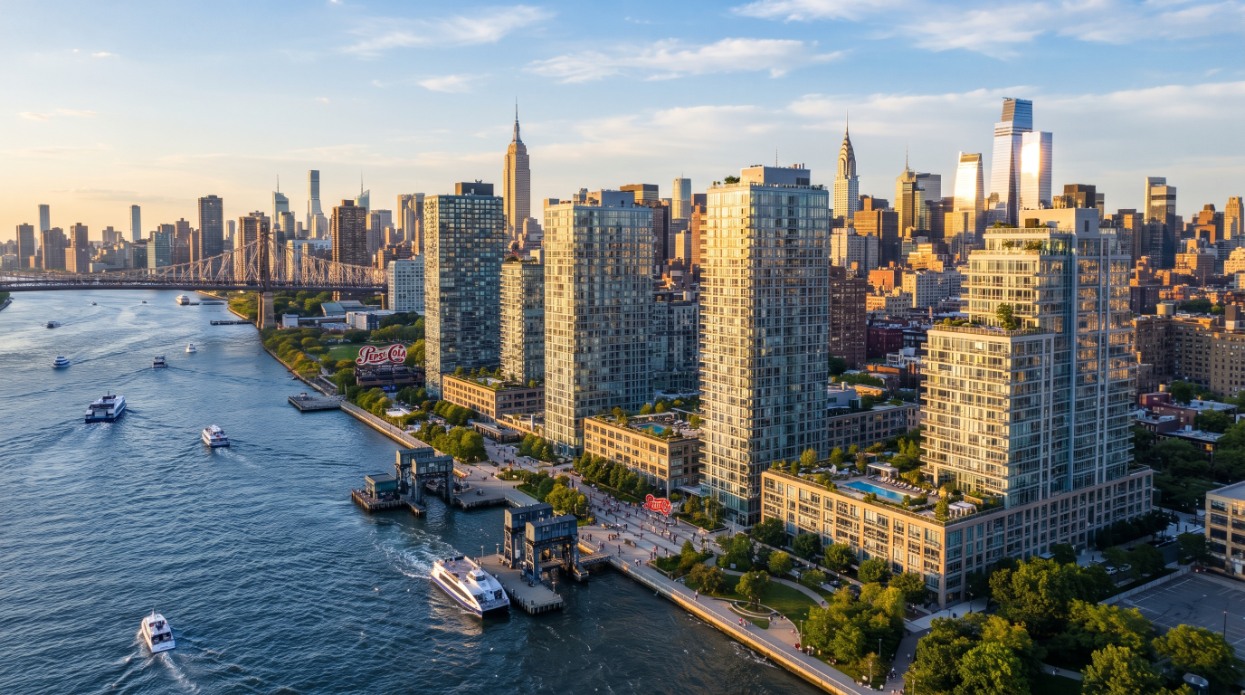
LIC is the condo capital of Queens. Of 138 active listings in the first half of 2026, 130 were condos. Co-ops barely exist here. The median hit an all-time high of around $1.156M in mid-2026, up 24% year over year. Resale condos make up 70% of supply, with listings up 45% from the prior year — giving buyers more options without giving up the neighborhood's core appeal: waterfront views, direct subway access to Midtown, and the newest building stock in the borough.
Best for: Buyers who want a Manhattan-adjacent lifestyle without Manhattan prices. Commuters who work in Midtown. Investors targeting the rental market.
Skip if: You're budgeting under $900K or want a quieter residential feel.
Mid Tier: Astoria (~$700K to $755K) and Forest Hills (~$648K to $925K)
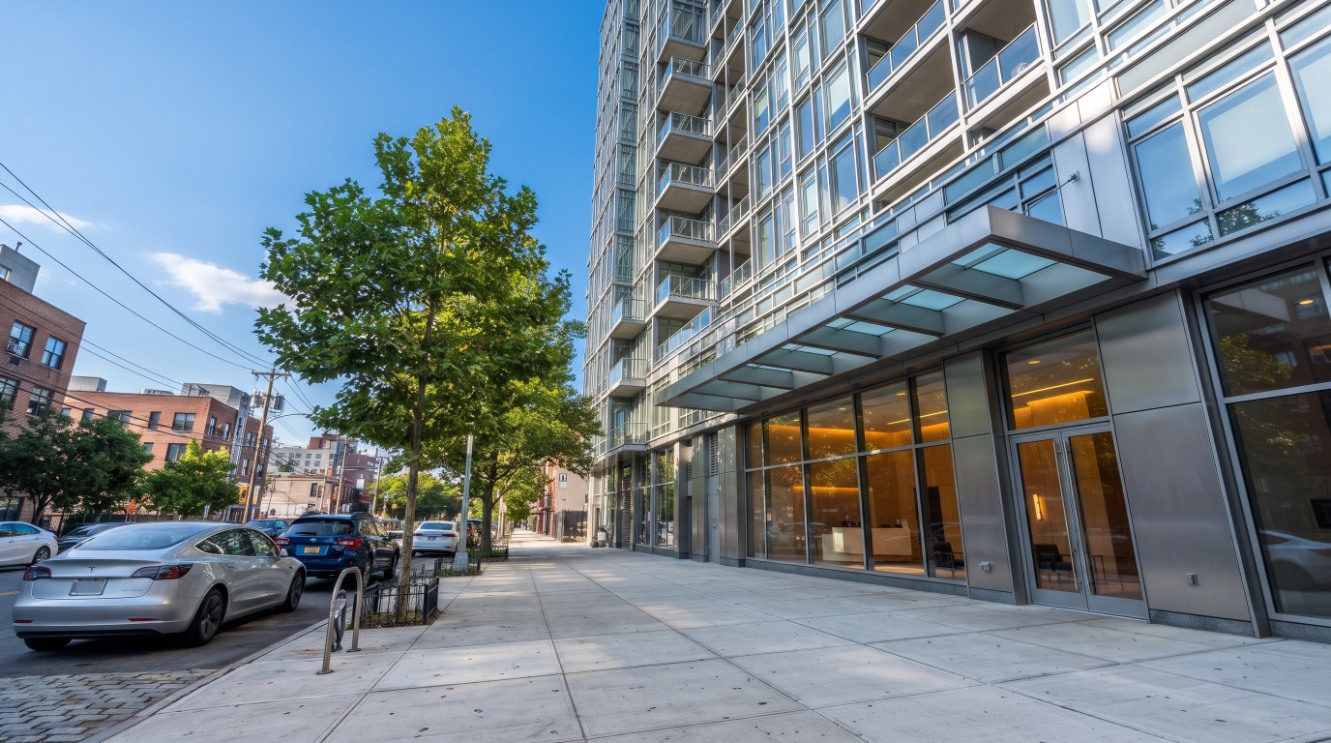
Astoria set a record-high condo median of around $700K in the first half of 2026, with an average price near $754K. New development captured 53% of market share, and properties moved in an average of 97 days — down 24% from the year before. The N/W trains get you to Midtown in 20 minutes, and the neighborhood's restaurant scene consistently ranks as one of the best in New York City.
Forest Hills spans a wider range — from around $648K to $925K — depending on proximity to the LIRR station, Austin Street shopping, and the Gardens section. The LIRR express reaches Penn Station in under 20 minutes. District 28 schools (including Queens High School for the Sciences, ranked #3 in New York State) make Forest Hills a strong pick for families priced out of LIC.
Value Tier: Flushing South (~$470K), Jamaica (~$530K), Woodhaven (~$580K)
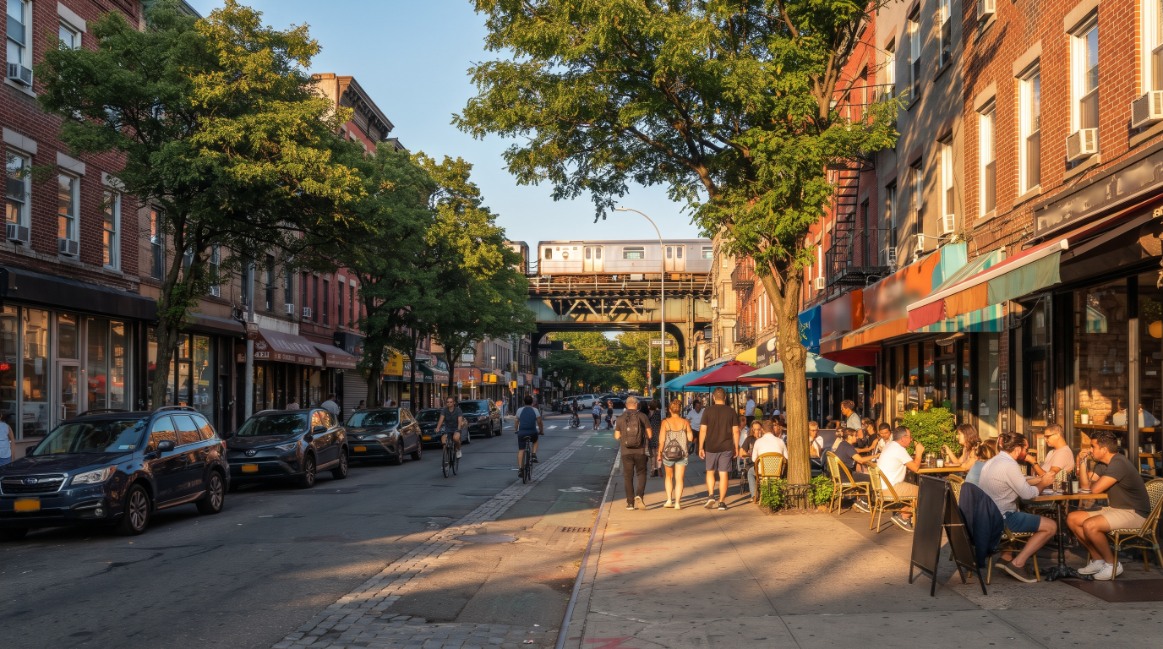
Flushing is two markets. Flushing North averages around $650K, driven by new development. Flushing South averages around $472K — some of the lowest condo prices in the borough. The 7 train connects Flushing to Times Square in about 40 minutes.
Jamaica averages around $530K and sits on top of a major transit hub: E, J, and Z subway lines plus the LIRR and AirTrain to JFK. New mixed-use projects continue adding condos for sale in Queens at price points well below the borough median. Woodhaven averages around $580K with a quieter, more residential pace along the J/Z corridor.
Best for: First-time buyers, investors, and anyone stretching their budget to own in New York City.
Skip if: You need a short commute to Midtown or want new-construction amenities.
For a full neighborhood ranking by value, see our most affordable neighborhoods in Queens guide, which covers 13 areas with entry-price data and down payment assistance details.
Condo vs. Co-op in Queens: Which Should You Buy?
You found the perfect Queens apartment listed at $520K. You call your lender. Then you discover it's a co-op. The board requires two years of tax returns, a reference letter from your employer, and a personal interview. They can reject you without giving a reason.
This is the reality of co-op buying in Queens. And since 60 to 65% of listings here are co-ops, you'll run into it constantly. A full breakdown of the co-op approval process is in our NYC co-op board approval guide, and if you're deciding between selling a co-op versus a condo, see our selling comparison.
The Structural Difference
A condo gives you a real property deed. You own the physical unit. A co-op gives you shares in a corporation that owns the building — a proprietary lease, not a deed. This distinction shapes everything: financing, subletting, resale, and who gets to live in your apartment.
| Feature | Condo | Co-op |
|---|---|---|
| Ownership | Deed to unit | Shares + proprietary lease |
| Median price (Queens) | ~$650K | ~$520K |
| Down payment | Typically 10% | 20–50% (board-set) |
| Closing costs | 3–5% resale | 1–3% |
| Mortgage recording tax | 1.8–1.925% | Exempt ✓ |
| Subletting | Generally unrestricted | Restricted or banned |
| Board approval to sell | No | Yes (can reject without cause) |
| FHA / VA eligible | Rarely (NYC) | No |
| Flip tax at resale | No | 1–3% |
Co-ops are cheaper upfront. The median co-op in Queens averages around $520K versus around $650K for a condo — a discount of roughly 15 to 25%. But the math gets complicated. Co-op maintenance fees usually include property tax; condo common charges don't. Co-op closing costs run 1 to 3% because co-ops are exempt from mortgage recording tax. Condo closing costs run 3 to 5%.
A new NYC law now requires co-op boards to acknowledge applications within 15 days and issue a decision within 45 days of receiving a complete application. That speeds up the timeline but boards still hold veto power.
Common Charges and Hidden Costs Queens Condo Buyers Miss
That $760K Queens condo could cost you an extra $916 per month the year after you buy it. Not because prices went up. Because a tax abatement expired.
Common Charges: The Baseline
Queens condos average around $0.83 per square foot per month in common charges. On a 1,000-square-foot unit, that's roughly $830 per month. For comparison, Manhattan averages around $1.29 per square foot. Common charges typically cover building staff, insurance, water, sewer, and maintenance of shared spaces. They don't cover property taxes, electricity, gas, or internet — those are yours.
The 421-a Tax Abatement Trap
The 421-a program gave tax breaks to developers who built new housing. The most recent version expired in June 2022 and has not been renewed. Thousands of buildings constructed between 1971 and 2022 carry abatements expiring between 2025 and 2035.
When that abatement runs out, your monthly property tax can jump from around $267 per month to around $1,183 per month — roughly $916 more every month. On a $760K condo, that increase wipes out any discount you thought you were getting versus Manhattan. For a full breakdown of how Queens property taxes work, see our Queens property taxes guide.
Special Assessments: The Other Surprise
Special assessments are one-time charges the condo board levies for capital improvements — a new roof, elevator replacement, or facade work. They can range from a few thousand dollars to more than $100,000. Some owners have been forced to sell because they couldn't cover a sudden large assessment.
NYC's Local Law 11 requires facade inspections every five years. Buildings that fail inspection must fund repairs immediately. Ask your attorney to review the most recent facade inspection report before you make an offer on any condos for sale in Queens.
What to Demand Before Making an Offer
- The 421-a abatement schedule and expiration date
- The building's reserve fund percentage (below 10% is a Fannie Mae red flag)
- Recent assessment history (past 3 to 5 years)
- The offering plan's financial statements
- The most recent facade inspection report (Local Law 11)
If your agent can't produce these, find one who can.
A Queens specialist caught a 421-a expiration that would have cost our clients $11,000 a year. That's why local expertise matters.
Match with a licensed Queens condo specialist today — free, no commitment.
Mon – Sat · 9 AM – 7 PM ET
New Development vs. Resale Condos in Queens
The sleek LIC tower listing doesn't mention the $30,000-plus in closing costs the developer expects you to pay. New development and resale condos play by different financial rules, and the gap is wider than most buyers expect.
Closing Cost Gap
Resale condos cost 3 to 5% in closing costs. New development costs 5 to 6% or more. The reason: developers often pass NYC and NYS transfer taxes to the buyer. That's 1.425% (NYC RPTT) plus 0.40% (NYS transfer tax) that you wouldn't pay on a resale where the seller covers transfer taxes. On a $1M new development condo, that's an extra $18,250 compared to a comparable resale.
Warrantable vs. Non-Warrantable: Why Your Lender Cares
To get a standard Fannie Mae or Freddie Mac mortgage, the condo building must be "warrantable" — meaning:
- 70% or more units are owner-occupied
- At least 10% of the budget is in reserves
- Less than 15% of owners are delinquent on dues
- No active litigation against the building
- No single entity owns more than 10% of units
As of August 2026, Fannie Mae eliminated its Limited Review option. Every condo purchase now requires a full project review, adding 2 to 6 weeks to your closing timeline.
If the building is non-warrantable, you'll need a portfolio loan with higher rates and at least 25% down — or all cash.
FHA Approval: Nearly Impossible in NYC
FHA loans require 50% or more owner occupancy and no right of first refusal clause in the condo bylaws. That right of first refusal language is standard in nearly every NYC condo offering plan, automatically disqualifying the building from FHA approval. If you're counting on FHA financing, check HUD's approved condo list before you fall in love with a building.
When Each Option Makes Sense
New development wins when: You want brand-new finishes, a developer warranty, tax abatement years ahead of you, and you have the cash to cover higher closing costs.
Resale wins when: You want lower closing costs, a proven building track record, and the ability to review years of financial statements and board minutes before buying.
Queens Condo Closing Costs: What You'll Actually Pay
Your $760K condo actually costs around $790K after closing. Budget 4% as a baseline for resale; 6% for new development. Here's where that money goes.
For a full breakdown of all NYC buyer closing costs across property types, see our NYC closing costs guide.
| Line Item | Amount |
|---|---|
| Down payment (20%) | $152,000 |
| Mortgage recording tax (1.925% of $608K loan) | ~$11,704 |
| Title insurance (~0.7%) | ~$5,320 |
| Attorney fees | ~$3,500 |
| Lender fees (~1% of loan) | ~$6,080 |
| Recording fees and misc | ~$2,000 |
| Building working capital (2 months common charges) | ~$1,660 |
| Total closing costs | ~$30,264 (about 4%) |
This example assumes a $760K resale condo with 20% down and a $608K mortgage. The mortgage recording tax rate is 1.925% because the loan exceeds $500K; loans under $500K pay 1.8%.
The Mansion Tax Cliff
If you're shopping near the $1M mark, pay close attention. A condo priced at $999,000 owes zero mansion tax. A condo at $1,001,000 owes 1% of the full purchase price — $10,010. That $2,000 price difference costs you over $10,000 in taxes. Negotiate accordingly. If you're within $20K of the $1M threshold, ask the seller for a price reduction below the line.
- 1.00% on purchases of $1M and above
- 1.25% on purchases of $2M and above
- 1.50% on purchases of $3M and above
Co-op closing costs run just 1 to 3% because co-op buyers skip mortgage recording tax and title insurance entirely. That difference can mean $15,000 to $20,000 in savings on a comparable purchase.
How to Buy a Condo in Queens: Step-by-Step Timeline
Cash purchases close in 60 to 90 days. Financed purchases take 90 to 120 days. After the August 2026 Fannie Mae rule change, add 2 to 6 weeks. Start your mortgage pre-approval at least 2 weeks before you begin searching so you can move fast when the right unit appears. For a step-by-step guide specific to house purchases, see how to buy a house in Queens.
Day 0: Offer accepted. Your attorney requests condo documents immediately — offering plan, building financials, board minutes.
Days 1–7: Attorney reviews the offering plan, financials, and board minutes. You submit your full mortgage application.
Days 7–14: Contract drafted and negotiated. At signing, you wire a 10% deposit to the seller's attorney escrow account.
Days 14–21: Your lender orders the full condo project review (now mandatory post-August 2026). Appraisal scheduled.
Days 21–45: Condo project approval takes 2 to 6 weeks. Appraisal completed. Underwriting reviews your file.
Days 45–55: Mortgage commitment letter issued — your green light from the lender.
Days 55–65: Title search completed, title insurance ordered, certified funds arranged.
Days 60–90: Closing. Deed recorded. Keys in hand.

What to Review in the Offering Plan
- Building financial statements and budget (confirm the building is solvent)
- Reserve fund balance (below 10% is a red flag for warrantability)
- Litigation history, past and pending (active lawsuits can block financing)
- Subletting policy and alteration rules
- 421-a abatement terms and expiration date
- Sponsor-held units (high sponsor ownership can affect warrantability)
Down Payment Assistance Programs for Queens Condo Buyers
New York City will give you up to $100,000 toward your Queens condo and forgive the loan entirely if you stay long enough. Most buyers don't know these programs exist until after they've already closed.
HPD HomeFirst: Up to $100K Forgivable
The city's HomeFirst Down Payment Assistance Program offers up to $100,000 as a forgivable loan to buyers at or below 80% of the Area Median Income — roughly $90,000 for a family of three in 2026. Live in the home for 10 to 15 years and the loan is fully forgiven. On a $650K condo, that covers over 15% of the purchase price. Apply before you start searching — slots are limited and funding cycles change.
SONYMA: Below-Market Mortgages Plus $15K
The State of New York Mortgage Agency offers below-market-rate mortgages plus up to $15,000 in down payment assistance. You must be a first-time buyer (no ownership in the prior 3 years) with a household income under approximately $172,000. SONYMA loans work on condos for sale in Queens priced within conforming loan limits. The programs can potentially be stacked — contact HPD directly to confirm current eligibility.
HomeReady and Home Possible: 3% Down
If you don't qualify for HomeFirst, Fannie Mae's HomeReady and Freddie Mac's Home Possible programs allow 3% down on conventional loans with reduced mortgage insurance. These can be combined with SONYMA funds for maximum leverage — and unlike FHA, they work on non-FHA-approved buildings.
Forgiven over 10–15 years of owner-occupancy. Income limit ~$90K for family of three (80% AMI). Apply before you start searching — funding is limited.
nyc.gov/hpd · HomeFirst programBelow-market-rate mortgage + down payment loan. First-time buyers with income under ~$172K. Can be stacked with HomeFirst.
sonyma.org3% down on conventional loans with reduced PMI. Works on buildings FHA won't approve. Combine with SONYMA for maximum leverage.
Available through most lenders5 Mistakes to Avoid When Buying a Queens Condo
These five mistakes cost Queens condo buyers tens of thousands of dollars each year. All are avoidable. See our broader Queens first-time home buyer guide for additional pitfalls specific to the NYC market.
Taxes can jump by roughly $916 per month overnight. Before making an offer, ask for the abatement schedule and run the numbers at the full, unabated tax rate.
Your lender can reject the building after you have signed the contract. Have your attorney confirm warrantability before waiving any contingencies.
Co-op closing costs run 1 to 3%. Condo closing costs run 3 to 5%. Show up underfunded and you could lose your 10% deposit. Budget 4% minimum for resale, 6% for new development.
If the building fails Fannie Mae requirements, your financing gets denied after your deposit is locked. Verify owner-occupancy rate and reserve fund before making an offer.
Right of first refusal language disqualifies nearly every NYC condo from FHA approval. Check HUD's approved condo list before searching if you plan to use FHA.
Frequently Asked Questions About Buying a Condo in Queens
How much does a condo cost in Queens, NY?
The borough-wide median averages around $760K as of early 2026. Prices range from around $470K in Flushing South to $1.15M in Long Island City. For 2027, expect modest continued appreciation of 3–6% in well-transited neighborhoods, with value-tier areas like Jamaica likely to outperform.
Is it better to buy a condo or co-op in Queens?
Condos cost 15 to 25% more but offer unrestricted subletting, no board approval, and easier financing. Co-ops are cheaper upfront with lower closing costs, but boards can reject buyers without cause and require 20 to 50% down. Buyers who want flexibility, rental income potential, or plan to sell within 5 years should lean toward condos.
What are closing costs on a Queens condo?
Expect 3 to 5% for resale and 5 to 6% for new development. The biggest line items are mortgage recording tax (1.8 to 1.925% of the loan) and mansion tax (1% on purchases of $1M and above). On a $760K resale condo with 20% down, total closing costs run roughly $30,000.
Are there first-time buyer programs for Queens condos?
Yes. NYC HPD's HomeFirst program offers up to $100,000 as a forgivable loan. SONYMA provides up to $15,000 in down payment assistance with below-market mortgages. FHA financing is largely unavailable for NYC condos due to right of first refusal clauses. The realistic path for most buyers is a conventional loan (HomeReady or Home Possible) combined with SONYMA or HomeFirst funds.
How long does it take to buy a condo in Queens?
Cash purchases close in 60 to 90 days. Financed purchases take 90 to 120 days. After the August 2026 Fannie Mae rule change requiring full condo project reviews, add 2 to 6 weeks. Start your mortgage pre-approval at least two weeks before you begin searching.
What is a 421-a tax abatement and why does it matter?
The 421-a program gave developers tax breaks for building new housing. When it expires — typically 10 to 25 years after construction — your monthly property tax can jump from around $267 to $1,183 per month, roughly $916 more. Thousands of Queens buildings have abatements expiring between 2025 and 2035. Always ask for the expiration date before making an offer.
What is the difference between a condo and a condominium?
None. "Condo" and "condominium" are the same thing. In Queens, listings may appear as condos for sale, condominiums for sale, or condo apartments depending on the platform. They all refer to individually owned units within a shared building where you receive a deed to your specific unit.
Are condos the same as apartments for sale in Queens?
Not exactly. "Apartments for sale in Queens" is a broad term that includes both condos and co-ops. A condo gives you a deed and real property ownership. A co-op gives you shares in a corporation. When searching for apartments for sale in Queens, always filter specifically for condos if you want a deed, easier financing, and no board approval requirement.