
Queens property taxes confuse nearly every homeowner who looks at their bill for the first time. The nominal Class 1 rate of around 19.843% sounds alarming. The actual effective rate of roughly 0.88% sounds too low. Both numbers are real — and the gap between them is where your bill lives. This guide explains exactly how to find your number, cut it with exemptions, appeal it if it's wrong, and never miss a payment deadline.
In May 2026, Queens officials celebrated after Mayor Mamdani reversed a proposed 9% property tax increase that had alarmed homeowners across the borough. The rates described in this guide reflect current FY2026–FY2027 levels. Any future changes will be announced via the NYC Department of Finance's annual assessment roll, released each January.
How Queens Property Taxes Are Calculated Step by Step
Three steps separate your home's market value from your annual bill. Master the formula and you can estimate your taxes in under two minutes.
Step 1 — Find Your Assessed Value
The NYC Department of Finance (DOF) estimates your home's market value, then multiplies it by 6%. That 6% is the Class 1 assessment ratio. A home the DOF values at $800,000 has an assessed value of $48,000. This assessed value — not your market value — is the number that drives your Queens property tax bill.
Step 2 — Subtract Your Exemptions
If you qualify for STAR, veterans benefits, or senior exemptions, those reduce your assessed value before the tax rate kicks in. Using the same $800,000 home example, subtracting roughly $30,000 in exemptions brings the taxable value down to about $17,700.
Step 3 — Apply the Tax Rate
Multiply the taxable value by the Class 1 rate, which sits around 19.843% for FY2026. On $17,700 in taxable assessed value, that works out to approximately $3,593 per year. Without exemptions, that same $48,000 assessed value at 19.843% produces a bill near $9,525. Exemptions cut this homeowner's bill by more than 60%.
Look up your home's market value on the DOF property tax portal and run this formula yourself. If the result differs significantly from your actual bill, an exemption may be missing or the assessed value may be wrong — both are correctable.
Queens Property Tax Assessment Caps and Transitional Values
A Queens home that doubled in market value over five years would see its assessed value rise by no more than 20% over that same period. That is not a typo. It is one of the strongest taxpayer protections in the system — and most homeowners have never heard of it.
NYC caps Class 1 assessed value increases at 6% in any single year and 20% over any rolling five-year period. These limits exist because the city recognizes that market values can spike far faster than homeowners' ability to pay.
Transitional Assessed Value
Instead of jumping your assessed value to its new target all at once, the DOF phases in the increase over five years. Your bill reflects whichever number is lower: the transitional value or the capped value. This phase-in creates what appraisers call a "transitional assessed value" — a number that may be well below the market-driven target while it catches up.
The Catch-Up Effect: Your Bill Can Rise Even When Your Home's Value Falls
The DOF has published examples showing homes whose market value fell in year three, yet the assessed value still climbed — because the transitional value was still catching up to a target set during an earlier boom. Your bill can increase in a flat or declining market because the phase-in is working as designed.
When Caps Don't Apply
Assessment caps reset if your property class changes or if you complete major renovations. Adding a legal apartment, converting a garage, or substantially expanding your home can trigger a reassessment without cap protections. Factor this into any major project budget. Long-term owners benefit most from this system. New buyers may inherit a low transitional value that gradually climbs toward the current target over the next several years.
STAR, Enhanced STAR, SCHE, and Other Queens Property Tax Exemptions
Exemptions are the single fastest way to cut your Queens property tax bill. Some save thousands per year, and applying takes about 20 minutes.
Basic STAR
Available to any primary-residence owner with a household income under $500,000. If you bought your home after 2015, you receive the STAR benefit as a credit check mailed to you rather than a reduction on your tax bill. Apply through the NYS Tax Department website. Savings in Queens typically run in the range of $300 to $400 per year. Not transformative on its own, but over a decade of ownership that adds up to $3,000 to $4,000.
Enhanced STAR
For homeowners age 65 and older with a household income under approximately $107,300. This version saves roughly $650 to $800 per year in Queens. You must reapply or re-enroll periodically to keep receiving the benefit. Check the NYS Tax Department for current income limits, which are adjusted annually.
SCHE (Senior Citizen Homeowners' Exemption)
This is the largest exemption available to most Queens homeowners. If you are 65 or older with a household income under roughly $58,399, SCHE reduces your assessed value on a sliding scale from 5% to 50%. At the maximum reduction, savings can reach approximately $5,951 per year. The lower your income, the higher the percentage reduction.
SCHE stacks with Enhanced STAR. Combined, a qualifying senior homeowner could save in the range of $6,000 to $7,000 or more annually — a meaningful chunk of a fixed-income budget.
Veterans Exemptions
Qualifying veterans receive a 15% basic exemption on assessed value. Combat zone service adds another 10%. Disability ratings provide additional reductions proportional to the disability percentage. A new law taking effect in October 2026 grants a near-full property tax exemption to 100% service-connected disabled veterans — if that applies to you or someone in your household, investigate this immediately before the filing deadline.
Critical Rule for Buyers
Exemptions do not transfer when a property is sold. If you buy a home from a senior who had SCHE and Enhanced STAR, your first tax bill could be thousands of dollars higher than theirs. If you're currently working through the Queens home buying process, budget for this gap and apply for every exemption you qualify for as soon as you close.
The deadline for most exemption applications is March 15. Checking your eligibility on the DOF website might be the highest-ROI 20 minutes you spend as a Queens homeowner.
How to Read Your Queens Property Tax Bill
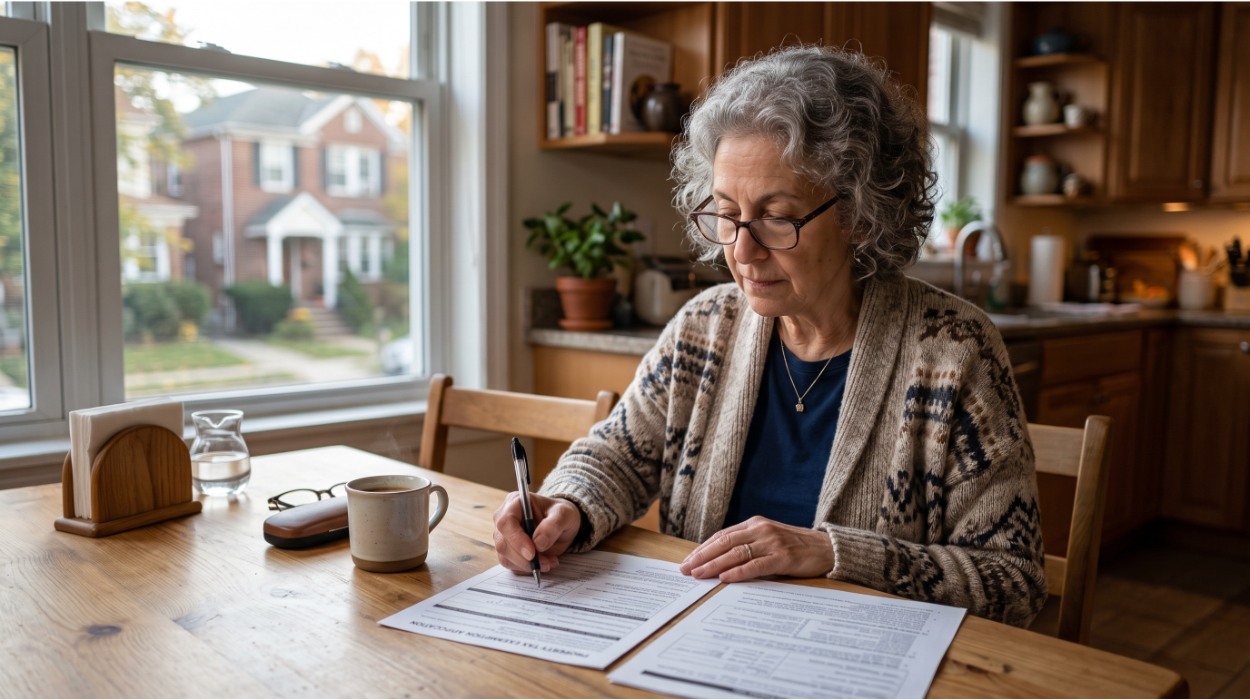
Most Queens homeowners glance at the bottom-line number and pay it. That is a mistake. Your bill contains the exact data you need to spot errors and save money.
Key Fields to Find
- Market value: The DOF's estimate of what your home is worth. This is the number to compare against recent comparable sales.
- Assessed value: 6% of market value for Class 1. If this doesn't equal roughly 6% of the market value listed, something is wrong.
- Transitional assessed value: The phased-in figure the DOF actually uses for your bill. May be lower than the full assessed value.
- Exemptions applied: Lists every exemption reducing your taxable value. If STAR or SCHE is missing, it needs to be corrected.
- Taxable value: Assessed value minus exemptions. This is what the 19.843% rate applies to.
- Final charge: The annual amount due, divided across your payment installments.
Where to Access Your Bill and Your NOPV
View current and past bills on the DOF's online property tax portal. Your Notice of Property Value (NOPV) appears there each January, showing next year's proposed values. Download and save each NOPV. If you disagree with the market value listed, you have until March 15 to file an appeal — but you need the NOPV to start that process.
Red Flags to Watch For
- DOF market value significantly above comparable sales: If similar homes on your block recently sold for around $750,000 and the DOF has you at $950,000, that discrepancy is worth appealing.
- Missing exemptions: STAR, SCHE, and veterans exemptions occasionally drop off due to administrative issues, income re-certification lapses, or data entry errors. A missing STAR exemption alone could cost you $300 to $400 per year.
- Sudden large increases without a renovation or property class change: This is a signal worth investigating before paying the bill.
Queens Property Tax Payment Schedule, Grace Periods, and Penalties
Missing a Queens property tax payment doesn't just cost you a late fee. It triggers daily compounding interest that can spiral fast.
Quarterly Payments (Most Homeowners)
If your property's assessed value is $250,000 or under, you pay quarterly. Due dates are July 1, October 1, January 1, and April 1. Each quarterly payment has a 15-day grace period, making the effective deadlines July 15, October 15, January 15, and April 15.
Semi-Annual Payments
Properties with assessed values over $250,000 pay twice per year, on July 1 and January 1. There is no grace period for semi-annual payers. The payment must arrive on or before the due date.
| Payment Type | Due Dates | Grace Period | Late Interest Rate |
|---|---|---|---|
| Quarterly (assessed ≤ $250K) | Jul 1, Oct 1, Jan 1, Apr 1 | 15 days | ~6% annually |
| Semi-annual (assessed > $250K) | Jul 1, Jan 1 | None | ~9–16% annually |
Late Payment Interest
Interest on overdue Queens property taxes compounds daily. For properties with small assessed values, the rate runs around 6% annually. Mid-range properties face roughly 9%. Larger properties can be charged up to 16% per year — rates that make credit card interest look modest by comparison.
Early-Pay Discount
Pay the full year's tax bill by July 15 and receive an early-payment discount of approximately 0.50%. On a bill in the $7,000 range, that's around $35. Small, but free money for making one payment instead of four.
Lien Sale Risk
Properties with $5,000 or more in outstanding tax debt and three or more years of delinquency can be sold at the city's annual lien sale. A third party buys the lien, and you then owe that party. Setting up autopay through the DOF portal or paying through your mortgage escrow eliminates this risk entirely. If your lender handles escrow, confirm annually that they are making payments on time.
How to Appeal Your Queens Property Tax Assessment
Filing a Queens property tax appeal is free, takes about an hour of prep, and the city cannot raise your assessment as a result. There is no downside to filing.
The Timeline
Each January, the DOF mails your Notice of Property Value (NOPV). If you disagree with the market value listed, you have until March 15 to file an appeal with the NYC Tax Commission using form TC108 for Class 1 properties. This is not a bill — it is the city's proposed assessed value for the coming fiscal year.
When It's Worth Filing
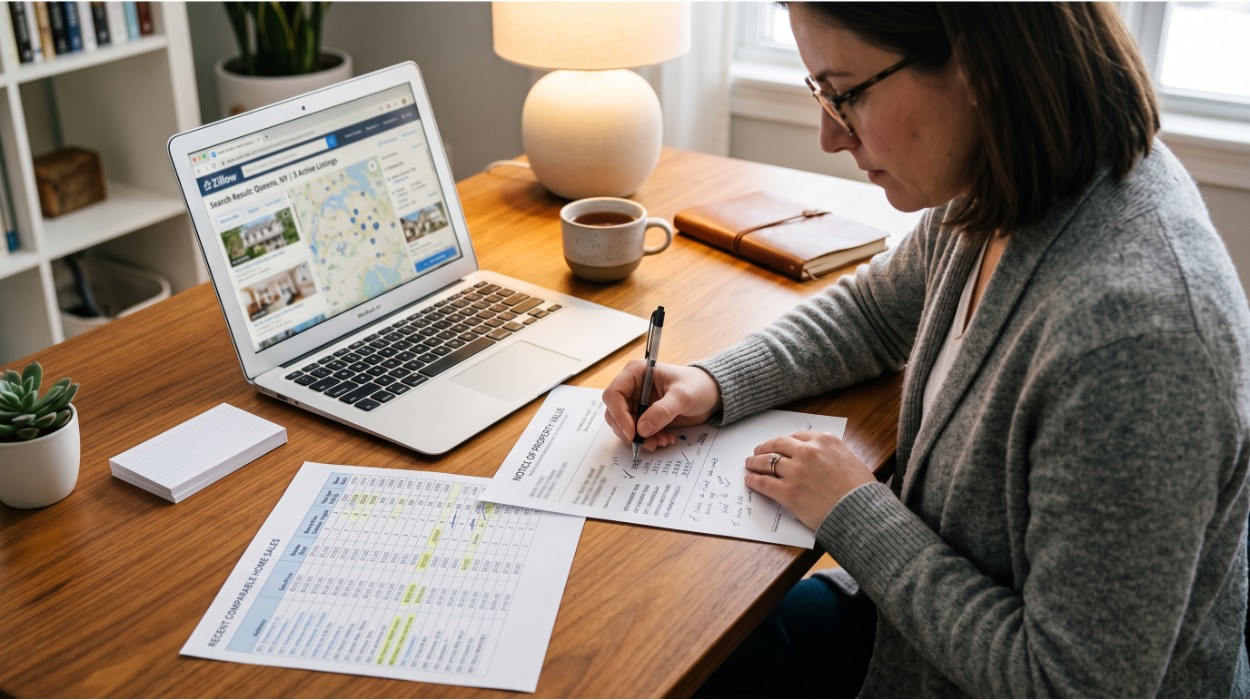
Consider an appeal if the DOF's market value estimate exceeds recent comparable sales by roughly 15% or more. Pull up three to five recent sales within half a mile of your home. If those sales consistently come in below the DOF's number, you have a case worth pursuing.
Success Rates
The Tax Commission (also called OATA) grants reductions for about 9.4% of Class 1 applications. That is a low hit rate, but the filing costs nothing and carries zero risk. If the Tax Commission denies your appeal, file a Small Claims Assessment Review (SCAR) by October 24. SCAR has a success rate of roughly 93.4%. The process takes longer, but the odds are overwhelmingly in your favor.
Tax Commission (OATA)
~9.4%
Success rate · File by March 15
SCAR (If Denied)
~93.4%
Success rate · File by October 24
Queens-Specific Wait Times
Queens homeowners wait an average of about 205 days for their Tax Commission hearing, compared to roughly 163 days in Manhattan. This systemic inequity has been flagged by advocacy groups but has not changed yet. File early and plan for a wait.
Practical Tips
- Gather three to five comparable sales from the past 12 months within half a mile of your property.
- Note any condition issues that might lower your home's value: foundation problems, outdated systems, flood zone location, or proximity to nuisances.
- Take dated photos documenting any structural or cosmetic issues.
- For homes valued above $1 million, consider hiring a tax certiorari attorney. They typically work on contingency, taking a percentage of the savings they win. The complexity and dollar amounts at that level often justify professional help.
Even a modest reduction in assessed value compounds over every year you own the home. A $50,000 reduction in market value translates to roughly $3,000 in assessed value, saving you around $595 per year at current rates. Over ten years, that is close to $6,000 in cumulative savings.
Queens Property Tax Rates Compared to NYC Boroughs and the Suburbs
Queens homeowners often assume they are overtaxed. Compared to the suburbs, the opposite is true — and the gap is larger than most people realize.
Within NYC: How the Five Boroughs Compare
Effective property tax rates across the five boroughs cluster in a tight range. Queens sits at roughly 0.88%, Manhattan at approximately 0.92%, Brooklyn at around 0.75%, and the Bronx at about 1.08%. Staten Island falls in a similar range to Queens. The differences are driven by variations in market value and assessment patterns, not different tax rates.
Queens Neighborhoods: Not All Equal
The borough-wide average masks wide variation between neighborhoods. Homeowners in Southeast Queens neighborhoods like Cambria Heights and Jamaica can face effective tax rates up to three times higher than Manhattan brownstone owners, due to the assessment system undervaluing high-priced Manhattan homes relative to their actual sale prices.
| Queens Neighborhood | Typical Home Type | Effective Rate (Approx.) |
|---|---|---|
| Long Island City | Condos/Co-ops | ~0.60–0.80% |
| Astoria / Jackson Heights | 1–3 family homes | ~0.80–0.95% |
| Flushing / Bayside | 1–3 family homes | ~0.82–0.96% |
| Forest Hills / Kew Gardens | 1–3 family / co-ops | ~0.75–0.90% |
| Jamaica / Cambria Heights | 1–2 family homes | ~1.00–1.20% |
| Douglaston / Little Neck | Single-family homes | ~0.85–0.95% |
For buyers exploring the most affordable neighborhoods in Queens, the effective tax rate adds meaningful context to sticker price comparisons — a lower home price in Jamaica can come with a higher effective tax rate than a costlier home in Astoria.
Compared to the Suburbs: The Gap Is Dramatic
Nassau County's effective rate runs approximately 2.05%. Westchester ranges from roughly 2.0% to 2.8% depending on the municipality. In concrete terms, a home in Douglaston, Queens worth in the $900,000 range would carry an annual tax bill of roughly $7,800. A comparable home in Great Neck, Nassau County would cost approximately $18,500 per year in property taxes — more than double for a neighborhood just a few miles east.
This tax advantage is one reason many buyers prioritize Queens over Long Island despite longer commutes from some neighborhoods. If you're weighing your options, our Queens first-time home buyer guide covers the full cost comparison including closing costs, mortgage rates, and total monthly ownership costs.
NYC Property Tax Classes: Where Queens Homes Fit
New York City divides all property into four tax classes. Your classification determines your assessment ratio, your tax rate, and which exemptions and caps apply. Most Queens homeowners never think about this — until they buy a co-op and wonder why their bill is so much higher than their neighbor's house at the same market price.
Class 1 — The Class Most Queens Homeowners Are In
This covers one- to three-family homes and small condominiums. The vast majority of Queens homeowners fall here. The assessment ratio is 6% of market value, and the 6%/year and 20%/five-year caps on assessed value increases apply. Everything in this article is written primarily for Class 1 owners.
Class 2 — Co-ops and Condos in Larger Buildings
Co-ops, condos in larger buildings, and rental properties with four or more units. The assessment ratio jumps to 45% of market value. There are no comparable caps on annual increases. This is why a co-op owner and a single-family homeowner with identical market values can have wildly different tax bills.
Class 1 House at $500K
$30,000
Assessed value (6% ratio)
Class 2 Co-op at $500K
$225,000
Assessed value (45% ratio)
Even though Class 2 carries a slightly lower nominal tax rate, the 7.5× difference in assessment ratio means a co-op owner pays dramatically more than a single-family homeowner at the same market value. If you're choosing between buying a house and a co-op in Queens, this tax gap deserves real weight in your decision. Class 2 apartment buildings are taxed at roughly 5.67 times the rate of Class 1 homes on a per-dollar basis, according to Furman Center analysis.
Classes 3 and 4
Class 3 covers utility company equipment and infrastructure. Class 4 covers commercial and industrial properties. Neither is relevant to most residential Queens homeowners, but worth knowing if you own mixed-use property or are considering a commercial investment.
6 Ways to Lower Your Queens Property Tax Bill
Six moves that can reduce what you owe. Most take less than an hour and cost nothing.
- Apply for every exemption you qualify for. STAR, Enhanced STAR, SCHE, and veterans exemptions can save hundreds to thousands per year. The March 15 deadline for most exemptions is firm — miss it and you wait another year. See the exemptions section above for income limits and application links.
- Review your NOPV every January. Compare the DOF's market value to recent sales on your block. If it looks inflated by 15% or more, file a TC108 appeal by March 15. See the appeals section for step-by-step guidance.
- Pay early for the discount. Paying your full annual bill by July 15 earns an early-payment discount of approximately 0.50%. Modest, but effortless savings that require zero paperwork.
- Set up escrow or autopay. Late penalties compound daily at rates from 6% to 16%. Autopay through the DOF portal or escrow through your mortgage lender eliminates the risk entirely.
- Budget for lost exemptions when buying. The previous owner's STAR, SCHE, and veterans exemptions disappear at closing. Factor the higher bill into your purchase budget and apply for your own exemptions immediately. If you're also navigating NYC down payment assistance programs, this first-year tax gap can affect your affordability calculation.
- Hire a tax certiorari attorney for high-value properties. If your home is valued above $1 million, the potential savings from a professional appeal often justify the contingency fee. Attorneys in this space typically take 30–50% of the first year's savings, with no upfront cost to you.
If you're planning to sell, note that understanding your carrying costs — including property taxes — is part of calculating your true net proceeds. Our guide to selling costs in NYC covers property taxes as a line item alongside transfer taxes, commissions, and attorney fees.
Frequently Asked Questions
What is the property tax rate in Queens, NY for 2026?
The FY2026 Class 1 nominal rate is approximately 19.843%, but that applies to assessed value — not market value. Since assessed value is only 6% of market value for Class 1 properties, the effective rate most Queens homeowners actually pay is closer to 0.88% of their home's market value. The large gap between these two figures is what causes confusion. Most homes in Queens are taxed at the lower effective rate because of the low assessment ratio and applicable caps.
How much are property taxes in Queens, NY?
Property taxes in Queens, NY vary by home value and exemptions. On a home valued around $700,000: $700,000 times 6% equals $42,000 in assessed value. Multiply $42,000 by approximately 19.843%, and the bill before exemptions is around $8,334. With a Basic STAR exemption, that drops by roughly $300 to $400. With SCHE and Enhanced STAR for a qualifying senior, the total reduction can exceed $6,000. The median annual bill for a typical Queens home runs around $6,130.
Can I appeal my Queens property tax assessment?
Yes. File form TC108 with the NYC Tax Commission by March 15. The filing is free and carries no risk of your assessment being raised. If the Tax Commission denies your appeal, file a Small Claims Assessment Review (SCAR) by October 24 for a second chance with a roughly 93.4% success rate. Queens homeowners wait an average of about 205 days for a Tax Commission hearing, so file early.
What is the STAR exemption and do I qualify in Queens?
STAR is a state-funded property tax benefit for primary-residence owners with household income under $500,000. It saves roughly $300 to $400 per year in Queens. Homeowners who purchased after 2015 receive the benefit as a credit check rather than a bill reduction. Apply through the NYS Tax Department website. Enhanced STAR is for homeowners age 65 and older with income under approximately $107,300 and saves roughly $650 to $800 per year in Queens.
When are Queens property taxes due in 2026?
Most Queens homeowners pay quarterly: July 1, October 1, January 1, and April 1, with 15-day grace periods making effective deadlines July 15, October 15, January 15, and April 15. Properties with assessed values over $250,000 pay semi-annually on July 1 and January 1, with no grace period. Late payments accrue daily compounding interest at rates between 6% and 16% depending on property size.
Why are Queens property taxes lower than Nassau County?
NYC assesses Class 1 homes at just 6% of market value and caps annual increases. Nassau County assesses closer to full market value at an effective rate of roughly 2.05%. In concrete terms, a home worth around $900,000 in Queens pays approximately $7,800 per year versus approximately $18,500 for a comparable home in Nassau County. The difference is structural — it's built into how each jurisdiction calculates assessed value, not just the nominal tax rate.
What is the SCHE exemption and how much can it save?
The Senior Citizen Homeowners' Exemption (SCHE) reduces assessed value by 5% to 50% on a sliding income scale for homeowners age 65 and older with household income under roughly $58,399. At the maximum reduction, savings can reach approximately $5,951 per year. SCHE stacks with Enhanced STAR, so a qualifying senior homeowner could save in the range of $6,000 to $7,000 annually. The application deadline is March 15.
Do Queens property tax exemptions transfer when I sell my home?
No. Exemptions do not transfer when a property is sold. If you buy a home from a senior homeowner who had SCHE and Enhanced STAR, your first tax bill could be $5,000 to $7,000 higher than theirs. Budget accordingly when making a purchase offer, and apply for every exemption you personally qualify for as soon as you close. The March 15 deadline applies to the calendar year following your purchase.