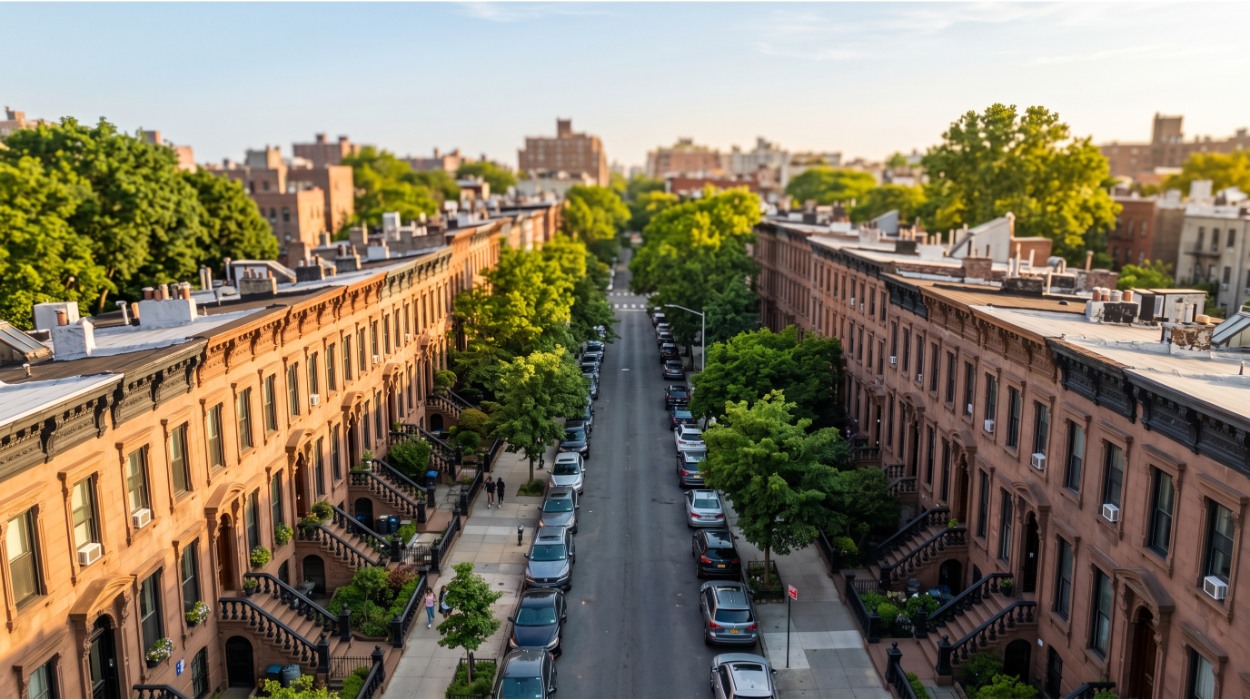

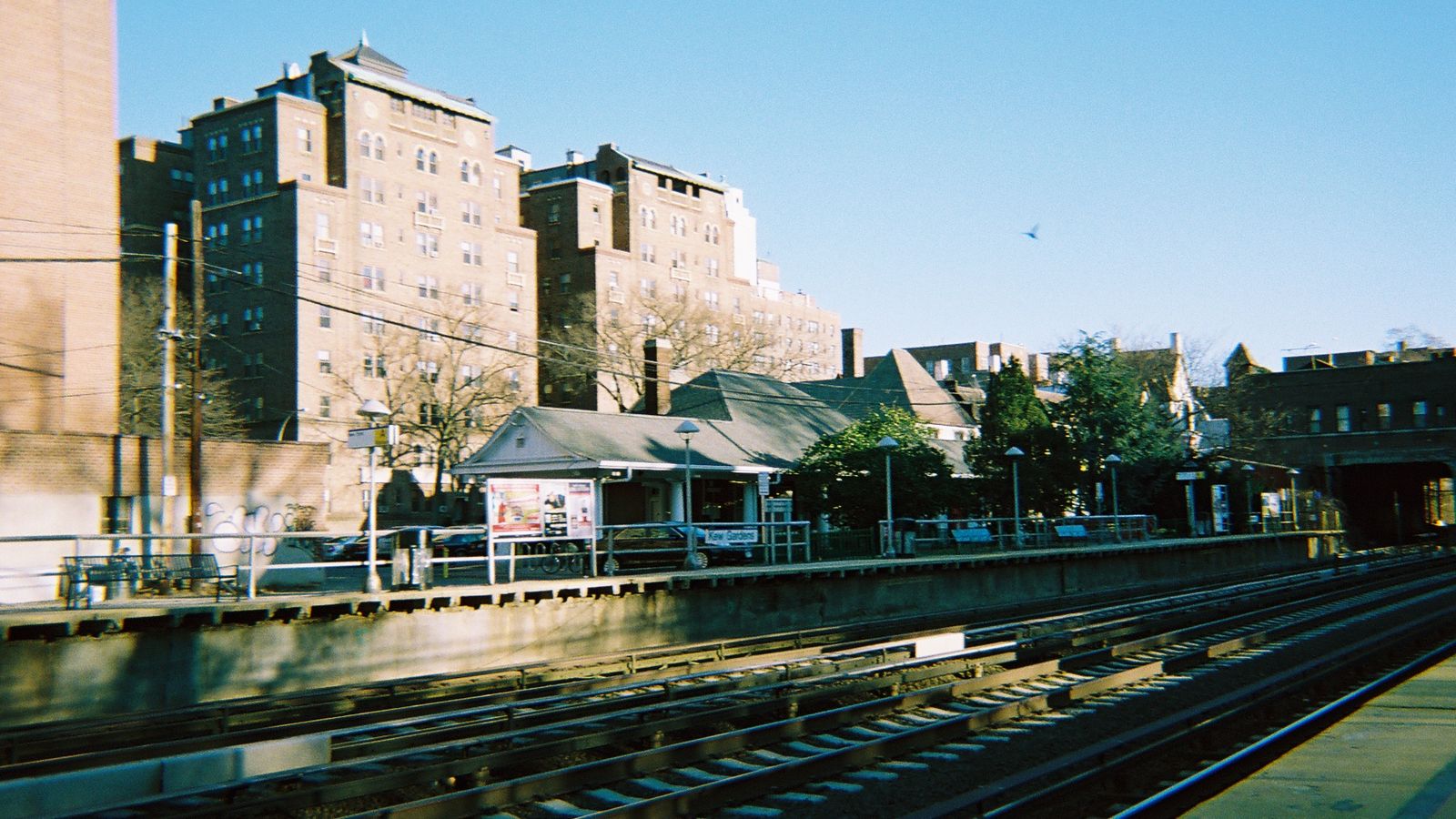
Queens co-ops average around $330K. Single-family homes average around $830K. Both sit well below Brooklyn and Manhattan equivalents, and Queens ranks as the second-safest borough in New York City. If you're looking for the best neighborhoods in Queens for home buyers, the math works in your favor.
The borough also gives you a property tax edge. Queens Class 2 properties average around $4,593 per unit, roughly half the citywide co-op average of $9,578 and less than a third of the condo average of $15,134. That gap saves you thousands every year.
One thing to know upfront: co-ops dominate Queens, making up roughly 75% of the housing stock. That means board approval, flip taxes, subletting restrictions, and financial scrutiny you won't face with a condo. If you're not familiar with how co-ops work, get up to speed before you start touring. Budget for flip taxes of 1% to 3% of the sale price, and expect most boards to restrict or ban subletting entirely.
Each neighborhood below is tagged by the buyer profile it fits best. I've ranked them by who they serve — from affordability-focused first-timers to lifestyle-driven waterfront seekers. Whether you're hunting for a sub-$500K co-op or a beachfront single-family home, one of these 10 neighborhoods fits your criteria. For a broader overview of what's available, see our complete guide to homes for sale in Queens, NY.
Why Queens Beats Other Boroughs for Home Buyers in 2026
The numbers tell the story. Queens runs 30% to 50% below Brooklyn per square foot, yet you get the same subway access, the same NYC school system, and the same property tax structure. Jamaica Estates saw roughly 69% year-over-year price growth in Q2 2026, and three Queens neighborhoods appeared on StreetEasy's top 10 hottest markets list — all signs of sustained buyer demand that hasn't fully repriced the borough yet.
What separates Queens from other outer-borough alternatives is range. The borough contains everything from sub-$300K co-ops in Jackson Heights to $2M+ waterfront condos in Long Island City. Whatever your budget, lifestyle, and commute tolerance, Queens has a pocket that fits. The challenge is knowing which pocket.
For a full breakdown of the buying process from offer to close, including co-op board prep and closing cost estimates, see our Queens home buying guide. If you need help with the down payment, our NYC down payment assistance guide covers programs that can add up to $175,000 in stacked grants and loans.
Co-op Primer: What Every Queens Home Buyer Must Know First
Co-ops are cheaper to buy into — often 15% to 25% below comparable condos — but they come with strings. Monthly maintenance fees bundle your property taxes, heat, and water into one payment. In northeast Queens, those fees typically run $550 to $800 per month, and some buildings have seen 8% to 12% annual increases in recent years.
Boards can reject you without explanation. Most require 20% down, a credit score of 680 or higher, and one to two years of post-closing liquidity. Flip taxes of 1% to 3% apply when you sell. Subletting is usually prohibited or severely restricted.
When does a co-op win? When you need the lowest entry price, plan to stay five or more years, and can handle the board process. When does a single-family home or condo win? When you want full ownership control, outdoor space, and financing flexibility. Keep that distinction in mind as you read each neighborhood below.
Jackson Heights: Most Affordable Entry Point in Queens
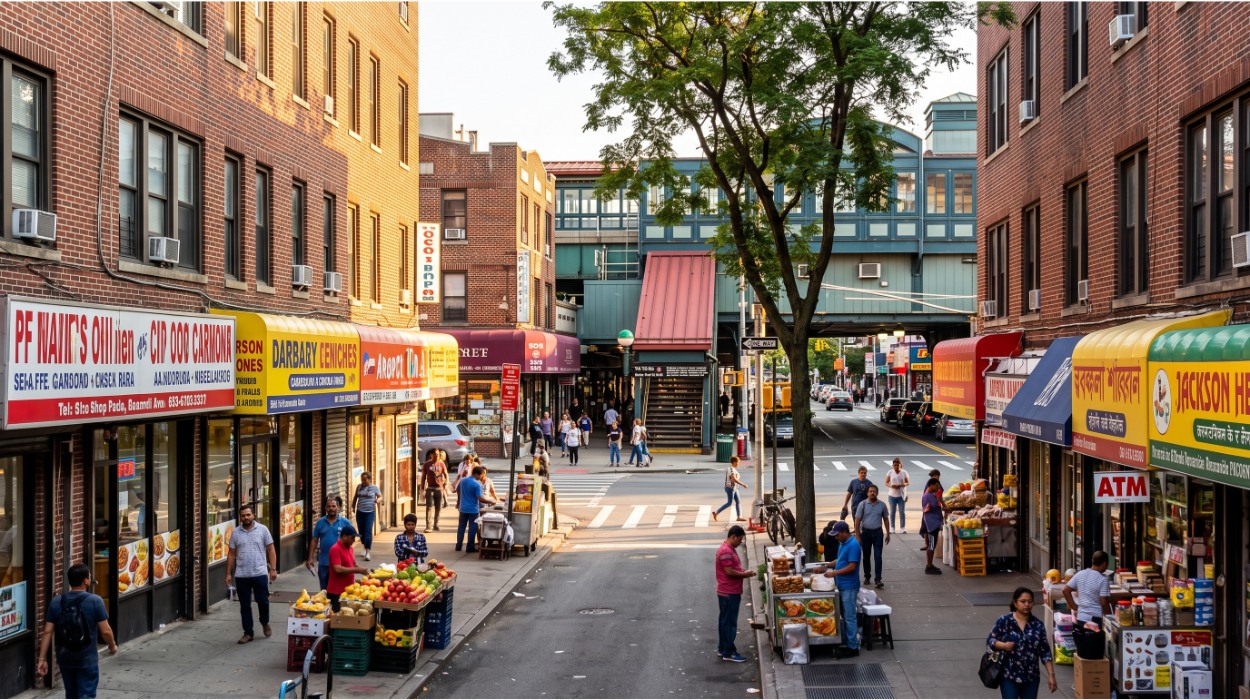
Co-ops in Jackson Heights average $250K to $450K. That's among the lowest entry points in the entire city for a neighborhood with direct subway access. If you're a first-time buyer looking to get into the market for under $500K, start here.
Single-family homes run higher, averaging $650K to $950K. But the real play in Jackson Heights is co-ops. They're the dominant property type and the reason this neighborhood lands at the top of any affordability list.
Transit is strong. The 7, E, F, M, and R trains all serve Jackson Heights, with Roosevelt Avenue acting as a major hub. Your Manhattan commute is direct and reliable — the E express reaches Midtown in roughly 20 to 25 minutes.
The co-ops here tend to be older buildings with lower maintenance fees, which is a plus. The trade-off: stricter boards and additional costs that surprise buyers. Flip taxes typically run 1% to 3% of the sale price, and most buildings restrict subletting entirely. Factor those into your numbers before making an offer.
The 74th Street corridor is one of the most vibrant commercial strips in Queens, with dozens of cuisines within walking distance. Jackson Heights also holds historic district designation on several blocks, which limits exterior renovation but preserves architectural character. The neighborhood is recognized as one of NYC's most LGBTQ+-welcoming communities.
The downside: aging housing stock means occasional assessment fees for building repairs. Some blocks along Roosevelt Avenue deal with noise and congestion from the elevated train.
Best for: First-time buyers seeking sub-$500K ownership with subway access and a short Manhattan commute.
Skip if: You want a single-family home with a yard or quiet suburban streets.
Ridgewood: The Value Play That Keeps Appreciating
Ridgewood has been StreetEasy's #1 Neighborhood to Watch for two consecutive years. It still underprices neighboring Bushwick across the Brooklyn border, where average rents run roughly $400 more per month according to StreetEasy and Pinpointe data.
Homes here average $700K to $1.1M, with two-family houses and co-ops making up most of the inventory. Two-family homes are especially attractive for buyer-occupants. You live in one unit, rent the second, and let rental income offset your mortgage. That math changes everything for buyers on the edge of affordability.
The historic yellow-brick rowhouses that define Ridgewood's streetscape are part of what makes the neighborhood distinctive. These aren't cookie-cutter buildings. The architectural character is a draw for buyers who want something with personality and long-term curb appeal.
The M train connects you to Manhattan. The L train is accessible via a short walk to the Bushwick border. Ridgewood's trajectory fits a broader Queens growth pattern: Jamaica Estates saw roughly 69% year-over-year price growth, and Rockwood Park posted a 240% jump in sales volume per Q2 2026 market data. Queens is in a growth cycle, and Ridgewood is positioned to benefit from continued Brooklyn spillover demand.
The downside: Ridgewood is still gentrifying. Commercial corridors are uneven. Some blocks feel polished; others don't. Expect construction activity and shifting streetscapes over the next few years.
Best for: Buyers who want the strongest pure appreciation bet in Queens and can tolerate a neighborhood still in transition.
Skip if: You need established commercial amenities or a fully polished block immediately.
Astoria: Urban Living Without Manhattan Prices
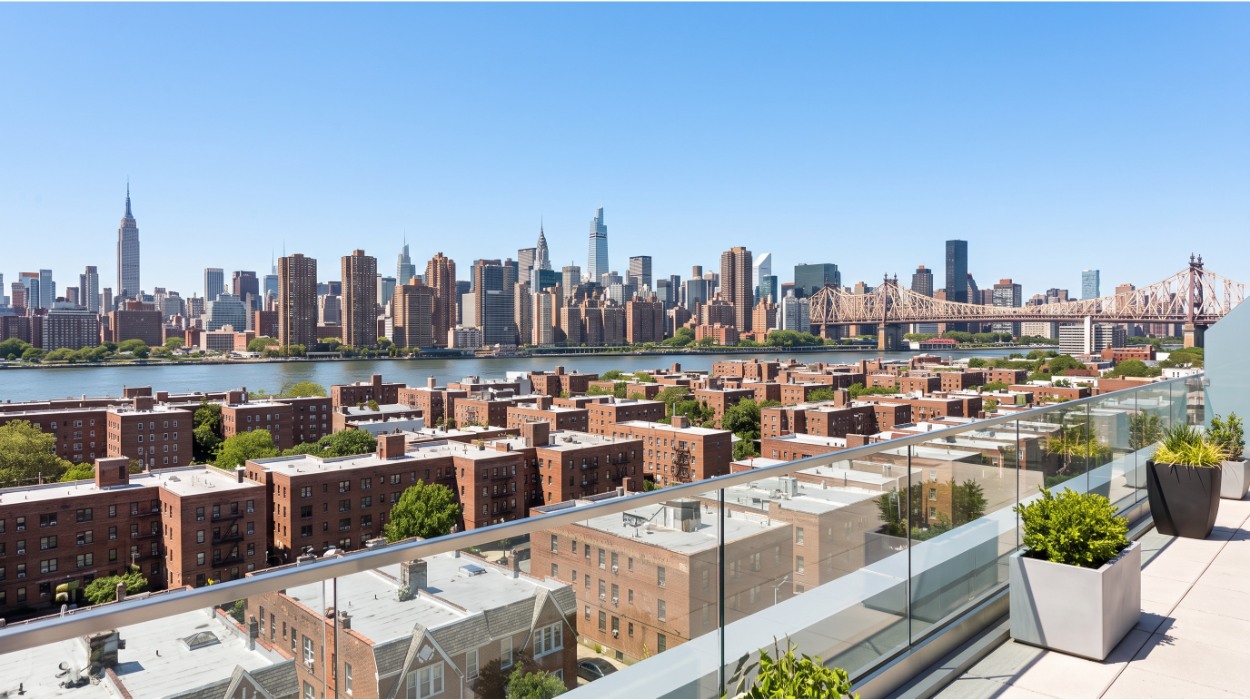
Astoria's median home price has surged roughly 39% to over $1M. That headline scares buyers away. But co-ops in Astoria still average $350K to $600K, making the neighborhood's best-kept secret its least glamorous housing type.
Single-family homes run $700K to $1.2M, which is where that median spike comes from. If you focus on co-ops, Astoria is still accessible. Corcoran's 1H 2026 report highlights strong demand from remote workers and multi-family investors, which is pushing prices on larger properties while co-ops remain comparatively affordable.
The N and W trains get you to Midtown in about 15 minutes. LaGuardia Airport is close — a real perk if you travel for work. Astoria Park sits on the waterfront, and Steinway Street anchors a strong restaurant and shopping scene. The Greek, Egyptian, and South Asian food scenes alone justify the price of entry.
Co-ops dominate the market here. Monthly maintenance fees bundle property taxes and building costs into one payment, which simplifies budgeting but can feel steep. Some boards run strict approval processes, so have your financial documents buttoned up before you submit an application.
The downside: the value window is narrowing fast. Flight noise affects some blocks near LaGuardia. And co-op boards in well-maintained buildings can be demanding.
Best for: Young professionals and couples wanting urban energy with a sub-$600K co-op entry and a 15-minute commute to Manhattan.
Skip if: You need space for a growing family or want to avoid co-op board scrutiny.
Long Island City: Shortest Commute, Highest Price Tag
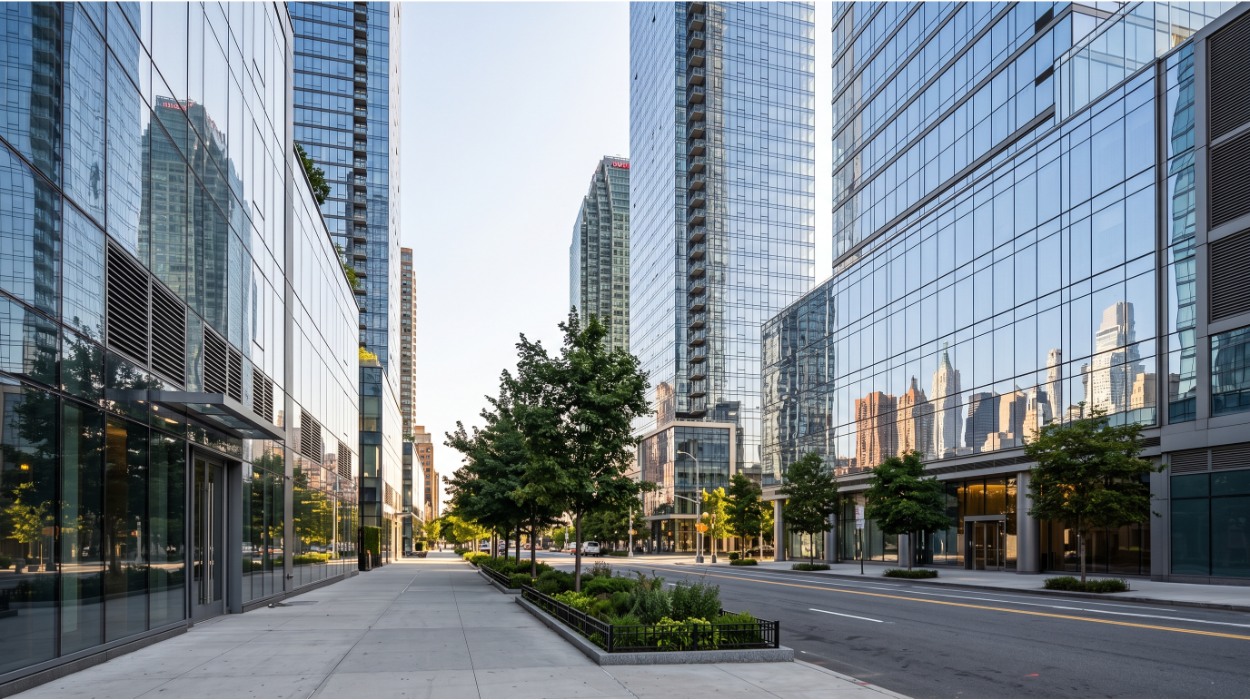
A sub-10-minute commute to Grand Central from Queens sounds impossible. Long Island City makes it routine. The 7 train covers the distance in minutes, and the E, M, and G lines add redundancy.
The price reflects that commute. LIC's median sits around $1.23M, up roughly 32% year over year. This is the most expensive neighborhood in Queens, and it's not close. Corcoran's 1H 2026 report shows that despite price increases, sales volume dropped 32% as reduced new development supply constrained transaction activity.
What you get for that price is different from the rest of the borough. LIC is dominated by new-construction luxury condos, which are rare in co-op-heavy Queens. No board approval. Easier subletting. More financing flexibility. If co-op restrictions have been a dealbreaker elsewhere, LIC removes that obstacle entirely.
Hunter's Point South and Gantry Plaza State Park anchor the waterfront. The skyline views are some of the best in the city. One warning: LIC's waterfront location means some buildings sit near FEMA flood zones. Check specific building flood maps before you fall in love with a unit, and budget for flood insurance if applicable. This connects to a borough-wide issue: 22.1% of all Queens properties sit in FEMA-designated flood zones.
Best for: Commuters and high earners who want the Queens neighborhood closest to Manhattan with no co-op board to deal with.
Skip if: Budget is a priority or you want a neighborhood with established street-level character.
Flushing: Dual Transit Lines and a Market That Rewards Patience
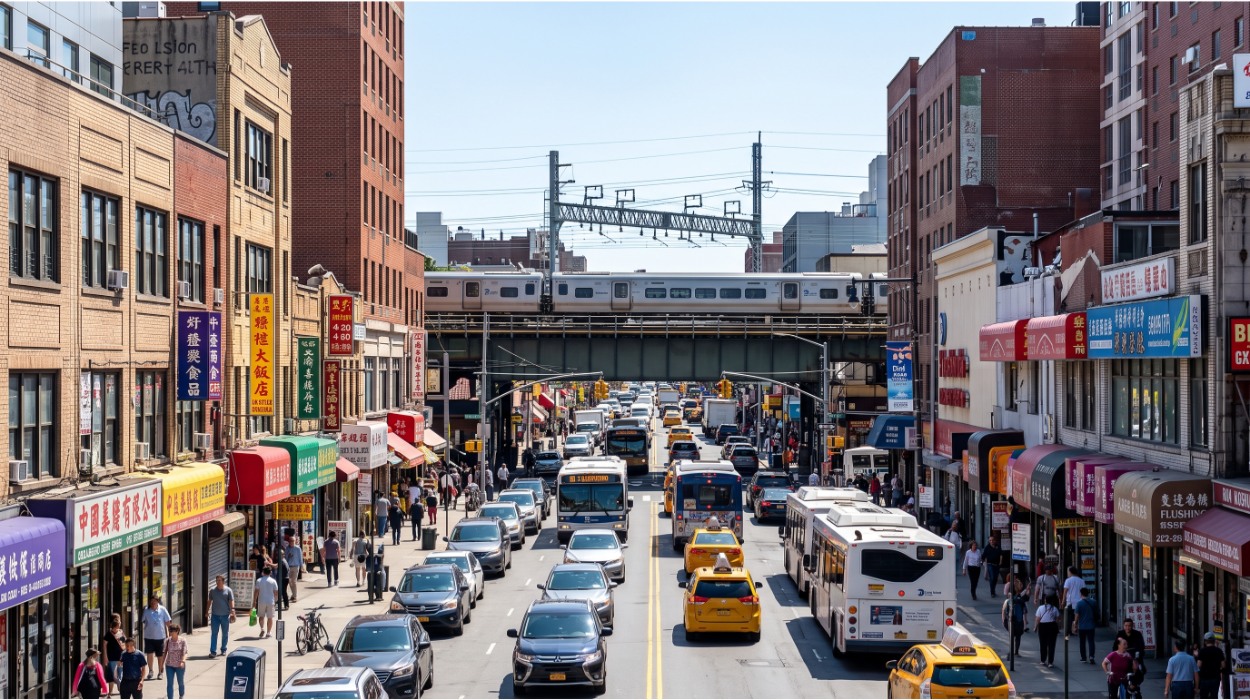
Flushing is one of the few Queens neighborhoods with both LIRR service and a subway terminus. The LIRR gets you to Penn Station in about 19 minutes. The 7 train ends here. That kind of transit redundancy is rare and valuable.
The price spectrum is the widest in Queens. Co-ops average $350K to $550K. Luxury condos run $800K to $2M or more. Whatever your budget, Flushing probably has something that fits.
Downtown Flushing functions as a major commercial hub. Groceries, dining, banking, medical offices — you can handle most errands on foot. The food scene rivals Manhattan's Chinatown in scope, with hundreds of restaurants spanning regional Chinese, Korean, and other Asian cuisines.
Property types split between older co-ops and newer luxury condo developments. If you're looking at newer condos, ask about tax abatements. Some buildings carry 421-a style abatements that keep property taxes artificially low for a set period. When those abatements expire, your tax bill can jump significantly. Always check expiration dates and calculate your post-abatement monthly costs before you commit.
The downside: downtown Flushing gets congested. Parking is difficult. Older co-op buildings may face capital improvement assessments. Street-level noise near the Main Street corridor can be intense during business hours.
Best for: Buyers who want the strongest transit-plus-value combination in Queens. Start with co-ops near the 7 train terminus for the best entry price.
Skip if: You want quiet streets and minimal congestion.
Most Queens buyers overpay by $20,000–$50,000 by skipping agent representation on co-op deals.
Get matched with a licensed Queens buyer's agent at no cost. Know your real costs before you make an offer.
Mon – Sat · 9 AM – 7 PM ET
Forest Hills: Top Schools and the Lowest Crime Rate in Queens
Finding a NYC neighborhood with strong public schools, low crime, and homes you'd actually want to raise kids in usually means leaving the city. Forest Hills is the exception.
The violent crime rate here averages around 1.8 per 1,000 residents, compared to the citywide average of 5.5. That's one of the lowest rates in all five boroughs, not just Queens. For more detail on safety across the borough, see our safest neighborhoods in Queens guide.
Schools matter here. Forest Hills sits in District 28, one of the top-performing school districts in Queens. Combined with District 26 in Bayside, these are the two premier public school districts in the borough.
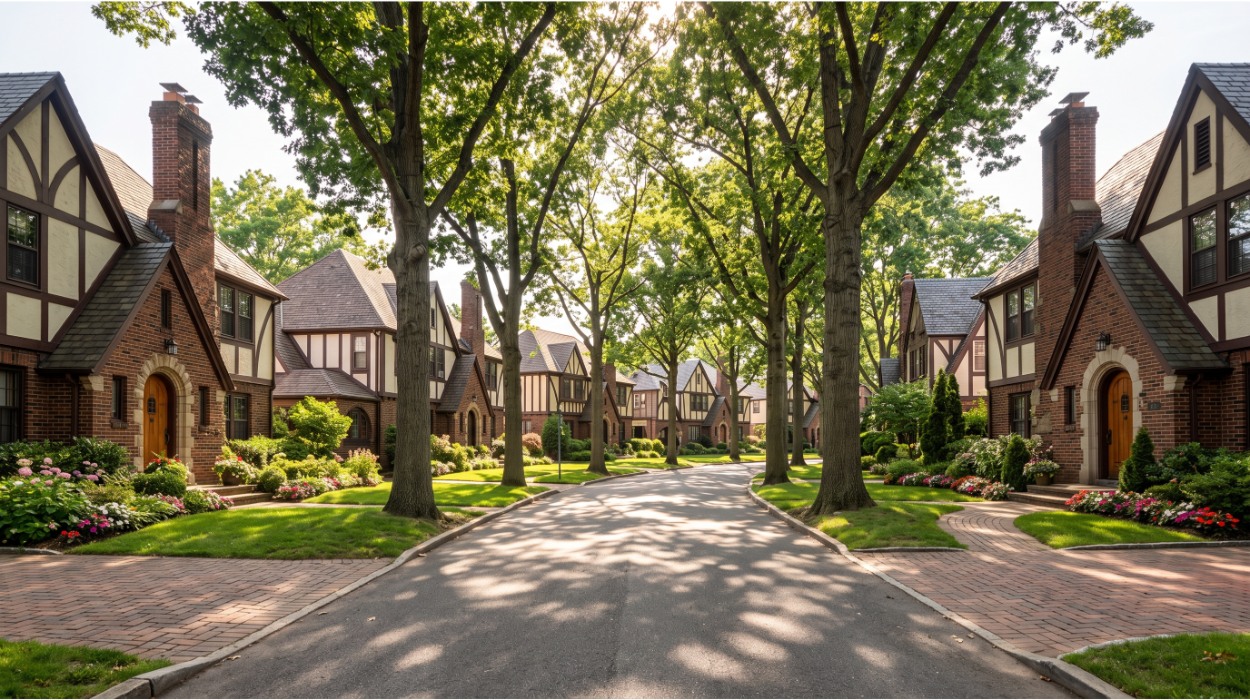
Homes average $800K to $2M or more. Co-ops dominate, with spacious pre-war units in well-maintained buildings. Forest Hills Gardens is a landmark historic planned community featuring Tudor-style homes on quiet, landscaped streets with private road maintenance. Co-op board approval in the Gardens is especially thorough, so prepare your financial documentation accordingly. Austin Street anchors the commercial district with independent shops, restaurants, and cafes.
The E, F, M, and R trains serve Forest Hills, and LIRR access is available. Commute to Midtown runs roughly 30 to 40 minutes. The neighborhood feels suburban without leaving the city.
Best for: Families prioritizing public school quality and safety above all else.
Skip if: You're a first-time buyer with a tight budget — co-op financial requirements here are among the toughest in Queens.
Bayside: Safest Neighborhood in Queens with Suburban Space
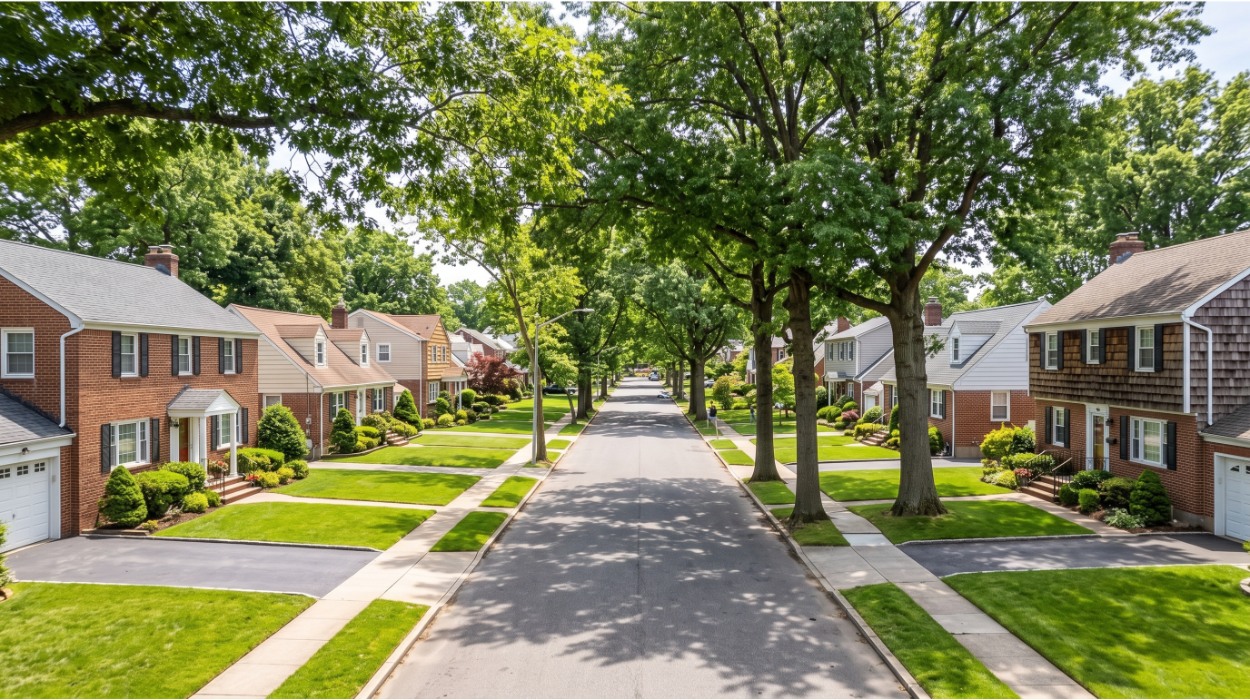
Bayside ranks as the safest neighborhood in Queens. It sits in the city's top-rated school district. And you can still get a single-family home with a yard — all without leaving NYC.
The 111th Precinct, covering Bayside, Douglaston, Little Neck, and Auburndale, posts the lowest crime numbers in Queens. Northeast Queens reports roughly 2,795 annual crimes, about one-fifth the volume of northwest Queens at approximately 14,283.
Schools are the headline here. District 26 is the top-performing district in all of New York City. P.S. 94 earned a National Blue Ribbon designation in 2020. J.H.S. 67 and Benjamin Cardozo High School are also strong performers.
Homes average in the mid-$900s. Single-family homes dominate the housing stock — colonials, capes, and split-levels on tree-lined streets with actual driveways. Transit is LIRR-based. The train gets you to Penn Station, but you're looking at a 40- to 50-minute commute. If you work remotely or have a hybrid schedule, the commute trade-off becomes much more manageable.
Bell Boulevard is the commercial spine with restaurants, shops, and local businesses. Little Neck Bay offers waterfront access and recreational space.
Best for: Families with school-age children who want top-rated public schools, single-family homes with yards, and the quietest neighborhoods in Queens.
Skip if: You commute to Manhattan daily by subway or want nightlife within walking distance.
Woodside: The Quiet Middle Ground Between Price and Access
Woodside rarely appears on best neighborhoods in Queens lists. That's exactly why its prices haven't caught up to neighboring Astoria and Long Island City.
Homes here average $700K to $1.1M — below Astoria's median of over $1M and well below LIC's $1.23M median. For the transit access you get, Woodside is underpriced.
That transit access is strong. Woodside has both an LIRR station (a major transfer point on the Port Washington and Oyster Bay branches) and 7 train service. You get two ways into Manhattan without paying Astoria or LIC prices. The LIRR ride to Penn Station takes roughly 15 to 20 minutes.
The neighborhood is quiet and tree-lined. Irish and Filipino communities give Woodside a cultural identity that feels real rather than curated. Row houses, small multi-family homes, and co-ops make up the housing stock. Two-family homes offer rental income potential for owner-occupants, mirroring Ridgewood's model.
Strategically, Woodside sits between several rapidly appreciating neighborhoods. Spillover from Astoria, LIC, Sunnyside, and Jackson Heights could push prices up. The Sunnyside Yards project adjacent to Woodside has been discussed as a future major development site. If that project advances, proximity would boost Woodside property values significantly.
Best for: Commuters who want dual LIRR and subway access at lower prices than Astoria or LIC, and buyers who prefer quiet residential streets over nightlife.
Skip if: You need a walkable commercial district or active social scene close to home.
Bellerose: Suburban Single-Family Homes at Queens Prices
Leaving NYC for the suburbs usually means giving up city benefits: pensions, city services, NYC property tax rates. Bellerose gives you suburban housing without that trade-off.
Homes here average in the $600s to $900s. Most are detached single-family houses with yards and driveways — a housing type rare in co-op-dominated Queens. Bellerose sits on the Queens-Nassau border. It looks and feels like Long Island, but you keep NYC property tax rates. Queens Class 2 properties average around $4,593 per unit, compared to significantly higher rates across the border in Nassau County.
Transit is LIRR via the Hempstead Branch. There's no subway access. Be upfront with yourself about that commute trade-off — the ride to Penn Station takes roughly 45 to 55 minutes. If you work in Manhattan, you're commuting by rail. Lot sizes tend to be generous by NYC standards, and many homes include garages, finished basements, and backyard space suitable for families.
Bellerose attracts buyers relocating from Nassau County who want to keep NYC employment benefits while staying in a familiar suburban environment.
Best for: Buyers who want a single-family home in NYC at suburban-adjacent prices.
Skip if: Commute time is your priority or you want walkable urban amenities.
Belle Harbor and the Rockaways: Waterfront Living with Flood Risk You Can't Ignore
Beachfront property in NYC sounds like a fantasy. Then you learn that 95% of the Rockaways peninsula sits in a FEMA-designated flood zone, and mandatory flood insurance can add thousands to your annual housing costs.
Medians in the Belle Harbor and Rockaway areas average $929K to $998K. For that price, you get what almost no other NYC neighborhood offers: actual beachfront single-family homes with sand and surf within walking distance.
The market here is volatile but showing signs of recovery. Belle Harbor recorded 0 sales in Q2 2025, then jumped to 8 sales in Q2 2026. Rockwood Park posted a 240% increase in sales volume over the same period. Buyers are returning, but transaction volume remains thin enough that a few deals can swing median prices dramatically.
The A train connects the Rockaways to Manhattan, but the commute runs roughly 60 to 70 minutes. Factor in seasonal beach crowds during summer months, which add congestion.
Best for: Lifestyle buyers who want beach living and have budgeted for flood insurance as a permanent cost.
Skip if: You're cost-sensitive or uncomfortable with natural disaster risk as an ongoing financial variable.
Related Queens Buying Guides
These guides pair directly with the neighborhoods above and give you the next layer of detail:
- Most Affordable Neighborhoods in Queens — 13 neighborhoods ranked by entry price, including specific co-op buildings and LIRR-accessible options under $400K
- Safest Neighborhoods in Queens — violent crime rates by precinct, with data-driven rankings for all 10 neighborhoods in this guide
- Best Neighborhoods in Queens for Families — school pipeline analysis, District 26 vs. District 28 breakdown, and total monthly ownership cost by neighborhood
- Most Expensive Neighborhoods in Queens — luxury market breakdown including Malba, Douglaston Manor, and Jamaica Estates
- NYC Down Payment Assistance Programs — stacking strategies that can add up to $175K in grants and forgivable loans
Frequently Asked Questions About Buying in Queens
Is Queens a safe place to buy a home?
Queens is the second-safest borough in New York City. The northeast cluster, covered by the 111th Precinct, is the safest area in the borough. Forest Hills posts a violent crime rate of around 1.8 per 1,000 residents, compared to the citywide average of 5.5. Safety varies significantly by precinct, so check NYPD CompStat data for the specific neighborhood you're considering.
What's the difference between buying a co-op and a condo in Queens?
Co-ops require board approval, restrict subletting, bundle property taxes into monthly maintenance, and charge a flip tax of 1% to 3% when you sell. Condos skip the board approval, offer more flexibility on renting and selling, but cost more upfront. Co-ops are cheaper to buy into but less flexible to own. Queens is roughly 75% co-ops, so understanding the distinction is essential before you start looking.
How much are property taxes in Queens?
Queens Class 2 property taxes average around $4,593 per unit. That's roughly half the citywide co-op average and less than a third of the citywide condo average. If you buy a co-op, your property taxes are embedded in your monthly maintenance payment. For condos and single-family homes, you pay taxes separately.
Which Queens neighborhoods have the best schools?
District 26, covering Bayside, Douglaston, and Little Neck, is the top-performing school district in all of New York City. P.S. 94 in Bayside earned a National Blue Ribbon designation in 2020. District 28, covering Forest Hills and Kew Gardens, is the second-strongest district in the borough. If schools drive your decision, focus on these two districts.
Are there flood risks when buying in Queens?
Yes. 22.1% of Queens County properties sit in FEMA-designated flood zones. The Rockaways are the most exposed, with 95% of the peninsula in a flood zone. If you have a federally backed mortgage and your property is in a FEMA zone, flood insurance is mandatory. Always check FEMA flood maps before making an offer on any Queens property, especially near waterfront areas.
What is the average home price in Queens in 2026?
Co-ops average around $330K. Condos average around $653K. Single-family homes average around $830K. But the range across neighborhoods is enormous. Jackson Heights co-ops start around $250K, while Long Island City condos sit at a median of around $1.23M. The borough-wide median falls between $595K and $712K depending on the time period measured.
Which Queens neighborhoods are best for first-time buyers?
Jackson Heights offers the lowest co-op entry points in Queens, with units averaging $250K to $450K and direct subway access via the 7, E, F, M, and R trains. Ridgewood is a strong second option for buyers who want two-family homes with rental income potential. Woodside offers underpriced transit access versus neighboring Astoria and LIC.
Which Queens neighborhoods are closest to Manhattan?
Long Island City is the Queens neighborhood nearest Manhattan, with the 7 train reaching Grand Central in under 10 minutes. Astoria follows, with the N and W trains reaching Midtown in roughly 15 minutes. Woodside (7 train and LIRR) and Flushing (LIRR to Penn Station in about 19 minutes) are also strong choices for buyers who want to stay close to Manhattan without paying LIC prices.
Which Queens neighborhoods are best for singles?
Astoria is the top pick for singles who want nightlife, restaurants, and a social scene within walking distance, with a 15-minute subway commute to Midtown. Ridgewood offers a younger, artsy demographic and proximity to Bushwick's bar and music scene via the M and L trains. Long Island City suits singles who prioritize commute speed and modern amenity buildings over neighborhood character.
Sources & Methodology
- Corcoran Group, Queens Market Report 1H 2026
- StreetEasy, Neighborhood to Watch Rankings 2025–2026
- NYC Department of Finance, Class 2 Property Tax Data 2026
- NYPD CompStat, Precinct-level crime data Q2 2026
- FEMA National Flood Hazard Layer, Queens County
- QNS.com, Queens Real Estate Market Q2 2026
- NYC DOE, District Performance Data 2025–2026
- MTA, Commute time data for Queens transit lines