Malba homes average $2 to $4 million. The Queens borough median is $595K. That's a 4x to 6x gap inside the same county.
Most buyers don't think of Queens as a luxury market. But the most expensive neighborhoods in Queens form a hidden tier of wealth, with seven neighborhoods showing average sale prices ranging from $750K to over $4M. These aren't fringe outliers. They're established enclaves with waterfront estates, Tudor mansions, and planned communities dating back over a century.
For context, Brooklyn's borough-wide median sits at $1.075M, and Manhattan's exceeds $1.1M. Several Queens luxury neighborhoods deliver comparable housing stock at a significant discount, with better lot sizes and less competition. A buyer spending $1.2M in Hunters Point gets a new-construction waterfront condo with Manhattan views. That same budget in Brooklyn buys a one-bedroom in Williamsburg. For buyers still weighing their options across the borough, our full guide covers the best places to live in Queens across every price range and lifestyle.
Queens also offers something Manhattan and Brooklyn largely don't: detached single-family homes with private yards and driveways. Five of the seven neighborhoods on this list consist almost entirely of single-family housing stock. Lot sizes range from 4,000 square feet in Forest Hills Gardens to over 10,000 square feet in Malba. For buyers who want land, not just square footage, Queens is where New York City luxury actually delivers.
The borough's luxury market also carries a historical depth that surprises newcomers. Malba was founded in 1908. Forest Hills Gardens dates to 1909. Jamaica Estates was planned in 1907. These neighborhoods weren't retrofitted into luxury; they were designed for it from the start, with covenants, architectural standards, and lot minimums that have held for over a century.
Malba: The $2M–$4M Enclave Known as the Hamptons of Queens
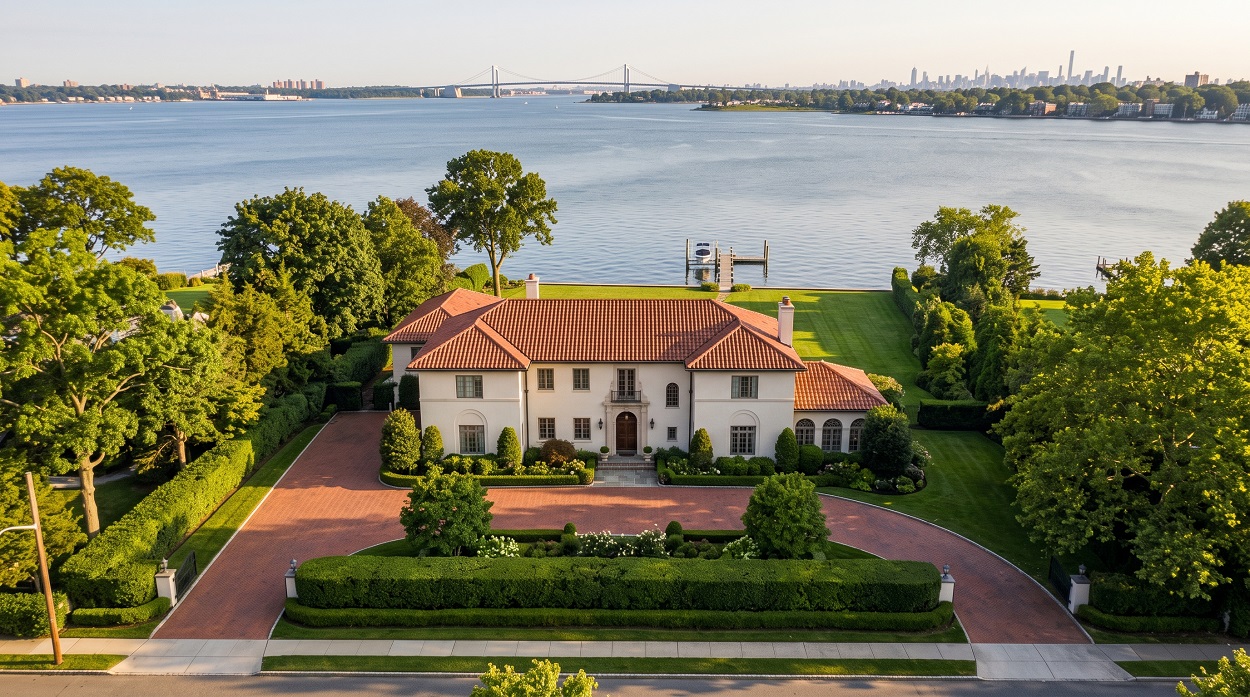
There's a neighborhood in northeast Queens where the streets were private until the mid-1980s, the homes sit on the waterfront, and residents dock their boats at a private yacht club. Most New Yorkers have never heard of it.
Malba homes averaged $2M to $4M in 2026 sales, placing it 5th most expensive neighborhood in all of New York City and the single richest neighborhood in Queens by a significant margin. The name is an acronym for the five founders of the Malba Realty Trust: Maycock, Avis, Lewis, Bishop, and Alling. They developed the area as an exclusive residential enclave in the early 1900s, and that character has barely changed.
Only 406 homes exist in Malba. There are no condos, no apartment buildings, no rental inventory. Every property is a detached single-family house on a lot typically ranging from 6,000 to over 10,000 square feet. The few homes that trade each year command serious premiums. In 2026, a home at 1-04 Malba Drive sold for around $3.1M, and 95 Malba Drive closed near $2.8M.
Powell's Cove provides waterfront access along the East River, and residents can join the Malba Yacht Club for private docking. The neighborhood sits on a peninsula, surrounded by water on three sides. That geography creates the feeling of a coastal town rather than a city neighborhood. Property taxes run roughly $15,000 to $25,000 annually — high by Queens standards but a fraction of what comparable waterfront property commands in Nassau County or Westchester.
The inventory crunch defines Malba's market. Fewer than 10 homes typically sell per year, and many transfer within families or through off-market deals. Notable residents over the decades have included William Shea — the attorney who gave Shea Stadium its name — and actress Drea de Matteo of The Sopranos.
Best for: Buyers who want a waterfront estate with total privacy, no shared walls, and a community small enough that everyone knows each other.
Skip if: You need walkable retail, nightlife, or subway access. Malba is car-dependent and intentionally isolated.
Forest Hills Gardens: 175 Acres of Tudor Homes Designed by Olmsted
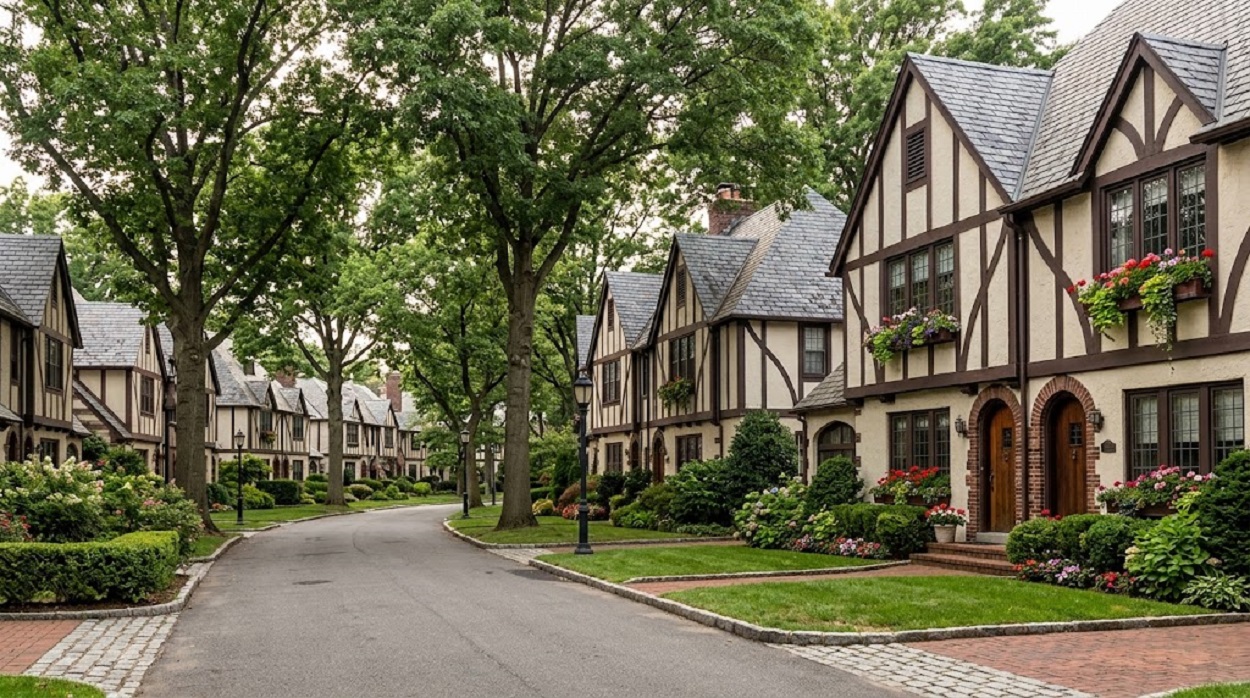
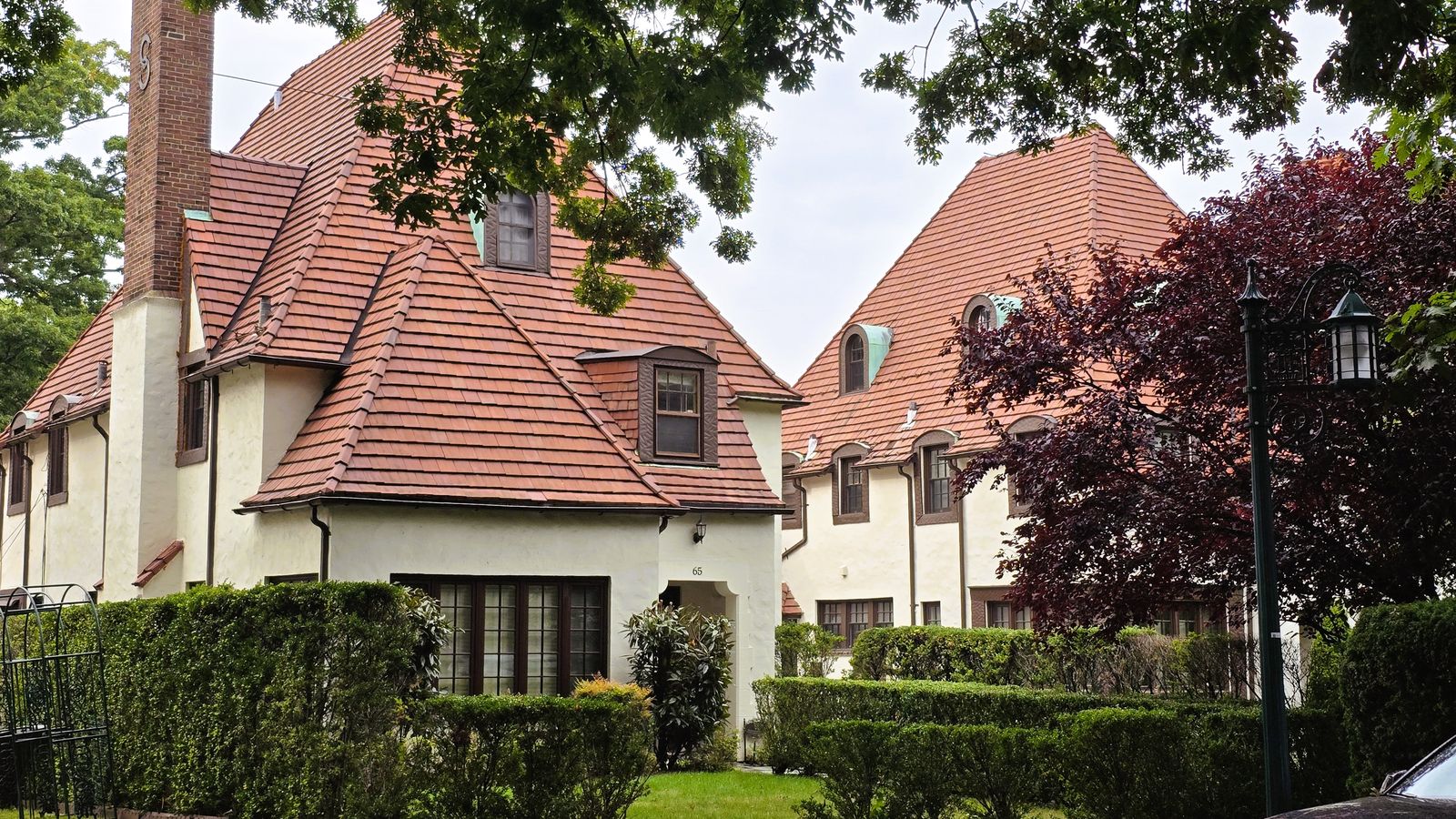
In 1909, the Russell Sage Foundation hired Frederick Law Olmsted Jr. to design a "garden city" in central Queens. His father had designed Central Park and Prospect Park. The son created something equally ambitious on a residential scale: 175 acres of curving streets, mature trees, and over 800 Tudor-style homes that still look exactly as planned.
Forest Hills Gardens was the first garden city built in New York City and one of the best neighborhoods in Queens for luxury homes with architectural pedigree. The Forest Hills Gardens Corporation governs the community today, enforcing the original Olmsted-era covenants. Homeowners cannot alter exterior facades without approval. The result is a streetscape that looks more like an English village than a Queens neighborhood.
Home prices reflect the exclusivity. In 2026, sales have ranged from roughly $1.8M to $2.3M. The Tudor homes feature half-timbered facades, slate roofs, and landscaped yards. Most homes range from 2,400 to 4,000 square feet, on lots averaging 4,000 to 6,000 square feet. At the $2M midpoint, buyers pay roughly $600 to $700 per square foot — competitive with brownstone Brooklyn.
Transit access is the best of any neighborhood on this list. The LIRR stops at Forest Hills station, and the E, F, M, and R subway lines all serve the area. Midtown Manhattan is reachable in under 30 minutes by multiple routes. Annual community fees run approximately $2,000 to $3,000 and cover street maintenance, security patrols, and shared landscaping.
If you're navigating the NYC buying process for the first time, read the co-op board section of our Queens home-buying guide before you make an offer — Forest Hills Gardens has a unique land-lease structure that surprises many buyers.
The verdict: If you want a Tudor home on a tree-lined street with genuine architectural protections and Midtown access in 25 minutes, Forest Hills Gardens is the strongest option in Queens. Nothing else on this list combines aesthetics, governance, and transit this well.
Hunters Point: Waterfront Condos 11 Minutes from Grand Central
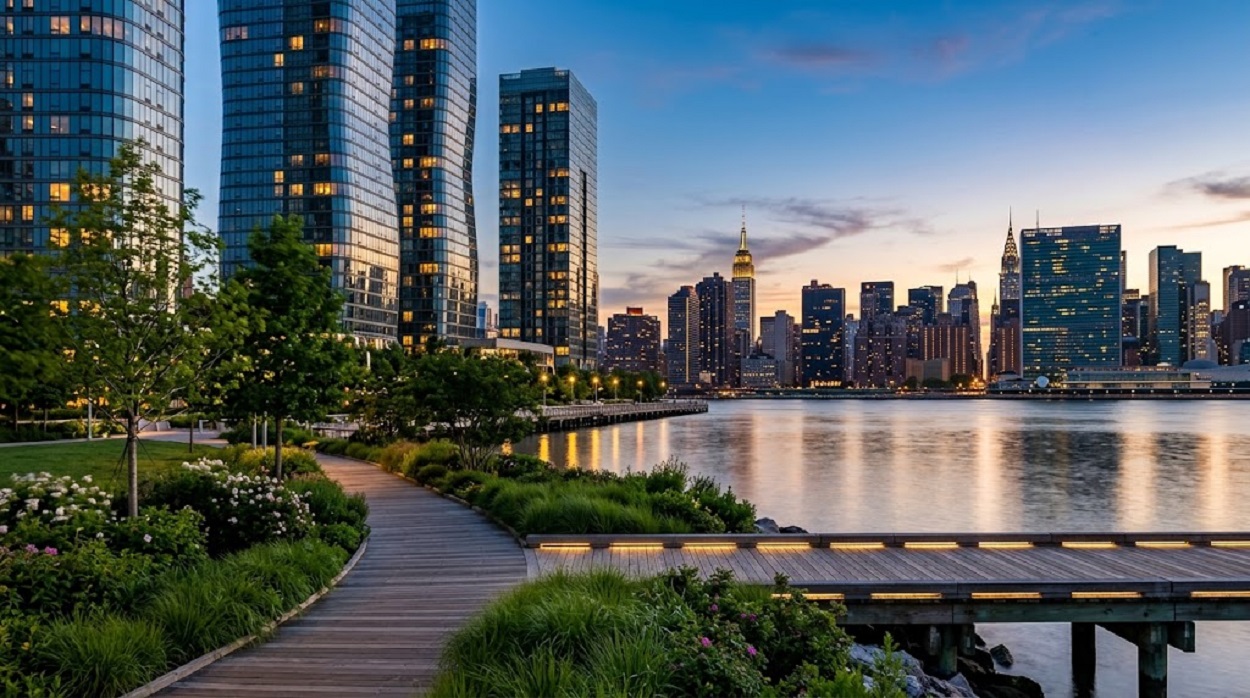
Take the 7 train from Hunters Point and you're at Grand Central Terminal in 11 minutes. That's faster than most of Manhattan's own neighborhoods.
Hunters Point posted a median around $1.23M in Q2 2026, up roughly 32% year over year according to PropertyShark data. That number needs context. Average unit sizes grew from around 800 to nearly 900 square feet, meaning bigger, pricier apartments are transacting now. On a per-square-foot basis, Hunters Point condos typically trade between $1,200 and $1,600, depending on the building and floor.
The condo market ranges from around $630K for a studio or one-bedroom to over $3M for a penthouse with skyline views. Renters can find units starting around $2,500 per month. The housing stock is predominantly high-rise condos built in the last 15 years, so finishes are modern and amenity packages compete with Manhattan new development.
Gantry Plaza State Park and Hunter's Point South Park combine for around 23 acres of waterfront green space along the East River. The Manhattan skyline views rank among the best vantage points in the city. The NYC Ferry also serves Hunters Point, connecting to Wall Street and Midtown East at subway fare.
The right agent in Queens can save you $40,000. The wrong one costs you the deal.
Buyers and sellers — talk to a licensed Queens agent today. We match you in minutes, at no cost.
Mon – Sat · 9 AM – 7 PM ET
HOA fees in Hunters Point's luxury towers typically run $800 to $1,500 per month. Factor those carrying costs into any purchase comparison.
Quick comparison: Brooklyn's waterfront equivalents — Williamsburg and DUMBO — price higher with longer Midtown commutes. Williamsburg to Grand Central runs 25+ minutes. DUMBO requires a transfer. Hunters Point delivers the same waterfront lifestyle for less money and less hassle.
Jamaica Estates: The Fastest Appreciating Luxury Neighborhood in Queens
Jamaica Estates posted a roughly 69% increase in median sale price over the past year — the fastest appreciation of any luxury neighborhood in Queens, making it one of the most talked-about expensive neighborhoods in Queens NYC right now.
Homes in Jamaica Estates ranged from $750K to $1.6M in Q2 2026. Context matters. Sales volume dropped from about 30 to 15 transactions, and roughly half of those exceeded $1M. When volume halves and the remaining sales skew expensive, the upper end of the range pulls the average up sharply. Still, the trend is real. Jamaica Estates is getting more expensive.
Recent sales range from $750K for smaller colonials to $1.6M for the largest Tudor properties. Price per square foot runs roughly $350 to $500 — well below Forest Hills Gardens and Malba. For buyers focused on square footage and lot size rather than waterfront or architectural pedigree, Jamaica Estates delivers the most space for the money.
Developer Ernestus Gulick planned the neighborhood in 1907 as a suburban retreat of grand homes on oversized lots. Lots run 40 to 60 feet wide and 140 to 150 feet deep — far larger than typical Queens parcels. The Jamaica Estates Association has enforced community covenants since 1929. Homes average 2,200 to 3,500 square feet.
Notable connections: Donald Trump was born at 85-15 Wareham Place, and the hip-hop group Run-D.M.C. hails from the area. The E and F trains provide subway access at the Jamaica-179th Street station, with a roughly 35-minute ride to Midtown.
The verdict: If you want a big house on a big lot with E/F train subway access, Jamaica Estates is the pick right now. No other neighborhood on this list offers this much land per dollar.
Auburndale: Quiet Tudor Streets in the $950K–$1.4M Range
There's no subway in Auburndale. For most Queens neighborhoods, that's a drawback. Here, it's the entire selling point.
The absence of subway access means Auburndale never got the density, the foot traffic, or the commercial development that transforms quiet residential streets into busy corridors. The result is a neighborhood of Tudor and Colonial homes, low fences, and a homeownership rate above 70%. The average homeowner tenure in Auburndale exceeds 15 years — one of the longest in Queens.
Home prices in Auburndale ran from $950K to $1.4M in Q2 2026, up roughly 21% year over year. The housing stock is almost entirely single-family detached homes built between 1920 and 1960, with most lots running 40 by 100 feet. Homes average 1,800 to 2,600 square feet, typically with three or four bedrooms.
Transit comes via the LIRR Auburndale station, with a direct ride to Penn Station in approximately 25 minutes. Monthly LIRR passes run in the $230 to $250 range for the city zone. The neighborhood draws dual-income families with hybrid work schedules, retirees downsizing from Long Island, and professionals who left subway-adjacent neighborhoods after starting families.
Best for: Families and professionals who work hybrid schedules and don't need a subway. If you commute to Midtown two or three days a week, the LIRR handles it. The other days, you enjoy the quiet.
Skip if: You commute five days a week and need a subway. The LIRR schedule and cost add friction that daily commuters will feel.
Belle Harbor: Oceanfront Living on the Rockaway Peninsula
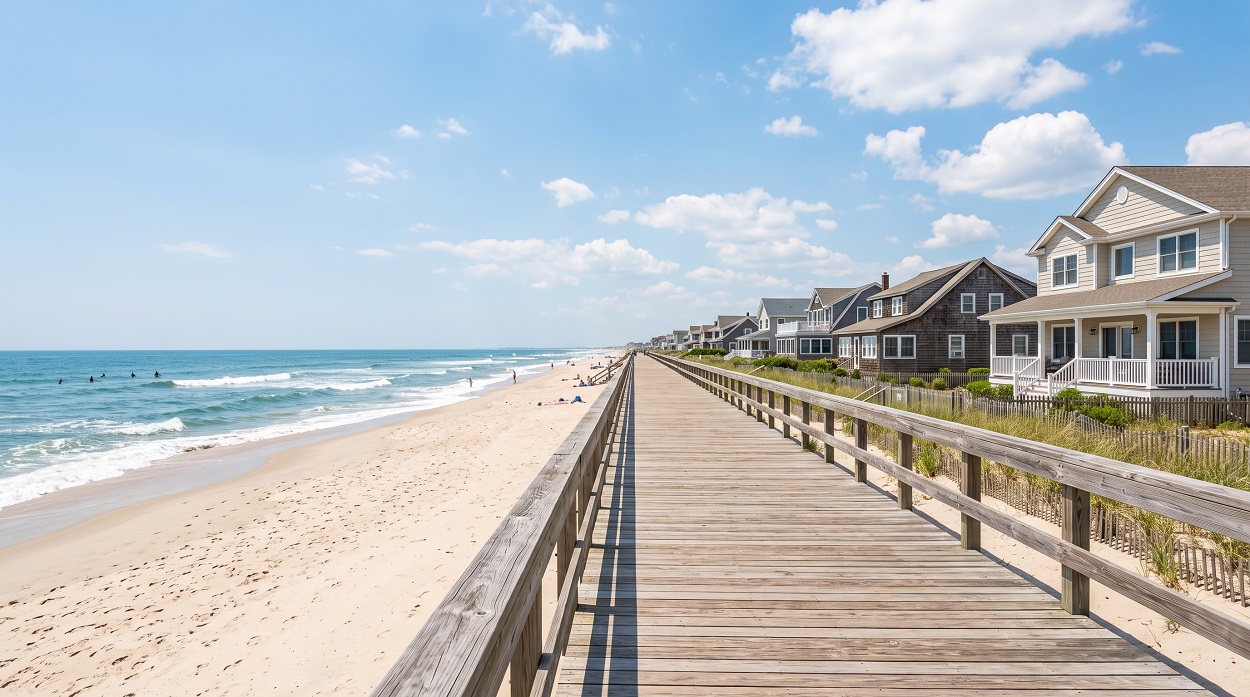
You can stand on the beach in Belle Harbor and look out at the Atlantic Ocean. No other neighborhood on this list offers that.
Belle Harbor homes averaged $800K to $1.3M in Q2 2026, appearing on the city's top-50 most expensive neighborhoods list for the first time. The housing stock is distinctive: Queen Anne-style homes, oversized 6-bedroom properties, and beachfront townhouses line the streets closest to the ocean. Many oceanfront parcels run 40 by 100 feet, with homes of 2,500 to 4,000 square feet.
Hurricane Sandy devastated the Rockaway Peninsula in 2012. Belle Harbor took some of the worst damage. The rebuilding effort elevated the housing stock significantly — many homes were rebuilt to modern storm-resistant codes. Flood insurance costs remain elevated. Annual flood insurance premiums for oceanfront properties typically range from $3,000 to $8,000, depending on elevation and coverage level. Buyers should price flood insurance into carrying costs and accept the exposure.
The beach is the primary amenity. Belle Harbor sits between Beach 126th and Beach 139th Streets, with direct access to the Rockaway Beach boardwalk. The A train serves the Rockaways, with the ride to Midtown running approximately 60 to 70 minutes.
The verdict: Belle Harbor is for buyers who want oceanfront living inside New York City and are comfortable with the flood risk tradeoff. The prices are a fraction of what Atlantic-facing property costs on Long Island's South Shore. Go in with eyes open on insurance and storm exposure.
Fresh Meadows: Postwar Planned Community With Parks and Top Schools
In 1946, the New York Life Insurance Company built Fresh Meadows on 141 acres for World War II veterans returning home. The planned community gave families affordable, well-designed housing near parks and schools. Eighty years later, the bones of that plan still hold.
Fresh Meadows trades in the $990K to $1.2M range, making it the most accessible of the expensive neighborhoods in Queens NYC on this list. In Q1 2026, it ranked 27th most expensive in New York City. For buyers entering the Queens luxury market for the first time, this is the starting point.
The original New York Life development included around 3,000 units across garden apartments, townhouses, and single-family homes. The master plan prioritized green space, pedestrian paths, and separation from through-traffic. Garden apartments offer entry-level pricing in the $600K to $800K range. Detached single-family homes command the highest prices, with recent sales between $1.05M and $1.2M for three- and four-bedroom properties on lots averaging 4,000 square feet.
Cunningham Park sits adjacent to the neighborhood, offering 358 acres of trails, sports fields, basketball courts, and green space. St. Francis Preparatory School — one of the largest Catholic high schools in the country with roughly 2,500 students — anchors the neighborhood's educational reputation.
Transit access runs through the Q17, Q30, and Q31 bus lines, connecting to the F train at Parsons Boulevard. The commute to Midtown takes 45 to 55 minutes door-to-door. By car, the Long Island Expressway and Grand Central Parkway provide highway access.
The verdict: Fresh Meadows is where Queens luxury starts. The prices are approachable, the parks are vast, the schools are strong, and the postwar planned-community layout gives the neighborhood a cohesion that newer developments can't replicate. If you're priced out of Forest Hills Gardens or Malba, start here.
Other Richest Neighborhoods in Queens Worth Knowing
The seven neighborhoods above cover the highest-priced tier, but several other luxury neighborhoods in Queens consistently rank above the borough median and deserve mention.
Bayside
Bayside sits in northeast Queens along Little Neck Bay, offering waterfront properties, well-regarded schools, and a suburban character that attracts families relocating from Long Island. Northeast Queens also posts the lowest Queens crime rates in the borough — a fact that drives sustained demand in this corridor. Home prices in Bayside average $700K to $1.1M, with waterfront properties running higher. The LIRR Bayside station provides direct service to Penn Station in under 35 minutes. Bayside is often grouped with Auburndale and Douglaston as one of the most desirable places to live in Queens for families who want space and quiet without leaving the city.
Douglaston
Douglaston occupies the northernmost tip of Queens, with views across to the Long Island Sound and the Manor section featuring some of the most architecturally significant homes in the borough. Homes in Douglaston typically range from $900K to $2M, with Manor homes commanding the upper end. Douglaston Manor is a private, gated community within Douglaston with its own community association, similar in spirit to Malba or Forest Hills Gardens.
For a broader look at how Queens compares to the rest of NYC, see our Queens real estate guide for 2026.
Frequently Asked Questions About Luxury Neighborhoods in Queens
What are the most expensive places to live in Queens?
The most expensive places to live in Queens are Malba ($2M to $4M range), Forest Hills Gardens ($1.8M to $2.3M), and Hunters Point ($630K to $3M+), based on 2026 sales data. Auburndale, Belle Harbor, Jamaica Estates, and Fresh Meadows round out the top seven, all with average prices between $750K and $1.4M. Bayside and Douglaston are close behind, with typical home prices ranging from $900K to over $2M in their most desirable sections.
What are the richest neighborhoods in Queens?
The richest neighborhoods in Queens by sale price are Malba, Forest Hills Gardens, Hunters Point, Auburndale, Belle Harbor, Jamaica Estates, and Fresh Meadows. Malba leads with homes ranging from $2M to $4M, placing it 5th most expensive in all of New York City. Among these, Malba, Forest Hills Gardens, and Douglaston Manor are considered the most exclusive due to their limited inventory and community governance structures.
What are the best neighborhoods in Queens for luxury homes?
The best neighborhoods in Queens for luxury homes depend on what you're looking for. For waterfront estates with maximum privacy, Malba is unmatched. For Tudor architecture and planned-community governance, Forest Hills Gardens leads. For luxury condos with a fast Manhattan commute, Hunters Point is the top pick. For large lots and investment momentum, Jamaica Estates is the strongest value. For oceanfront living within city limits, Belle Harbor stands alone.
Is Queens considered a luxury market?
Yes, though selectively. Seven Queens neighborhoods show average sale prices ranging from $750K to over $4M, placing them among the most expensive in New York City. Malba ranks 5th citywide. The borough overall has a median around $595K, so the luxury tier represents a distinct segment rather than the borough-wide norm. Queens luxury tends toward single-family homes on large lots rather than the high-rise condo towers that define Manhattan luxury.
What is the most expensive neighborhood in Queens?
Malba holds the top position with homes averaging $2M to $4M in 2026, ranking 5th in all of New York City. The neighborhood contains only 406 homes, all detached single-family properties. Individual sales have ranged from roughly $2.8M to $3.1M for interior lots, with true waterfront parcels reaching $4M and above. The combination of waterfront access, private streets, and extremely limited inventory keeps prices elevated year after year.
How does Queens luxury compare to Brooklyn?
Queens offers significant savings. Brooklyn's borough-wide median is around $1.075M compared to Queens' $715K. For condos, the gap widens: roughly $672K in Queens versus $1.275M in Brooklyn. Queens luxury skews toward detached homes with yards, while Brooklyn luxury concentrates in brownstones and new-construction condos. Buyers who want a single-family home with a private yard will find far more options in Queens at lower prices. For a detailed comparison, see our Brooklyn vs. Queens market comparison.
Are there luxury apartments and rentals in Queens?
Hunters Point is the primary market for luxury apartments in Queens, with condos ranging from around $630K to over $3M and rentals starting around $2,500 per month. The neighborhood's high-rise inventory is predominantly new construction with modern amenities. Outside of Hunters Point, Queens luxury is dominated by single-family homes. Luxury rental inventory in neighborhoods like Malba, Forest Hills Gardens, and Jamaica Estates is essentially nonexistent.
Which Queens neighborhood is best for families?
Fresh Meadows and Jamaica Estates stand out for families. Fresh Meadows offers Cunningham Park's 358 acres, St. Francis Preparatory School, and the most accessible price point on this list. Jamaica Estates provides Queens High School for the Sciences (10/10 on GreatSchools) plus oversized lots that give children room to play. Forest Hills Gardens adds Kew-Forest School and Forest Park to the mix at a higher price point. See our guide to the best Queens neighborhoods for families for more detail.
What makes a Queens neighborhood expensive?
The most expensive neighborhoods in Queens share a few key characteristics: limited housing supply (Malba has only 406 homes), community governance that maintains standards (Forest Hills Gardens Corporation, Jamaica Estates Association), waterfront or park access, strong school options, and historical planning with large lots. Proximity to Manhattan transit is a factor in Hunters Point and Forest Hills Gardens, but several of the most expensive enclaves (Malba, Auburndale, Belle Harbor) are car-dependent, proving that privacy and land matter more than commute speed in Queens luxury pricing.