

Brooklyn crossed a grim threshold in 2026. Average rents hit the $4,100 to $4,350 range, vacancy collapsed to around 1.4% — the lowest since 1968 — and electricity costs hit roughly $0.37 per kWh, about 81% above the national average. The cost of living in Brooklyn is no longer a rough estimate. It's a precise, budget-by-budget reality that rewards planning and punishes vague intentions. Here's what the numbers actually look like.
Brooklyn Rent in 2026: Averages, Trends, and What's Driving Prices Up
Rent is the expense that dominates everything. In mid-2026, average Brooklyn rent sits around $4,141 per month according to RentCafe. Corcoran's data puts the median near $4,350. Both figures are at or near record highs. For context, the national average rent hovers around $1,500 to $1,700. Brooklyn costs roughly 2.5 times that.
The trajectory is steep. RentCafe tracks a year-over-year increase of about 16%. Corcoran's data shows roughly 8% growth. The 2024-to-2025 jump was around 5.4%, so the pace is accelerating. Brooklyn's vacancy rate has dropped to approximately 1.4%, the lowest since 1968.
By unit type, studios average around $2,800 to $3,200 per month. One-bedrooms range from $3,500 to $4,200. Two-bedrooms run $4,500 to $5,500, though prices vary sharply by neighborhood. For buyers who have decided to stop renting altogether, Brooklyn's median home prices for 2026 tell a parallel story — ownership sits near $1 million borough-wide, but co-ops entry starts around $460,000.
Gary Malin, Corcoran's COO, put it plainly: "Competition remains intense, urgency is high, and well-priced listings disappear almost as quickly as they hit the market."
The driver is structural. There aren't enough apartments. The FARE Act, which shifted broker fees to landlords in June 2025, raised rents by only about 1.1% — roughly $38 per month on average according to StreetEasy. That's noise compared to the supply shortage. About 32% of tenants report being in bidding wars for apartments.
Brooklyn Neighborhood Costs: From Around $2,000 to $8,500 a Month
The difference between Brooklyn's cheapest and most expensive neighborhoods can exceed $6,000 per month for a one-bedroom. Where you live matters more than almost any other financial decision you'll make here.
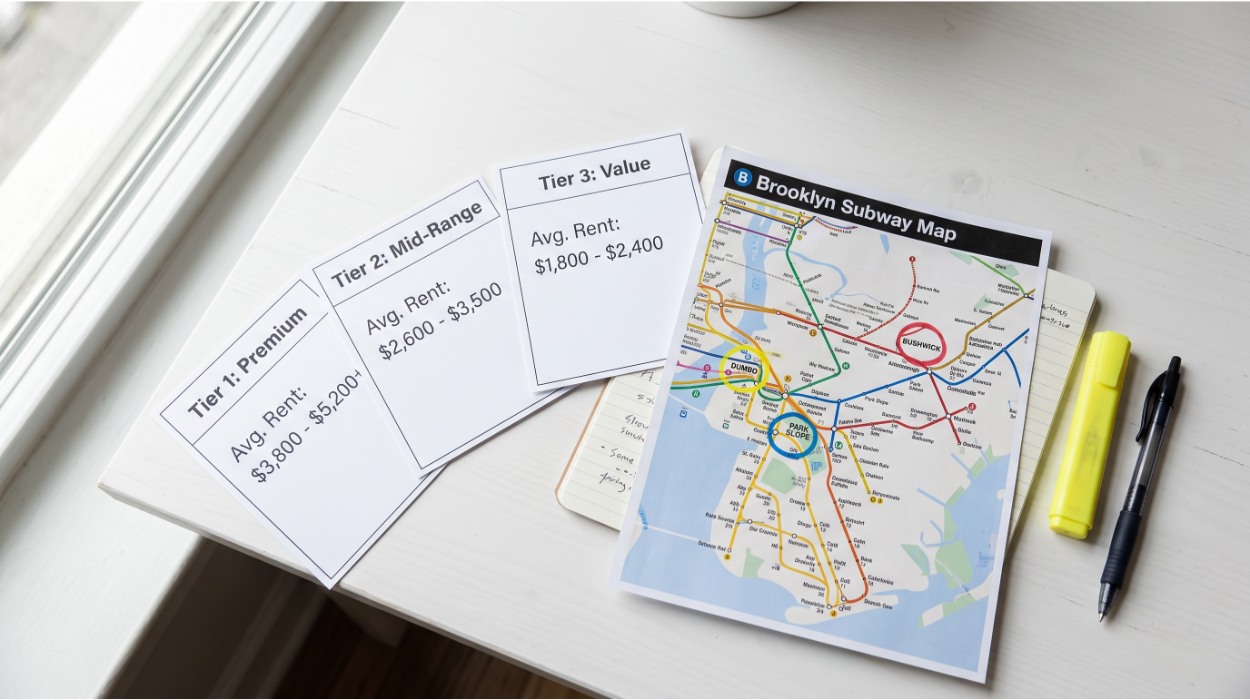
Tier 1, Premium ($4,500+ per month): DUMBO leads with one-bedrooms averaging up to $8,500, up roughly 33% year over year. South Williamsburg averages around $6,500, a staggering 44% annual increase. Williamsburg proper sits near $4,600. These neighborhoods offer the shortest commutes to Manhattan (10 to 20 minutes to Midtown) and the fiercest competition for units.
Tier 2, Mid-Range ($3,200 to $4,300 per month): Park Slope averages around $4,250. Prospect Heights comes in near $3,800. Crown Heights sits around $3,600. Bed-Stuy and Bushwick both hover around $3,200 to $3,300. Commutes run 20 to 35 minutes to Midtown. These neighborhoods have strong identities, good food scenes, and real community feel. Families looking for long-term stability in Brooklyn should read our guide to the best Brooklyn neighborhoods for families — it covers schools, commute times, and childcare costs for each area.
Tier 3, Value ($1,800 to $2,500 per month): Bay Ridge averages around $2,200. Canarsie sits near $2,000. East New York offers some of the lowest rents in the borough. Commutes stretch to 40 to 55 minutes, but you get more space, quieter streets, and a lower overall cost of living in Brooklyn.
Monthly Expenses Beyond Rent: Utilities, Groceries, Transit, and More
Brooklyn living expenses extend well beyond rent, and the gap from the national average is steep across almost every category. The expense that surprises newcomers most: electricity.
At roughly $0.37 per kWh, New York's electricity rates run about 81% above the national average — and shelter costs rose another 4.4% year over year through August 2026, per the U.S. Bureau of Labor Statistics New York-area CPI. Monthly electric bills average $300 to $411. If you run AC through a Brooklyn summer, expect to land near the top of that range.
Utilities summary: Electric runs $300 to $411 per month. Internet costs $50 to $80. Gas and heat varies widely by building type. Cell phone plans run $40 to $90 depending on carrier and data.
Transportation: An unlimited MetroCard costs about $132 per month. A Citi Bike annual membership runs around $219 per year, roughly $18 per month. Car ownership adds $300 to $500 per month between insurance and parking alone, before gas or maintenance. Unless you're commuting outside NYC, owning a car in Brooklyn is usually a net negative.
Groceries: Budget $400 to $600 per month. Trader Joe's and Aldi stretch your dollar. Ethnic grocery stores in Sunset Park, Flatbush, and Bensonhurst can cut your grocery bill by 20% to 30% compared to standard supermarkets.
Dining out: An inexpensive meal runs $15 to $20 per person. A mid-range dinner for two costs $80 to $100. Budget $200 to $400 per month depending on how often you eat out.
Laundry: Most Brooklyn apartments lack in-unit laundry. Budget $40 to $80 per month for laundromat visits, or $100 to $150 per month for wash-and-fold service.
Healthcare: Employer-sponsored plans cost roughly $200 to $400 per month. Freelancers and marketplace plan holders should budget $400 to $600. New York State of Health marketplace plans offer subsidies if you earn under 400% of the federal poverty level.
Childcare: Full-time daycare runs approximately $1,800 to $2,500 per month per child. This is often the second-largest expense after rent for Brooklyn families. If childcare is a factor in your decision, compare Brooklyn's total cost against Queens — our most affordable Queens neighborhoods guide covers comparable family-friendly areas at meaningfully lower price points.
A useful rule of thumb: take your current spending on utilities and groceries and add 30% to 40%. That's your Brooklyn baseline.
Thinking about renting or buying in Brooklyn? Our agents know which neighborhoods match your budget — and which blocks are worth the premium.
NestIt connects you with top Brooklyn agents at lower commission rates. No pressure, no commitment.
Mon – Sat · 9 AM – 7 PM ET
Upfront Move-In Costs: What You'll Pay Before Unpacking
Before the FARE Act took effect in June 2025, the average upfront cost of moving into a Brooklyn apartment was around $12,900. After the FARE Act eliminated tenant-paid broker fees, that number dropped to roughly $7,500. Still substantial — and it often needs to be paid within 48 to 72 hours of signing.
Expect to pay first month's rent, a security deposit (usually one month's rent), application and credit check fees ($20 to $100 per application), and moving costs. Local moves range from $200 to $4,000 depending on apartment size, floor level, and distance. Summer moves cost 20% to 40% more than winter. Book your building's elevator time in advance and confirm whether your building requires a Certificate of Insurance from your movers.
Budget $150 to $300 per year for renter's insurance. Most landlords require it, and it protects your belongings against theft, fire, and water damage. If you're eventually planning to buy rather than rent, NYC has multiple down payment assistance programs that can cover up to $175,000 of your upfront buying costs — a meaningful comparison when weighing whether to keep renting.
Solo vs. Roommate: The $20,000-a-Year Question
Solo renters in Brooklyn pay roughly $20,100 more per year than couples sharing a one-bedroom. Call it the singles tax.
The math is straightforward. A mid-range one-bedroom runs about $3,500 per month. Split a two-bedroom with a roommate and your share drops to roughly $2,000 to $2,700 per month. That's $400 to $800 in monthly savings, or $9,600 to $14,400 per year. Couples splitting a one-bedroom save even more — Brooklyn couples save approximately $36,500 annually compared to two people renting solo.
Beyond rent, roommates split utilities (saving $150 to $200 per month), internet, and household supplies. Total shared savings add up to roughly $11,000 to $17,000 per year.
| Living Scenario | Income Needed | Situation | Savings |
|---|---|---|---|
| Surviving | $55K–$70K | Roommate + outer neighborhood | Minimal |
| Comfortable w/ roommate | $70K–$90K | Mid-range neighborhood | Some room |
| Comfortable solo | $100K–$130K | Mid-range neighborhood | Tight |
| Solo + 20% savings rate | $130K–$160K | Mid-range neighborhood | 20%+ |
Find roommates through SpareRoom, Roomi, or neighborhood-specific Facebook groups. Meet in person before signing anything. Check lease terms to confirm subletting or roommate additions are allowed.
Questions about Brooklyn rents or neighborhoods? Talk to a specialist.
Mon – Sat · 9 AM – 7 PM ET · Free, no commitment
Brooklyn vs. Manhattan: Is Brooklyn Actually Cheaper?
Brooklyn used to be Manhattan's affordable alternative. In 2026, neighborhoods like DUMBO and South Williamsburg rival Upper East Side pricing. The discount between boroughs is smaller than most people expect.
Brooklyn's median rent of approximately $4,350 compares to Manhattan's median of roughly $5,295 — based on mid-2026 data. That's about a 17% discount. Overall cost of living in Brooklyn runs around 10% lower than Manhattan, with non-rent expenses averaging about $130 less per month.
Where Brooklyn still wins: more square footage per dollar, brownstone charm, better access to outdoor space (Prospect Park is 585 acres), and cheaper dining outside of Williamsburg's trendiest blocks. Brooklyn also edges ahead for families — more stroller-friendly sidewalks and a growing number of quality public schools.
Where Manhattan wins: shorter Midtown commutes and more subway line redundancy, so a single train delay doesn't derail your morning. The 4/5/6 from the Upper East Side beats any Brooklyn train for raw speed to Midtown.
If you're open to going further afield, Queens offers a sharper value play. Queens rents average around $2,500 to $3,200 per month for a one-bedroom — about 30% to 35% less than comparable Brooklyn neighborhoods with similar commute times. Our overview of affordable Queens neighborhoods is worth reading if budget is a top priority. And if you're considering home ownership rather than renting, Queens property tax rates are worth understanding before you commit to a borough.

What Salary Do You Need to Live in Brooklyn?
Only about 5% of NYC apartments qualify as affordable for the average salary. And the official numbers are worse than most people expect: according to the NYC Mayor's Office 2026 True Cost of Living Report, 61.8% of New Yorkers fall below the income threshold needed to live with stability and dignity — the average gap between what they earn and what they need is $39,603 per year. That figure covers Brooklyn renters as much as any other borough.
That last number is one most budgeting guides skip. Brooklyn has triple taxation: federal, New York State (4% to 8.8%), and NYC city income tax (3.1% to 3.9%). A $100,000 gross salary nets roughly $5,500 to $5,800 per month in take-home pay — not the $8,300 gross figure. Every landlord income requirement is in gross; your actual budget runs on net. That math changes everything.
So what do you actually need to earn?
Surviving (roommate, outer neighborhood): $55,000 to $70,000 gross. You'll be tight on savings but functional.
Comfortable with a roommate (mid-range neighborhood): $70,000 to $90,000 gross. Room to breathe. Some savings possible.
Comfortable solo (mid-range neighborhood): $100,000 to $130,000 gross. A $100,000 salary nets roughly $5,800 per month after NYC taxes — NYC city tax runs 3.1% to 3.9% on top of state tax. A one-bedroom around $2,800 eats about 48% of that take-home, leaving roughly $3,000 for everything else.
Comfortable solo with 20% savings rate: $130,000 to $160,000 gross. SmartAsset estimates a solo adult needs over $150,000 to live comfortably in NYC using the 50/30/20 budgeting rule.
Most landlords require annual income of 40 times the monthly rent. A $3,500-per-month apartment means you need to show $140,000 in annual income. If you fall short, a guarantor (earning 80 times the monthly rent) or a service like Insurent can bridge the gap. Freelancers often need to show two years of tax returns plus six months of bank statements.
How to Save Money Living in Brooklyn
Switching from solo to roommate living saves $9,600 to $14,400 per year. That's the biggest single move. But smaller adjustments add up fast.
Housing: Negotiate lease renewals. With a 1.4% vacancy rate, landlords prefer keeping tenants over finding new ones. You have more leverage than you think — ask for a 0% increase or a one-month concession. Move in winter for lower rents and moving costs.
Transit: A Citi Bike annual membership costs about $219 per year versus roughly $1,584 per year for an unlimited MetroCard. If your commute allows it, that's about $1,365 in annual savings.
Groceries: Aldi, Trader Joe's, and ethnic grocery stores in Sunset Park, Bay Ridge, and Flatbush cut bills by 20% to 30% compared to standard supermarkets.
Utilities: At $0.37 per kWh, energy efficiency matters more in Brooklyn than almost anywhere else in the country. LED bulbs, smart power strips, and mindful AC use make a measurable dent. Bundle internet and cell service where possible to save $20 to $40 per month.
Entertainment: Prospect Park, free museum nights (Brooklyn Museum's first Saturday), free concerts in the park, and public library events cost nothing. Brooklyn's free entertainment options are genuinely world-class. A disciplined Brooklyn resident can realistically cut $500 to $800 per month from their spending. The biggest lever, by far, is housing.
Is Brooklyn Worth the Cost?
A solo renter in a mid-range Brooklyn neighborhood spends roughly $5,500 to $6,500 per month on all living expenses — $66,000 to $78,000 per year just to exist. What you get: cultural richness you can't replicate elsewhere, genuine diversity, walkable neighborhoods, reliable transit, world-class parks, extraordinary food, nightlife, and direct access to one of the world's most important job markets.
Worth it if you…
- Earn $100K+ solo, or $70K+ with a roommate
- Work in NYC or benefit from being here
- Value urban density, transit, and access
- Plan to stay at least 3–5 years
Reconsider if you…
- Would spend more than 40% of income on rent
- Would sacrifice retirement savings to stay
- Work fully remote with no NYC requirement
- Need more space than Brooklyn can offer
Frequently Asked Questions About Brooklyn Cost of Living
What is the average rent in Brooklyn in 2026?
Average Brooklyn rent ranges from roughly $4,100 to $4,350 per month as of mid-2026, depending on the data source. Rents vary enormously by neighborhood — from around $2,000 per month in Canarsie to over $8,500 per month in DUMBO. Studios average $2,800 to $3,200, one-bedrooms $3,500 to $4,200, and two-bedrooms $4,500 to $5,500.
Is Brooklyn cheaper than Manhattan?
On average, yes. Brooklyn rents run about 17% lower than Manhattan's median of roughly $5,295, and overall Brooklyn living costs are around 10% cheaper. However, premium Brooklyn neighborhoods like DUMBO and South Williamsburg match or exceed many Manhattan neighborhoods in price. The gap is real — but smaller than it used to be.
How much do I need to earn to live in Brooklyn?
Solo in a mid-range neighborhood: roughly $100,000 to $130,000 gross per year. With a roommate: $70,000 to $90,000. To live solo and save 20% of income: $130,000 to $160,000. Most landlords require annual income of 40 times the monthly rent. A $3,500-per-month apartment requires proving $140,000 in annual income.
Do I have to pay a broker fee in Brooklyn in 2026?
Under the FARE Act, effective June 2025, tenants are not responsible for paying the landlord's broker fee. Landlords cover that cost. If a broker tries to charge you, report it to NYC's Department of Consumer and Worker Protection. About 38% of renters reported violations in the first three months — watch for fees disguised as "management" or "technology" charges.
What are the cheapest neighborhoods in Brooklyn?
Canarsie (averaging around $2,000 per month), Bay Ridge (around $2,200), and East New York offer the lowest rents. The tradeoff is longer commutes, typically 40 to 55 minutes to Midtown Manhattan. These neighborhoods are most practical for remote workers or those with non-Midtown offices.
Is Brooklyn expensive compared to the rest of the U.S.?
Yes. Brooklyn's overall cost of living runs about 75% higher than the U.S. national average. A single person spending conservatively still budgets around $4,300 to $5,500 per month. That said, Brooklyn is roughly 10% to 17% cheaper than Manhattan. Outer areas like Bay Ridge and Canarsie are manageable on $70,000 to $90,000 with a roommate.