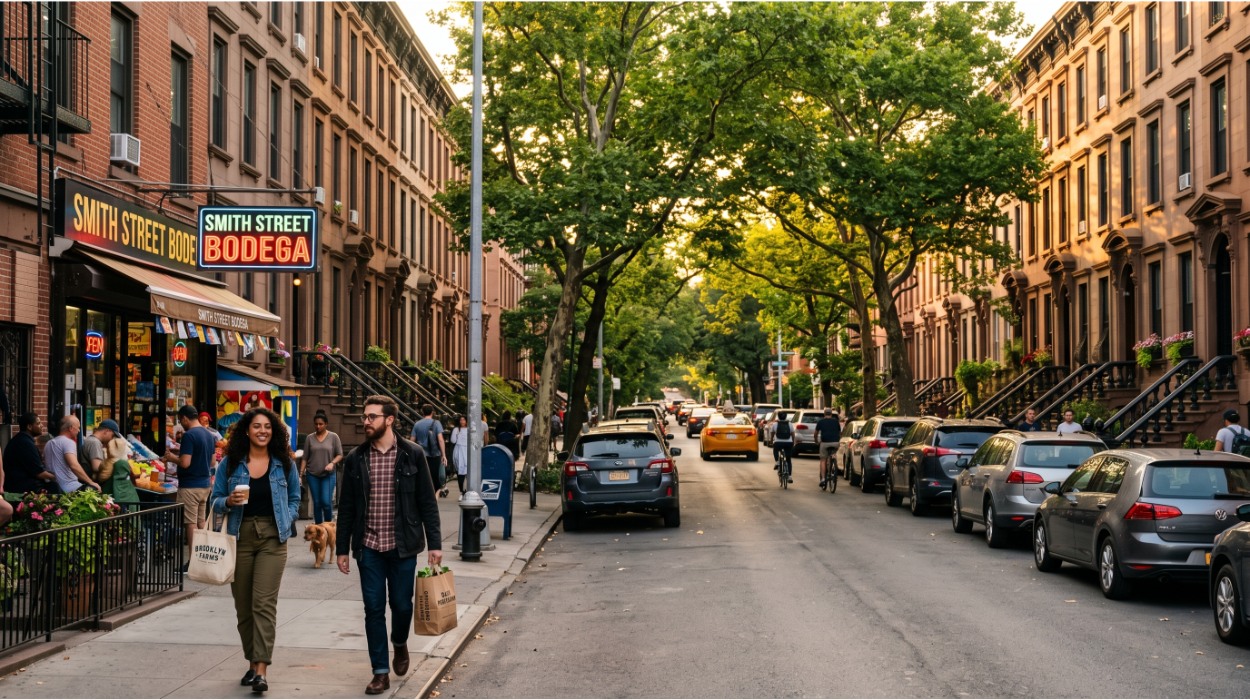
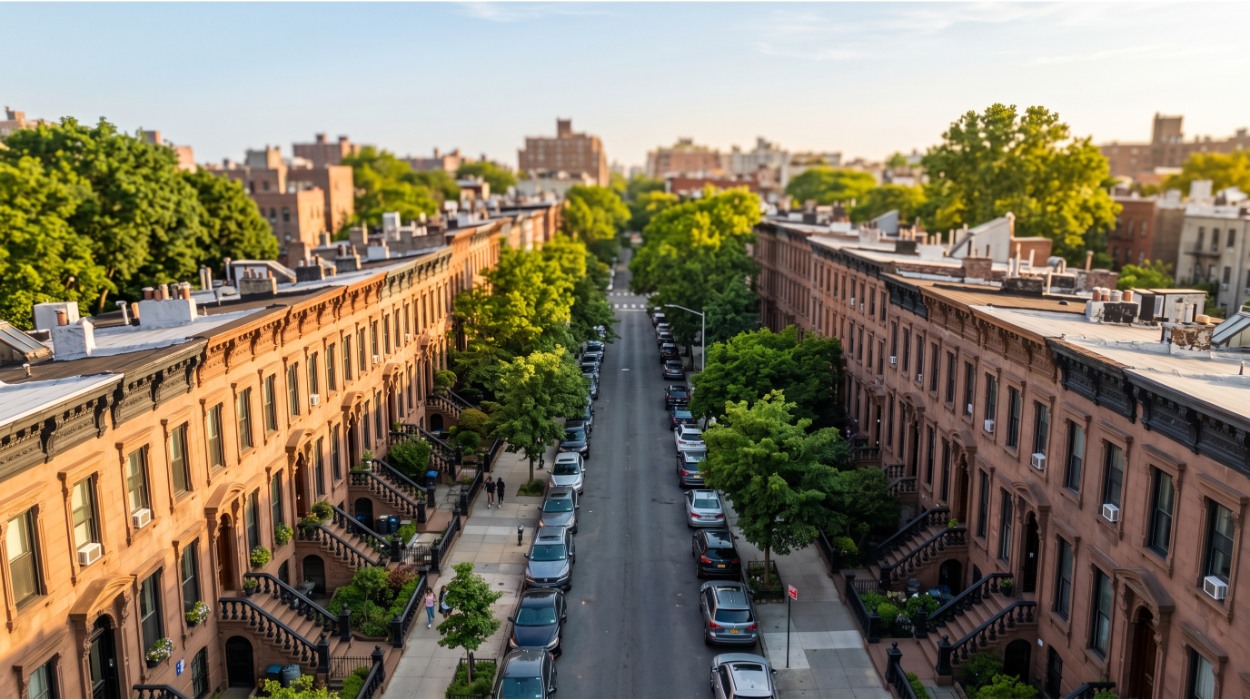
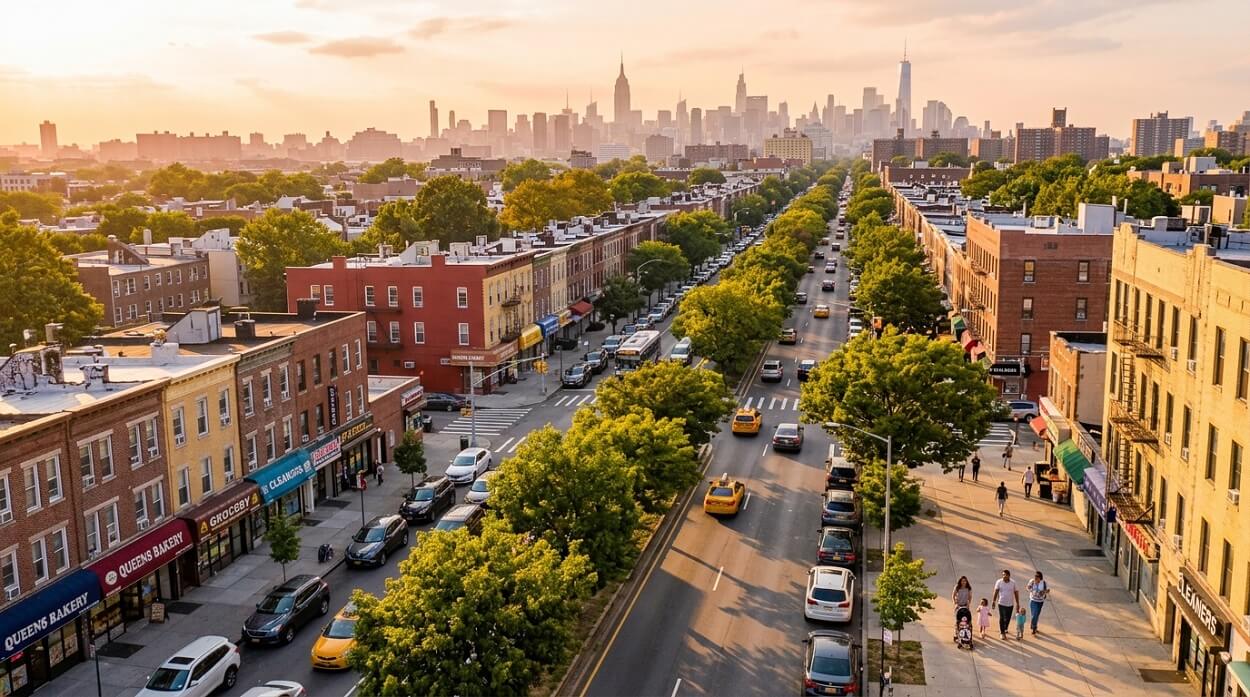
Queens is the borough where first-time buyers actually close. The median asking price across the borough sits around $685,000 to $712,000. Brooklyn's median is well over $1 million. Manhattan doesn't enter the conversation for most buyers earning under $130,000. That price gap is why thousands of first-time buyers land in Queens every year. If you need to orient yourself geographically first, the map of Queens neighborhoods covers all 90+ areas by price and transit zone.
Two programs make these prices even more accessible. HomeFirst offers up to $100,000 in forgivable down payment assistance for qualifying buyers. Income limits are roughly $107,000 for a family of four, and the Queens purchase price cap is $699,000. SONYMA DPAL adds up to $15,000 at 0% interest, stackable with HomeFirst. If you qualify for both, your out-of-pocket costs on a $300,000 co-op could be minimal.
If you earn under $80,000, start with Corona, Briarwood, or Kew Gardens. If you want a house instead of an apartment, jump to Jamaica, Woodhaven, or the Springfield Gardens section. For context on closing costs before you start shopping, see our NYC home selling cost breakdown — many of the same fees apply to buyers too.
What Your Income Can Buy in Queens Right Now
Your income determines your purchase power. At roughly 6.75% on a 30-year fixed mortgage, here is what the numbers look like:
| Household Income | Approx. Purchase Range | Neighborhoods in Range |
|---|---|---|
| ~$80,000 | $350K – $380K | Corona, Briarwood, Kew Gardens, Woodside |
| ~$100,000 | $430K – $470K | Jackson Heights, Elmhurst, Sunnyside, Flushing |
| ~$130,000 | $550K – $600K | Forest Hills, Ridgewood, Springfield Gardens |
| $130K+ (FHA) | $750K – $960K | Jamaica, Woodhaven, Richmond Hill (2-family) |
These are approximate figures. Your debt load, credit score, and down payment size shift the number in either direction. Stack HomeFirst and SONYMA DPAL and the effective purchase power climbs meaningfully for qualifying buyers.
Corona: The Most Affordable Co-ops in Central Queens
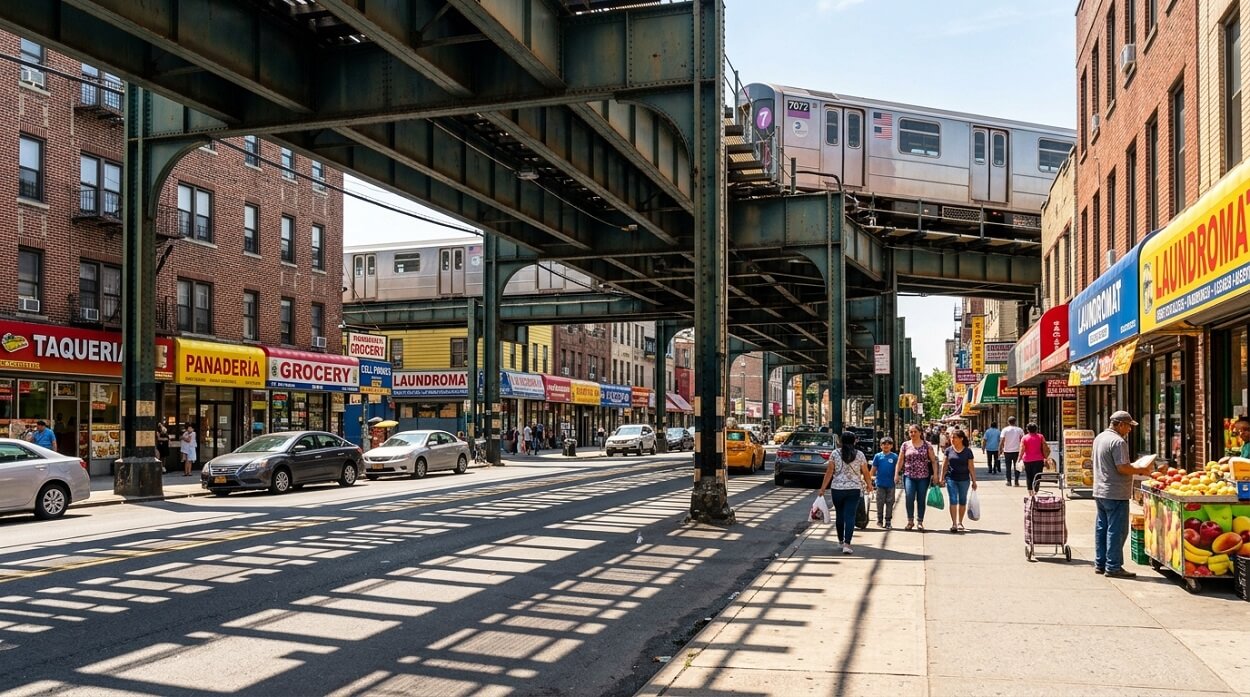
Corona has some of the most affordable co-op prices in all of Queens. One-bedrooms average around $250,000 to $330,000, and studios regularly come in under $250,000. For buyers earning $80,000 or less, this is often the first neighborhood that pencils out.
Co-ops dominate Corona's housing stock. Entry-level studios typically average $180,000 to $250,000. One-bedrooms range from $250,000 to $330,000. Condos are a different tier entirely, averaging around $430,000 to $480,000. Most of the building stock is post-war mid-rise construction from the 1950s through the 1970s.
Transit runs through the 7 train at Junction Boulevard — about 30 to 35 minutes to Grand Central in Midtown on a single-seat ride with no transfer needed.
Co-op boards in Corona tend to be less strict than those in higher-priced Queens neighborhoods. Financial requirements are more flexible, and board interviews are generally straightforward. Everything here falls well under the $699,000 HomeFirst cap. Corona and Elmhurst are generating significant investor interest in 2026 due to accessible prices and strong rental demand. Getting in before that demand pushes prices higher is a real consideration.
Best for: Buyers earning $80,000 to $100,000 who want a co-op close to Midtown without overpaying.
Skip if: You want a quieter, more suburban feel.
Briarwood: Co-ops Starting Around $240K — Among NYC's Three Most Affordable
Briarwood's co-ops average around $240,000 to $280,000. That places it among the three most affordable neighborhoods for co-op buyers in all of New York City — not just Queens.
The housing stock is almost entirely co-ops. Brick mid-rise buildings from the 1950s through the 1970s line the streets near Queens Boulevard. Studios and one-bedrooms average $200,000 to $280,000. The adjacent Lindenwood section averages slightly higher at $260,000 to $300,000, but shares the same transit and infrastructure.
The E and F trains stop at Briarwood-Van Wyck station — a direct shot to Midtown in about 35 minutes. For a neighborhood this affordable, direct E/F access is a genuine advantage most buyers undervalue.
Maintenance fees average $500 to $700 per month including property taxes. The standard 20% down payment on a $250,000 co-op is $50,000. Stack HomeFirst (up to $100,000 forgivable) with SONYMA DPAL ($15,000 at 0% interest), and qualifying buyers at this price point could close with very little out-of-pocket cost. The math here is genuinely compelling for anyone who qualifies.
Best for: Budget-focused buyers who prioritize price and direct subway access above everything else.
Skip if: You need walkable restaurants, retail, or a lively street scene.
Kew Gardens: Schools, Parks, and Co-ops from $240K
Good schools, park access, and a budget under $300,000. In Manhattan, pick one. In Kew Gardens, you get all three.
Co-ops here average $240,000 to $320,000. The housing mix includes both pre-war and post-war buildings, with Kew Gardens Hills skewing slightly lower on average. Studios start around $200,000. The typical one-bedroom buyer is looking at $260,000 to $320,000.
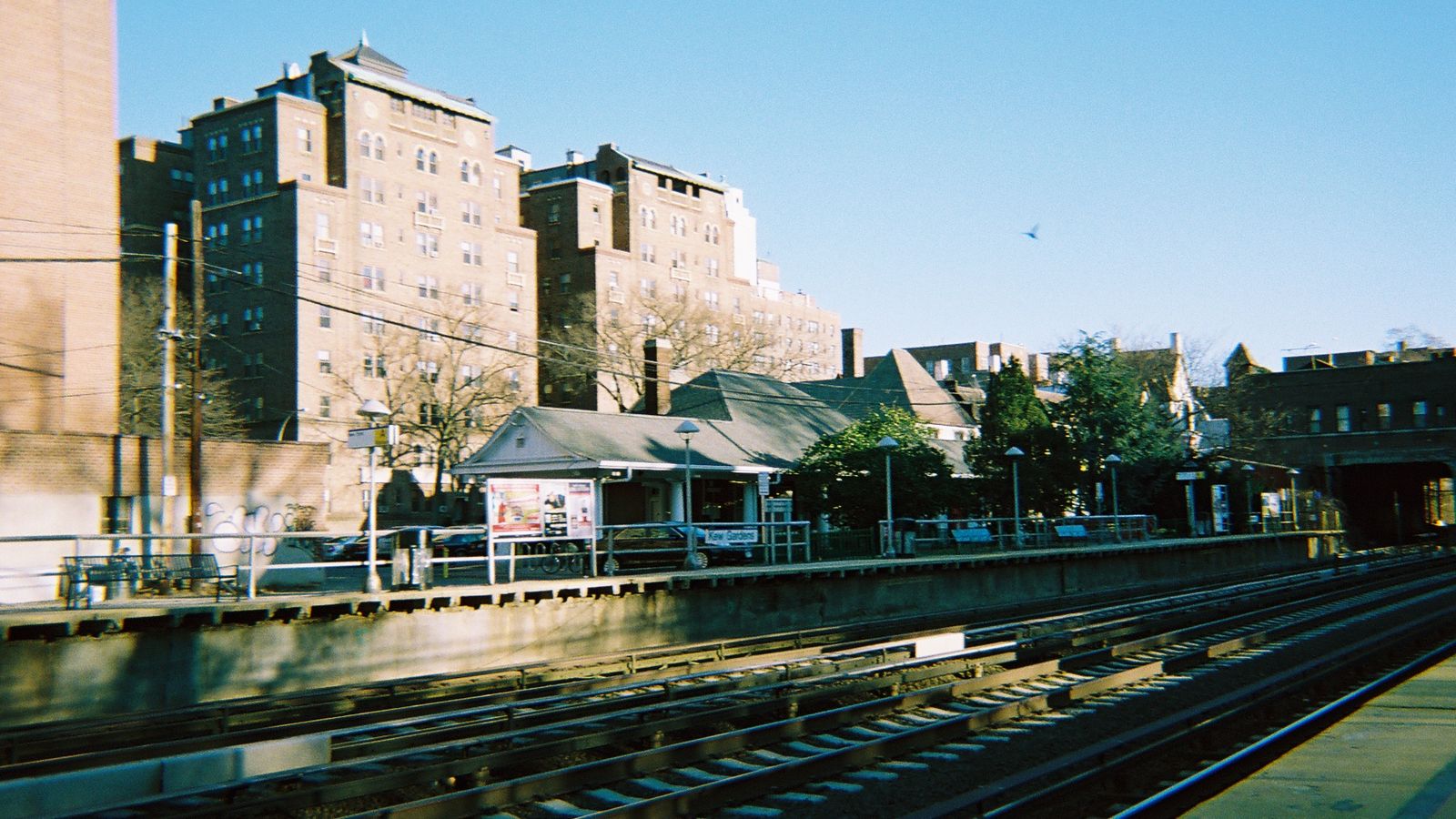
The E and F trains stop at Kew Gardens-Union Turnpike, putting Midtown about 35 to 40 minutes away. An LIRR option nearby provides a backup commute. Forest Park (538 acres) sits right here, offering trails, golf, and green space.
Schools are the key differentiator over Briarwood. District 28 includes some of Queens' better-rated elementary schools. That's the primary reason families choose Kew Gardens, even though Briarwood's prices run slightly lower. The school quality premium is real but modest.
Best for: Families who want parks, school quality, and E/F train access at a price that leaves room in the budget for everything else.
Skip if: You're a solo buyer focused purely on the lowest price per square foot — Briarwood is your move.
Jackson Heights: Five Subway Lines and Co-ops Around $300K–$400K
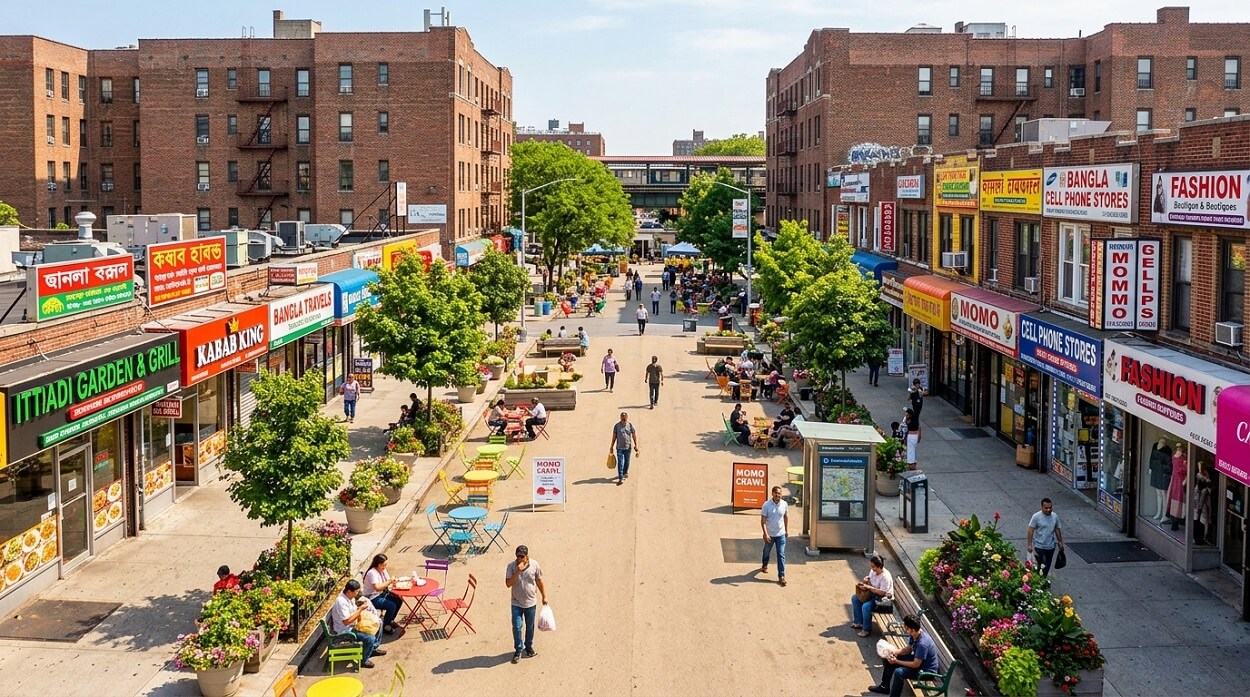
Five subway lines in one neighborhood where co-ops average around $300,000 to $400,000. The transit access alone separates Jackson Heights from everything else at this price. It also consistently ranks among the best places to live in Queens for buyers who prioritize commute flexibility over square footage.
Co-ops here typically range from $330,000 to $383,000 at the median. Studios start around $250,000. Two-bedrooms can reach $450,000 in the better buildings. The historic 1920s and 1930s garden co-ops are the crown jewels — landmarked complexes with private courtyards and architecturally distinctive brickwork.
The E, F, M, R, and 7 trains all serve Jackson Heights — 25 to 30 minutes to Midtown with multiple route options. If one line is disrupted, you have four backups. No other affordable neighborhood in Queens offers that kind of redundancy.
Jackson Heights holds the Guinness record for the most ethnically diverse urban area in the world. 74th Street is a food destination drawing visitors from across the city. HDFC co-ops occasionally appear here, sometimes priced from around $100,000 to $150,000 for a one-bedroom with income caps. Chhaya CDC in Jackson Heights (718-478-3848) offers free homebuyer counseling for anyone exploring affordable options in Queens.
Elmhurst: Affordable Co-ops at the Center of the Queens Transit Grid
Elmhurst sits at the intersection of three subway lines, yet co-op prices average in the $290,000 to $360,000 range. It is consistently one of Queens' most underrated affordable neighborhoods for first-time buyers.
Co-ops average $290,000 to $360,000 across the neighborhood. Condos run higher at around $500,000 to $550,000. For co-op-focused buyers, this is one of the deepest markets in central Queens — inventory stays relatively consistent compared to smaller neighborhoods where listings dry up for months.
The 7, E, F, M, and R trains all serve Elmhurst, adjacent to Jackson Heights and sharing much of the same transit infrastructure. From Elmhurst, you are 30 to 35 minutes to Midtown on most lines. Every co-op here falls well within the $699,000 HomeFirst cap.
Corona and Elmhurst are generating significant investor interest in 2026 due to accessible purchase prices and strong rental demand. That kind of attention tends to push prices upward within 12 to 24 months. Buyers who act sooner capture value before that shift.
Best for: Buyers who want multiple subway options and a central Queens location at below-average prices.
Skip if: You want quiet residential streets or a suburban pace.
The right Queens neighborhood saves you $100K off Brooklyn's price tag. The right agent saves you another $20K off the deal.
NestIt matches first-time buyers with top local Queens agents who know every building, every board, and every block — at lower commission rates.
Mon – Sat · 9 AM – 7 PM ET
Sunnyside: Queens' Hottest Market with Studios from $225K
Sunnyside was ranked the 7th hottest neighborhood in NYC for 2026, with a 43.7% increase in buyer search activity. Studios still average around $225,000. Do the math on how long that lasts.
Studios average around $225,000. One-bedrooms run approximately $360,000 to $370,000. Two-bedrooms sit around $550,000 to $560,000. The median asking price climbed to roughly $475,000 in 2026, up about 10.7% year over year.
The 7 train puts you at Grand Central in about 15 minutes — the fastest commute to Midtown on this entire list. For workers in the Grand Central corridor, Sunnyside's transit time is competitive with parts of Manhattan itself.
A studio at $225,000 with 20% down means roughly $45,000 upfront. Subtract SONYMA DPAL ($15,000) and the effective out-of-pocket drops to approximately $30,000. Stack HomeFirst for qualifying buyers and the cash required at closing shrinks further.
Best for: Midtown commuters who want a 15-minute 7 train ride and a neighborhood with real character.
Skip if: Your budget is above $500,000 — you'd get more space in a quieter neighborhood.
Woodside: LIRR to Penn Station in 15 Minutes, Studios from $215K
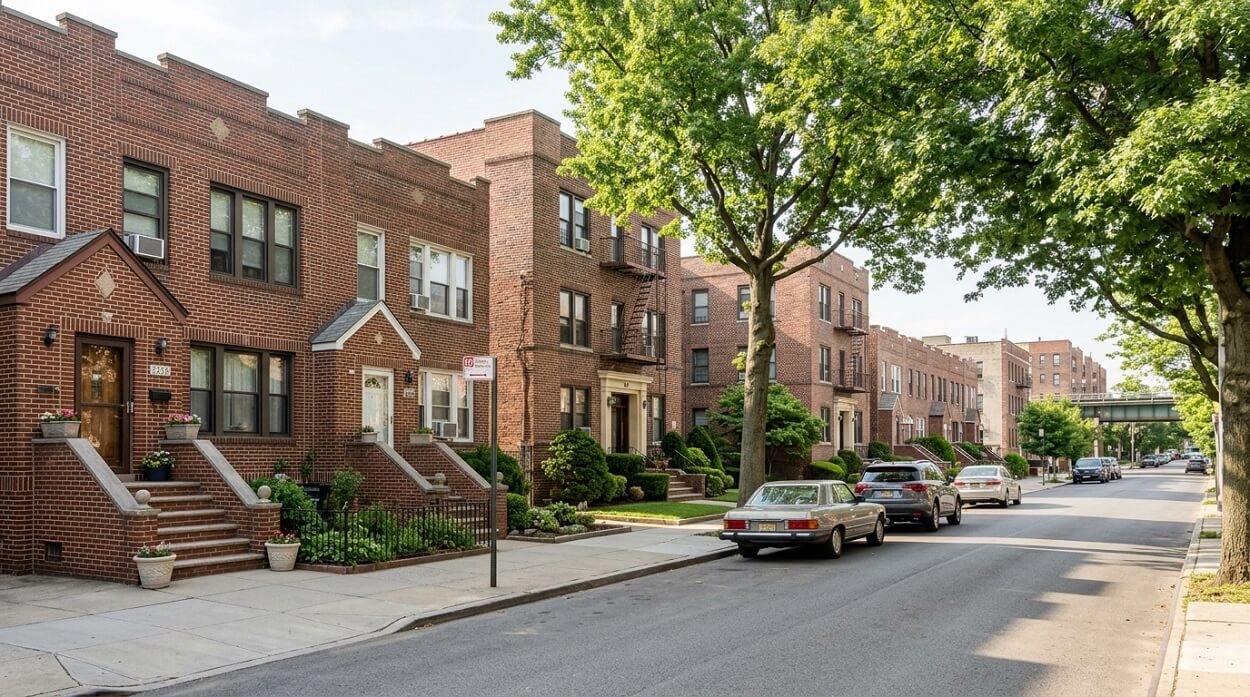
Penn Station in 15 minutes via the LIRR. Studios averaging around $215,000 to $220,000. That's a commute most Manhattan residents would trade their apartment for.
Studios average roughly $215,000 to $220,000. One-bedrooms typically run $340,000 to $360,000. Two-bedrooms sit around $520,000 to $540,000. The co-op market here is the value play — condos are significantly higher at $650,000 to $700,000.
The LIRR stops at Woodside station, putting Penn Station 15 minutes away. The 7 train offers a second route to Grand Central in about 20 minutes. Dual access means a built-in backup whenever one line has service issues.
Woodside is working-class and diverse. Filipino, Irish, and Latin American communities all have deep roots here. The neighborhood is less gentrified than neighboring Sunnyside, which is exactly why co-op prices remain lower. Woodside condos appreciated around 16% in 2024 — that value gap represents an opportunity co-op buyers can capture before prices catch up.
NHS of Queens CDC is headquartered right in Woodside (718-457-1017). Free homebuyer counseling, walk-ins welcome. A 20% down payment on a $217,000 studio comes to roughly $43,000. SONYMA DPAL ($15,000) drops the effective out-of-pocket to about $28,000.
Best for: Buyers who work near Penn Station and want the fastest LIRR commute at the lowest price in Queens.
Skip if: You need a walkable commercial strip or nightlife within steps.
Flushing: 7 Train and LIRR Access with Co-ops from $300K
Flushing has a lower median sale price than the Queens average — around $550,000 versus the borough-wide figure of approximately $712,000. For co-op buyers, entry prices average between $300,000 and $390,000.
Condos average $600,000 to $700,000, driven by newer construction along the 7 train corridor. The co-op inventory is large, including some buildings with Chinese-speaking management — a genuine advantage for non-English-speaking buyers who want to navigate the purchase process in their primary language.
The 7 train terminates at Flushing-Main Street. LIRR service is available at the same station. Direct service to Grand Central takes about 30 to 40 minutes. Flushing Meadows-Corona Park, home of the 1964 World's Fair and the US Open tennis complex, borders the neighborhood.
Local community banks in Flushing sometimes offer co-op financing products tailored specifically to this market. HomeFirst eligibility applies across the co-op price range here. Flushing makes the most sense for buyers who want LIRR access, a culturally rich community, and co-op prices below the Queens median.
Forest Hills: Top Schools and Co-ops Around $340K–$380K
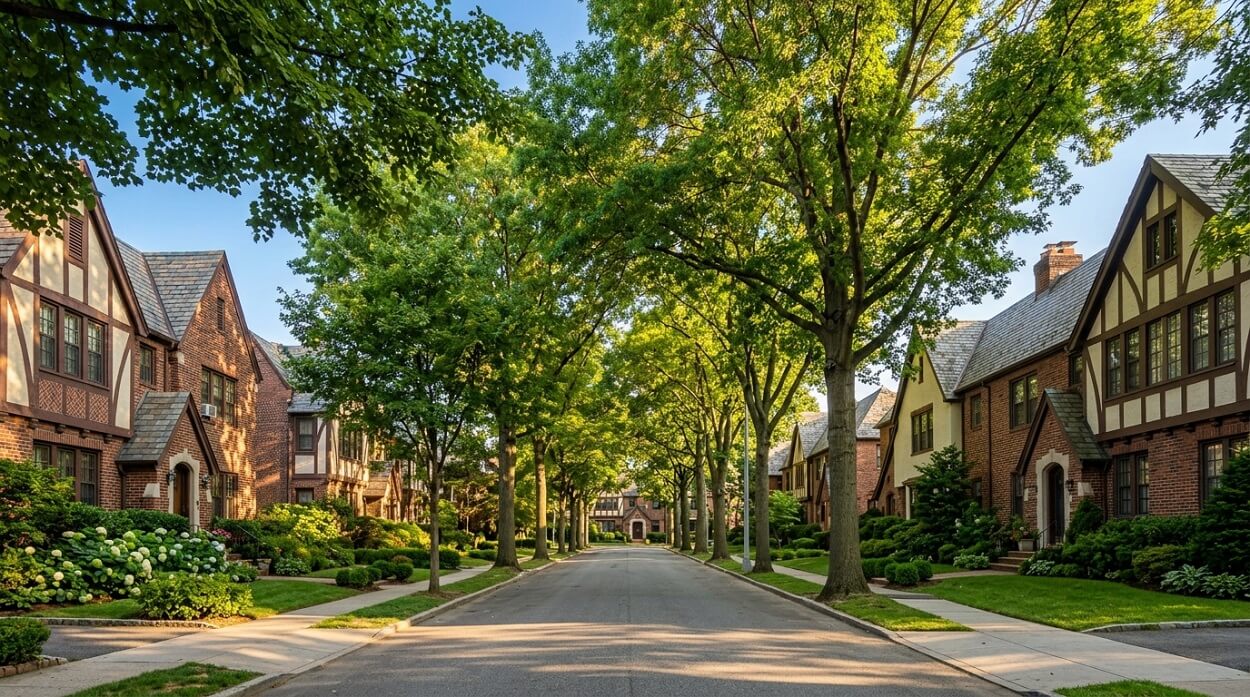
In Westchester, a tree-lined street, a good school district, and a real downtown costs $800,000 or more. In Forest Hills, the median for studios and one-bedrooms runs around $340,000 to $380,000.
Co-ops dominate the housing stock. Forest Hills Gardens, the Tudor-style enclave, starts well above $1 million — it ranks among the most expensive neighborhoods in Queens. But the high-rise co-ops along Queens Boulevard and Austin Street average $340,000 to $380,000. The LIRR plus E, F, M, and R trains serve Forest Hills — 30 to 35 minutes to Midtown with multiple route options.
Schools are the reason Forest Hills commands a premium over Briarwood or Kew Gardens. Forest Hills High School ranks 36th in New York State. PS 144 serves the elementary level. For families, the school quality justifies the extra $60,000 to $100,000 over Briarwood's prices. Our safest neighborhoods in Queens guide covers Forest Hills' crime data in detail — it ranks among the lowest in the borough.
Maintenance fees average $600 to $1,000 per month. A 20% down payment on a $360,000 co-op comes to about $72,000 — within purchase power for a household earning around $100,000. HomeFirst eligibility applies.
Best for: Families who prioritize school quality and a walkable neighborhood with real amenities.
Skip if: You're a solo buyer focused purely on the lowest price per square foot.
Ridgewood: Brooklyn Border Value with Condos Around $600K–$750K
Ridgewood sits on the Queens-Brooklyn border, served by the L and M trains. Condos average around $600,000 to $750,000. The comparison isn't to Corona or Briarwood — it's to Williamsburg and Bushwick, where comparable units run $300,000 to $400,000 more.
Condos are the primary product here, along with some co-ops and multi-family homes. Pre-war railroad apartments line Myrtle Avenue and surrounding streets. New construction is limited, which preserves the neighborhood's architectural character and keeps supply constrained.
The L train at Myrtle-Wyckoff Avenue and the M train provide access to Williamsburg, Bushwick, and Midtown in about 30 to 35 minutes. This is condo territory, which means more flexible financing — conventional, FHA, and VA loans all apply. No board interview. No 20% down requirement for FHA buyers. HomeFirst eligibility covers most of the entry-level condo market here.
Best for: Buyers who want Brooklyn vibes at below-Brooklyn prices, with flexible financing options.
Skip if: You specifically need co-op pricing under $400,000 or a fast commute to Midtown East.
Jamaica and Hollis: House-Hacking Two-Family Homes from $750K
What if your tenant paid a third of your mortgage? In Jamaica and Hollis, two-family homes average around $750,000 to $850,000, and FHA financing lets you put down just 3.5%.
The house-hacking math is straightforward. FHA at 3.5% down on a $780,000 two-family home means roughly $27,000 in down payment. Your lender counts 75% of projected rental income toward qualifying income. Rent one unit at a typical $2,000 to $2,200 per month and your net carrying cost drops roughly 30% to 33% from the gross mortgage payment.
The E and J trains serve Jamaica. The Jamaica LIRR hub provides direct Penn Station service. AirTrain connects to JFK. Some single-family options under $699,000 qualify for HomeFirst.
Best for: Buyers with income above $100,000 who want to build equity through rental income.
Skip if: You're not comfortable managing a tenant or nighttime safety is a top priority.
Woodhaven and Richmond Hill: Quieter House-Hacking at $850K–$960K
Woodhaven and Richmond Hill offer the same house-hacking strategy as Jamaica, in a quieter, more residential setting. Two-family prices here average around $850,000 to $960,000.
In Woodhaven, two-family homes average $840,000 to $900,000. Richmond Hill runs slightly higher at $880,000 to $960,000. Single-family homes are more accessible — Woodhaven averages $720,000 to $780,000, Richmond Hill around $680,000 to $760,000. The same FHA house-hacking math from the Jamaica section applies here.
The J and Z trains serve both neighborhoods along Jamaica Avenue. The A train stops at 88th Street-Boyd Avenue in Woodhaven. Commute times to Midtown run 35 to 45 minutes. Multi-family properties in South Queens consistently attract multiple offers — a signal of strong demand and stable investment fundamentals.
Both neighborhoods are generally safe, working-class residential areas with lower crime rates than Jamaica and Far Rockaway. J/Z train access is considered less premium than E/F/7 lines, which partly explains why prices remain more accessible than comparable areas closer to Manhattan.
Best for: Buyers who want the house-hacking strategy without the urban commercial intensity of Jamaica.
Skip if: You need an express subway line to Manhattan.
Springfield Gardens, Broad Channel, and Arverne: Single-Family Homes Under $750K
You can buy a single-family home with a yard in New York City for well under $700,000. In some of these neighborhoods, prices average around $555,000 to $660,000.
Springfield Gardens averages $650,000 to $750,000 for detached single-family homes. Suburban-sized lots near JFK, driveways, yards, and garages are standard. Bus-dependent with no direct subway. Quiet, residential, predominantly Caribbean-American with three major parks nearby.
Broad Channel averages $555,000 to $600,000. An island community in Jamaica Bay, accessible via the A train or Cross Bay Boulevard. It feels like a beach town, not a New York City neighborhood. Broad Channel appreciated roughly 29% year over year — the fastest of any affordable Queens neighborhood. Inventory is extremely limited. When a house comes up, it moves fast.
Arverne averages $555,000 to $600,000. Rockaway Beach access is the headline. The A train connects to Manhattan. More development is planned for the coming years.
Frequently Asked Questions
What are the cheapest neighborhoods in Queens to buy a home?
The most affordable co-op neighborhoods in Queens are Briarwood, Woodside, Kew Gardens, and Corona, where entry-level units average $200,000 to $330,000. For single-family homes, Springfield Gardens, Broad Channel, and Arverne offer prices averaging $555,000 to $750,000. Two-family homes in Jamaica and Hollis average $750,000 to $850,000. The right neighborhood depends on whether you're buying an apartment or a house, and which subway line serves your commute.
How much do I need to buy a home in Queens as a first-time buyer?
For co-ops, you typically need 20% down plus closing costs. On a $280,000 co-op in Briarwood, that's roughly $56,000 before assistance programs. HomeFirst can provide up to $100,000 in forgivable assistance, and SONYMA DPAL adds $15,000 at 0% interest. For condos and houses, FHA loans require just 3.5% down. A household earning around $80,000 can generally afford a purchase in the $350,000 to $380,000 range at current rates.
What is the difference between a co-op and condo in Queens?
A co-op means you buy shares in a corporation that owns the building, not the unit itself. You'll need board approval, typically 20% down, and you pay monthly maintenance that includes property taxes. A condo means you own the actual unit — financing is more flexible, FHA and VA loans apply, and there's no board interview. Co-ops are cheaper in Queens, averaging 20% to 40% less than comparable condos. Most affordable Queens neighborhoods are co-op markets.
What first-time buyer assistance programs are available in Queens?
HomeFirst provides up to $100,000 in forgivable down payment assistance. Income limits are roughly $107,000 for a family of four, and the Queens purchase price cap is $699,000. SONYMA DPAL offers up to $15,000 at 0% interest, stackable with HomeFirst. Free homebuyer counseling is available through NHS of Queens in Woodside (718-457-1017), Chhaya CDC in Jackson Heights (718-478-3848), and NHS of Jamaica (718-291-7400). HUD-approved counseling is required for most assistance programs. For a full breakdown of what these programs stack up to, see our NYC down payment assistance guide.
Is it better to buy in Queens or Brooklyn?
Queens is significantly more affordable. The Queens median asking price runs around $685,000 to $712,000. Brooklyn's median exceeds $1 million. A co-op that costs $300,000 in Jackson Heights or Elmhurst would cost $500,000 or more in comparable Brooklyn neighborhoods. Queens also offers more subway line diversity, LIRR access, and larger apartment sizes at every price point. For pure value, Queens wins for first-time buyers — and it's not close. Even the most expensive neighborhoods in Queens like Malba and Forest Hills Gardens price well below comparable Brooklyn luxury areas.
What is the most affordable neighborhood in Queens for families?
Kew Gardens and Forest Hills offer the best combination of affordability and school quality for families. Kew Gardens co-ops start around $240,000 with District 28 schools and Forest Park nearby. Forest Hills co-ops start around $340,000 with Forest Hills High School (ranked 36th in New York State) and full E/F/M/R/LIRR transit access. Both neighborhoods are covered in our safest neighborhoods guide with detailed crime data.