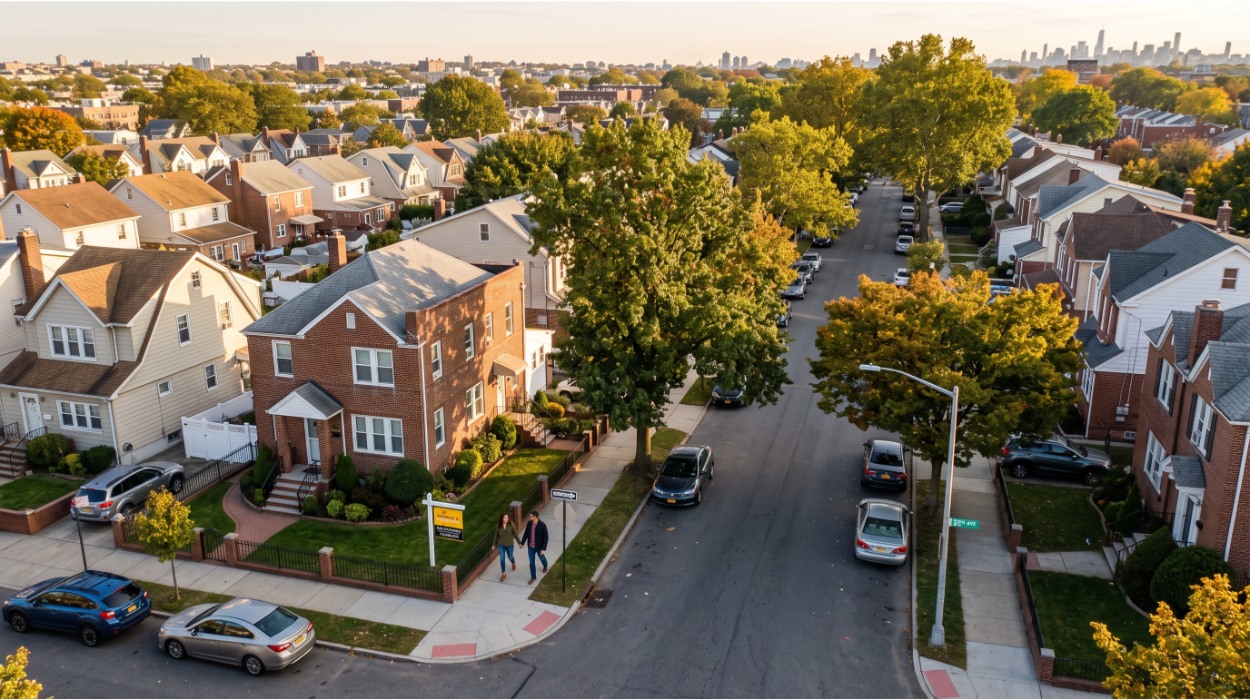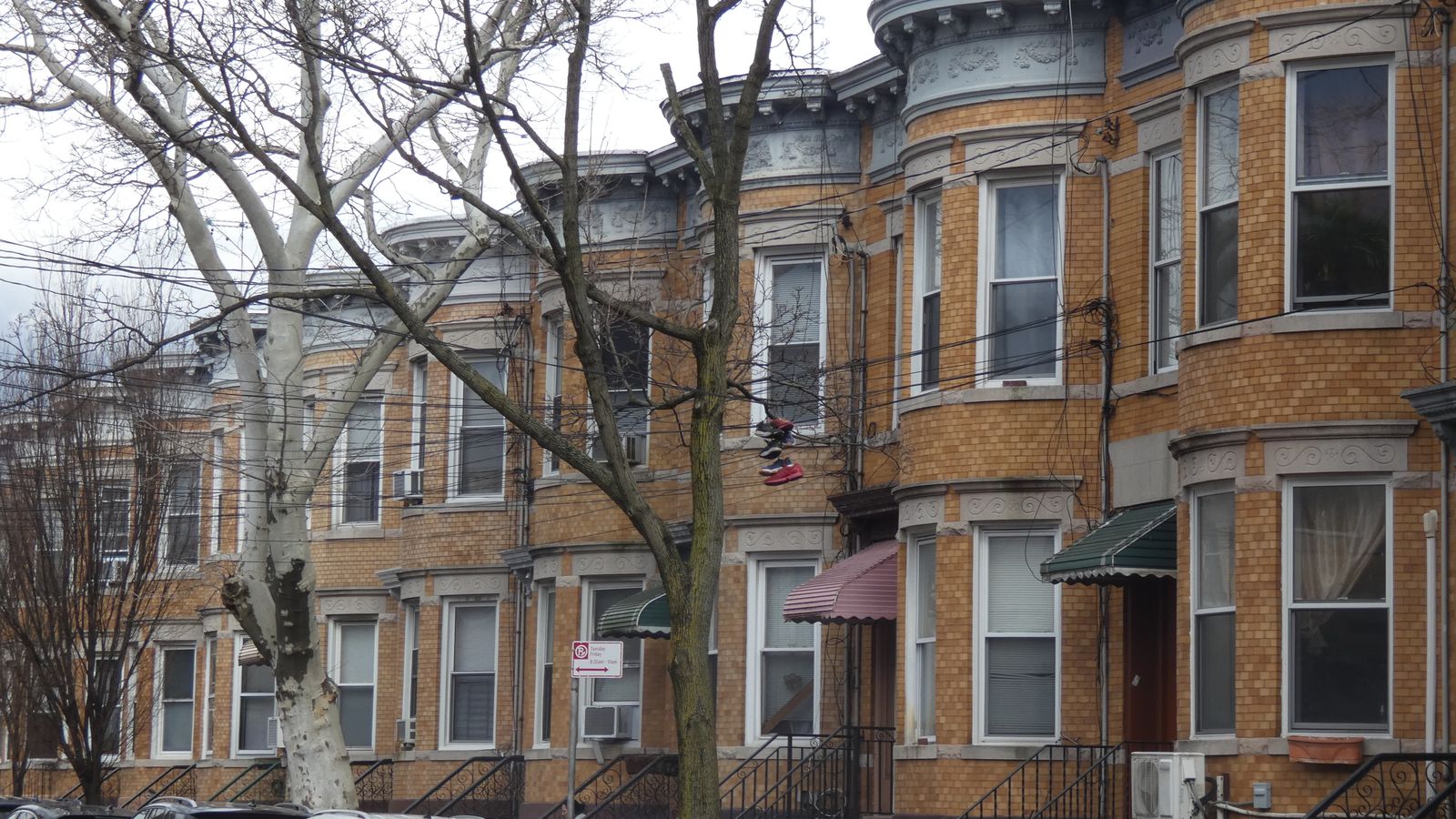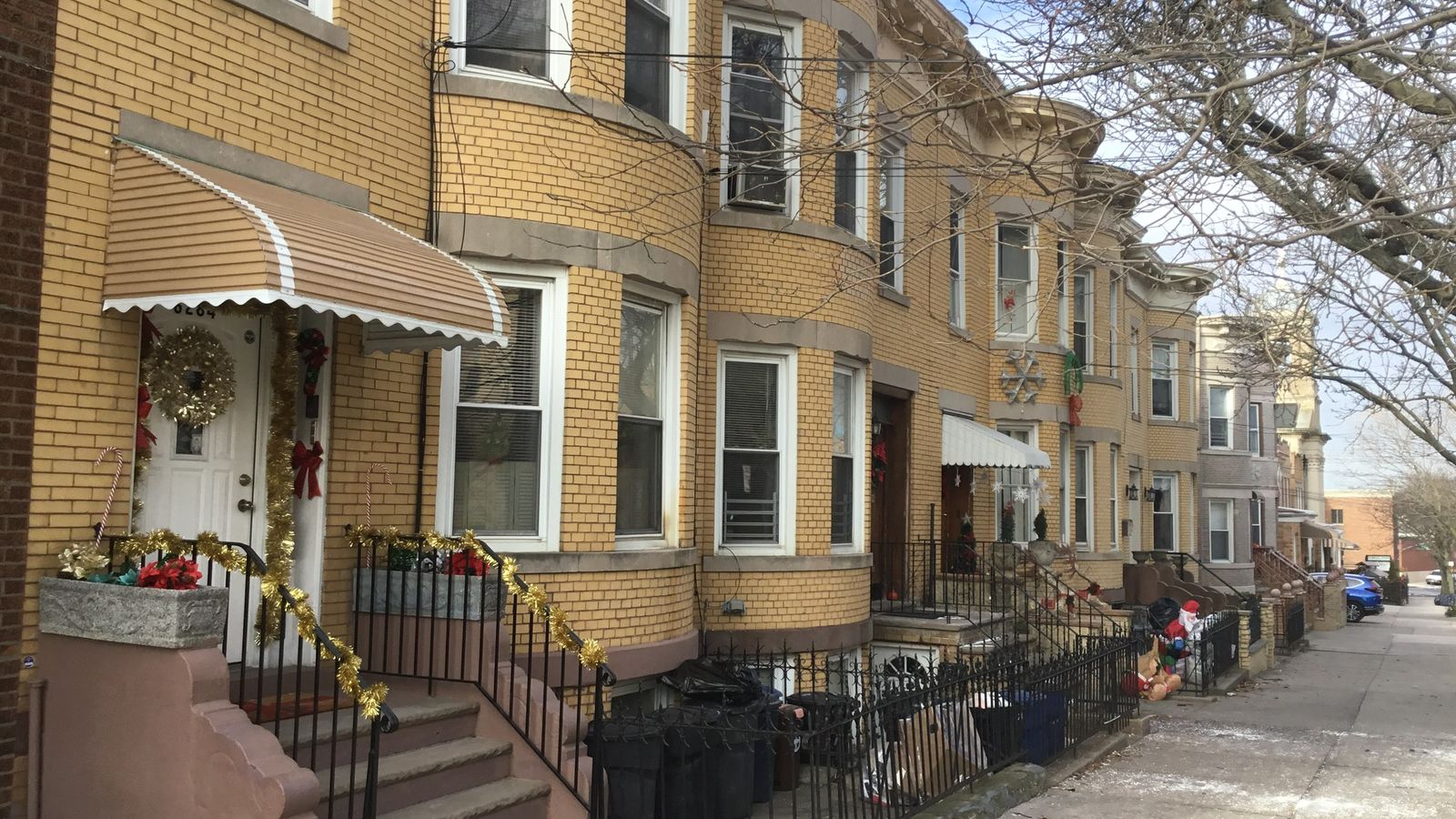

If you're searching for houses for sale in Queens, NY, here's what most guides skip: a two-family home with rental income can drop your effective monthly housing cost by roughly 33%. That single insight changes how you shop, what you qualify for, and which neighborhoods make financial sense.
Queens is the last borough where a middle-income household can still buy an actual house. But the process has hidden costs. Closing costs alone can run $45,000 to $55,000. Co-op boards reject buyers with $500,000 in liquid assets. Property tax exemptions don't transfer from seller to buyer unless you register separately.
What Houses in Queens Actually Cost
Queens home values have trended upward year over year, with the borough-wide median now ranging roughly in the low-to-mid $700Ks when you blend all property types together. But that blended number mixes co-ops, condos, and houses. For actual houses, you're looking at a very different price tier.
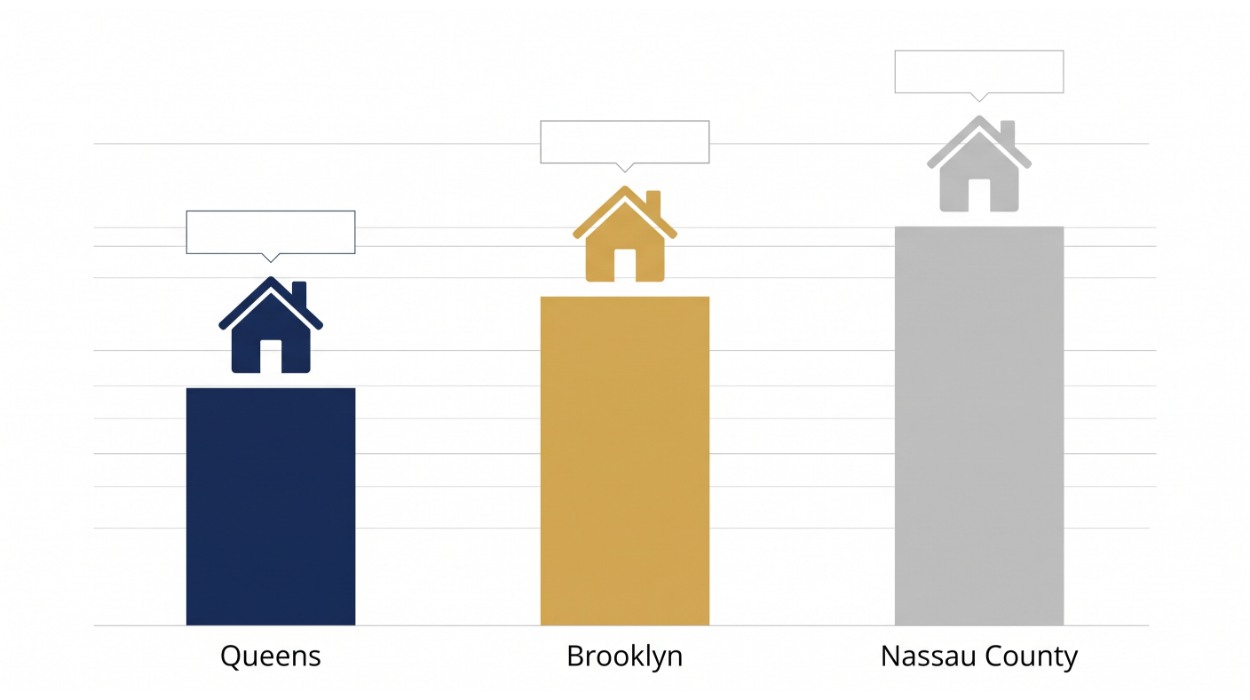
Two-to-four-family prices are climbing faster than single-family, driven by investor demand and the house-hacking strategy. Year-over-year multi-family appreciation consistently outpaces the borough average — which tells you where buyer competition is shifting.
The market leans toward sellers, but it's not extreme. The typical sold-to-list price ratio means most houses sell slightly below asking price — especially in South Ozone Park and Jamaica. Compare that to Manhattan and Brooklyn, where bidding wars over asking price are still standard. Queens gives you negotiation room that barely exists elsewhere in the city.
If your household earns between $80,000 and $160,000, single-family houses at the lower end of these ranges are possible with assistance programs. Two-family homes with rental income expand your qualifying power significantly, often dropping the required household income by $20,000 to $40,000.
Best Queens Neighborhoods for Families (With School Ratings)
Every guide to houses for sale in Queens lists neighborhoods. Very few pair them with school district scores and realistic house prices. For a broader ranking across all buyer types, see our 10 best Queens neighborhoods for home buyers and our guide to the most affordable neighborhoods in Queens. Here's the school-and-price breakdown that matters most for families specifically.
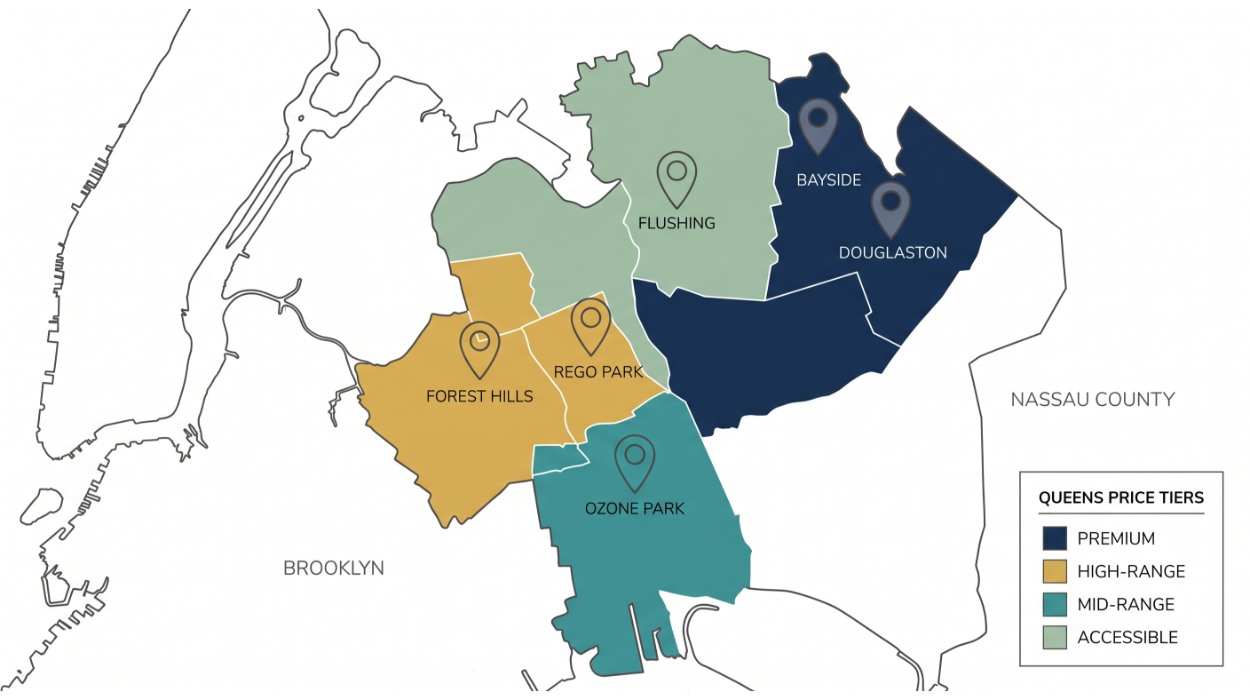
Bayside and Douglaston (District 26)
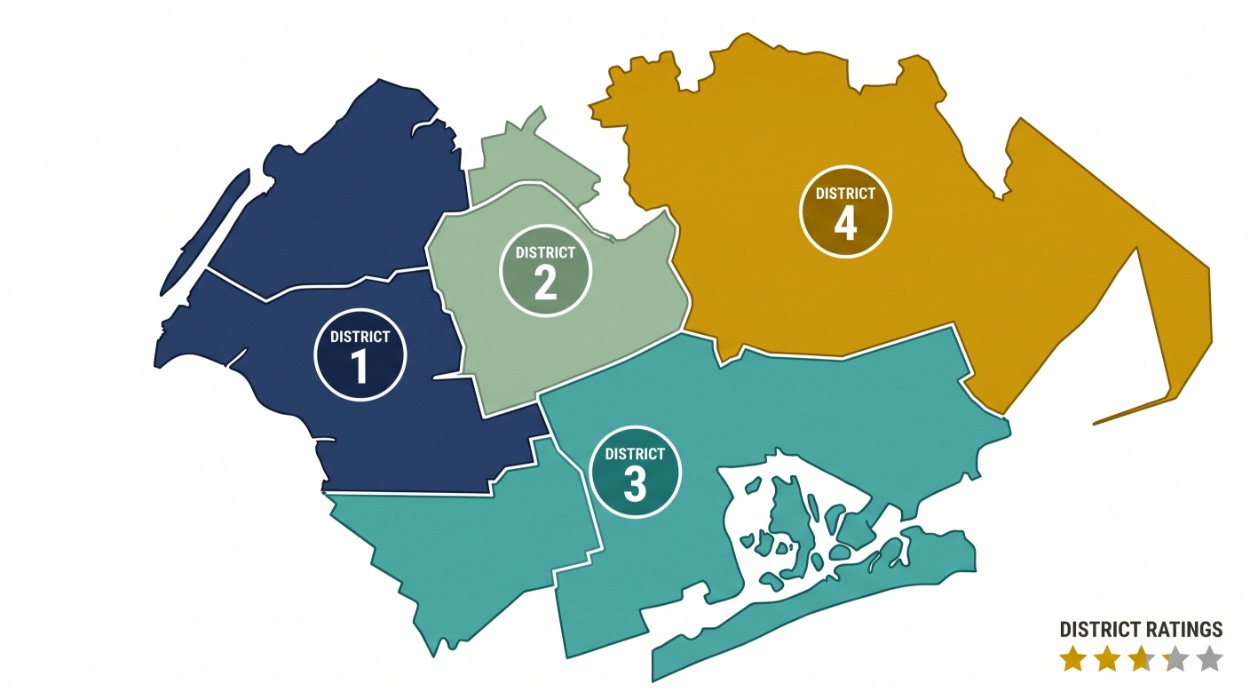
School ratings averaging 8.5 to 8.7 out of 10. House prices typically ranging from the high $700Ks to $1.4M. This is the premium school district in Queens. Waterfront access along Little Neck Bay adds lifestyle value you won't find inland. Commute to Midtown Manhattan runs about 40 to 50 minutes via the LIRR. Expect competition for anything below $900,000.
Forest Hills and Rego Park (District 28)
School ratings 7.1 to 7.8 out of 10. House prices generally in the $600,000 to $900,000 range. Strong balance of school quality, transit access (E, F, M, and R trains), and walkability. Forest Hills Gardens is mostly co-ops — houses cluster further south toward Kew Gardens. Commute to Midtown: roughly 30 to 40 minutes by express train.
Ozone Park and South Ozone Park
School ratings around 5 to 6 out of 10. House prices typically averaging $750,000 to $900,000 for a two-family. This is the strongest area for the house-hacking strategy. Proximity to JFK and the A train keeps rental demand steady. Homes sell below asking more consistently than other Queens neighborhoods. Lots tend to run 20 by 100 feet or larger. Commute to Lower Manhattan: about 45 to 55 minutes via the A train.
Flushing and Fresh Meadows
School ratings 6 to 7 out of 10. House prices averaging $800,000 to $1,100,000. Strong rental demand driven by the international community makes this ideal for buyers considering a two-family. The 7 train puts you in Midtown in about 35 to 45 minutes.
The right agent in Queens knows which blocks appreciate fastest — and which co-op boards will reject you before you apply.
Get matched with a top Queens buyer's agent today. Free service, no commitment.
Mon – Sat · 9 AM – 7 PM ET
The Two-Family Strategy: How House-Hacking Cuts Your Monthly Cost by 33%
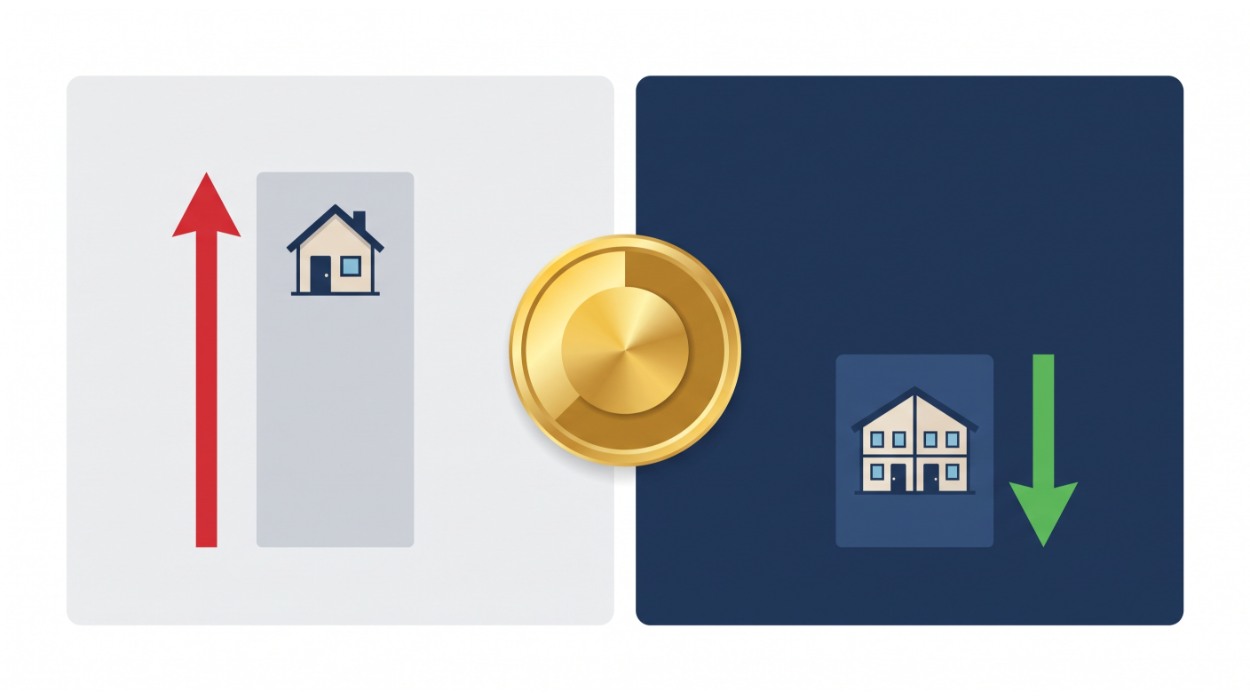
The smartest first-time buy in Queens might not be a single-family house. It might be a two-family home where your tenant covers roughly a third of your mortgage.
Here's what the math looks like on a two-family in Ozone Park. On a purchase averaging in the $850,000 range with an FHA loan (3.5% down), your down payment runs roughly in the high $20,000s to low $30,000s. With estimated rental income from the second unit around $2,000 to $2,400 per month, your net monthly housing cost drops by roughly one-third compared to carrying the full mortgage alone.
The 33% Rule
FHA loans make this accessible. Lenders count 75% of projected rental income toward your qualifying income. You must live in one unit as your primary residence. The 3.5% down payment still applies — compared to 15% to 25% down required for investment properties.
Cap rates on Queens two-family homes typically run between 4% and 6%. Two-family homes with fewer than six units built after 1974 are generally exempt from rent stabilization, giving you more flexibility on rental pricing.
For neighborhood context: Jamaica, Hollis, and Woodhaven two-family homes each sit in different price bands. Jamaica and Hollis tend to offer more affordable entry points; Woodhaven typically runs higher. Do your own current-market research with a Queens-specialized agent before locking in a target. For a complete step-by-step walkthrough of the purchase process, see our how to buy a house in Queens guide.
Down Payment Assistance Programs That Actually Work in Queens
Two programs can put $15,000 to $100,000 toward your down payment on houses for sale in Queens. Both have catches you should know before applying.
Forgiven after 10 years (15 for loans over $40K). Income limit ~$107,300 for a family of four. Requires homebuyer education course.
NYC HPD: hpd.nyc.govDeferred repayment. Income limit ~$172,000. Purchase price cap ~$862,500. Must pair with a SONYMA first mortgage.
sonyma.orgFHA two-unit loan limit in Queens exceeds most two-family prices. 75% of rental income counts toward qualifying. Must owner-occupy one unit.
Your SONYMA-approved lenderThe NYC HomeFirst catch: funding runs in limited cycles and is competitive. Apply directly through the NYC HPD HomeFirst program page early in the fiscal year before money runs out. Expect processing to take 6 to 8 weeks from application to commitment letter.
The SONYMA DPAL catch: the purchase price cap eliminates most single-family homes in premium neighborhoods. This program works best for two-family homes in the Ozone Park, Jamaica, and Hollis price range. Find approved lenders and income tables on the SONYMA Down Payment Assistance Loan page.
If your household income is under $107,000, HomeFirst is the most generous assistance program available anywhere in NYC. Apply before you start house-hunting, not after you find a home. For a deeper breakdown of every NYC stacking strategy, see our NYC down payment assistance guide.
Closing Costs That Blindside Queens Buyers
Your down payment is not the number that will shock you. Your closing costs will.
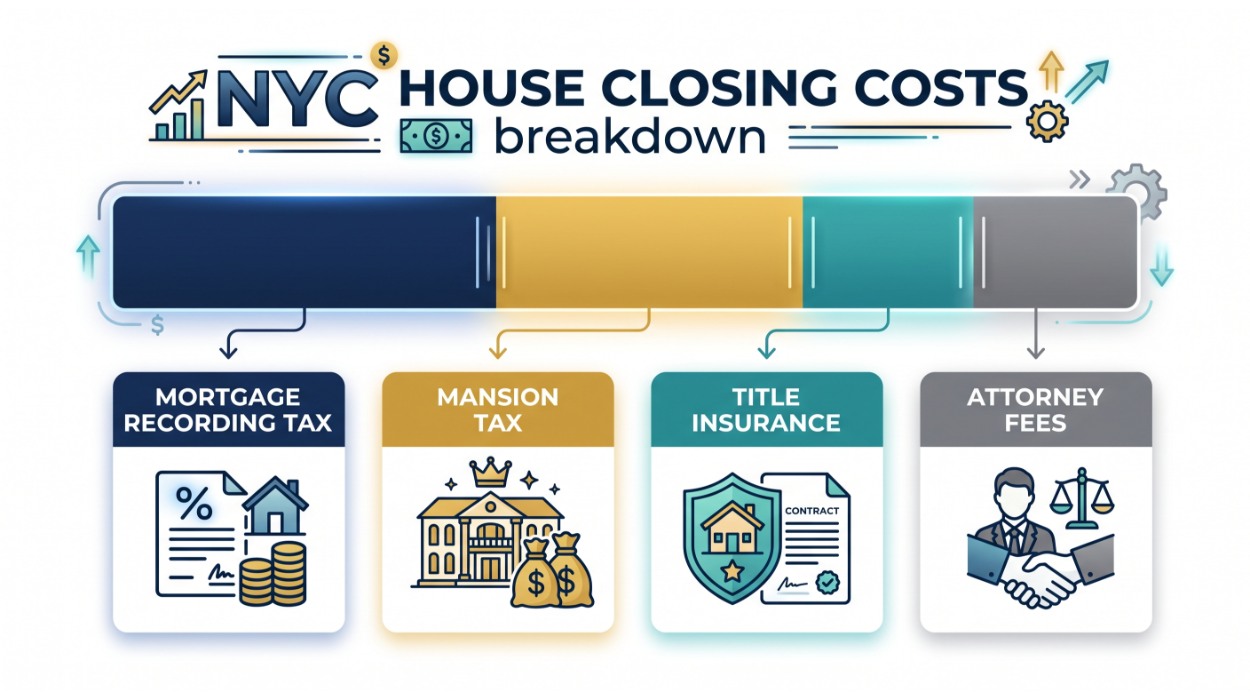
| Cost Item | Rate / Range | Notes |
|---|---|---|
| Mortgage Recording Tax | 1.925% of loan (≥$500K) | No way to avoid on houses/condos |
| Mansion Tax | 1% on purchases ≥$1M | Negotiate below $1M to save ~$10K |
| Title Insurance | Approx. $3,000–$6,000 | Varies by purchase price |
| Attorney Fees | Approx. $2,500–$4,000 | Shop before you're under contract |
| Typical Total | 2%–6% of price | On a $1.2M home: ~$45K–$55K |
Mortgage Recording Tax (1.925% on loans of $500,000 or more). This is a New York State and New York City tax, not a lender fee. On a mortgage in the $800,000 range, expect roughly $15,000 to $16,000. It does not apply to co-ops — one reason co-ops are cheaper to close on.
Mansion Tax (1% on purchases of $1,000,000 or more). This kicks in at exactly $1,000,000. A house listed at $1,010,000? Negotiate to $999,999 and you save roughly $10,000. Frame it as a win for the seller too: buyers searching online filter by "under $1M," so a $999,999 list price generates more showing traffic. Experienced agents use this lever regularly.
Property Taxes and the STAR Exemption Mistake Most Buyers Make
Queens property taxes look reasonable compared to the suburbs — and they hold up against the rest of NYC too.
| Location | Effective Tax Rate | Annual Bill (approx. $900K home) |
|---|---|---|
| Queens | ~0.88% | ~$5,500–$8,000 range |
| Brooklyn | ~0.74% | Slightly lower |
| Nassau County (LI) | 1.5%–2.5% | $13,500–$22,500+ |
For buyers weighing Queens versus Nassau County, the annual tax savings can run $5,500 to $14,500 or more depending on the home price. That compounds significantly over a 10-year hold.
STAR Exemption — register within 30 days of closing
Basic STAR saves $300 to $700 per year on primary residences. Enhanced STAR (age 65+, income under $98,000) saves $650 to $800. SCHE (age 65+, income under $58,399) can save up to $4,000 per year.
From Pre-Approval to Keys: How Long Buying a House in Queens Takes
If you start the pre-approval process today, plan for 3 to 5 months to closing for a house or condo. Co-ops take 4 to 7 months.
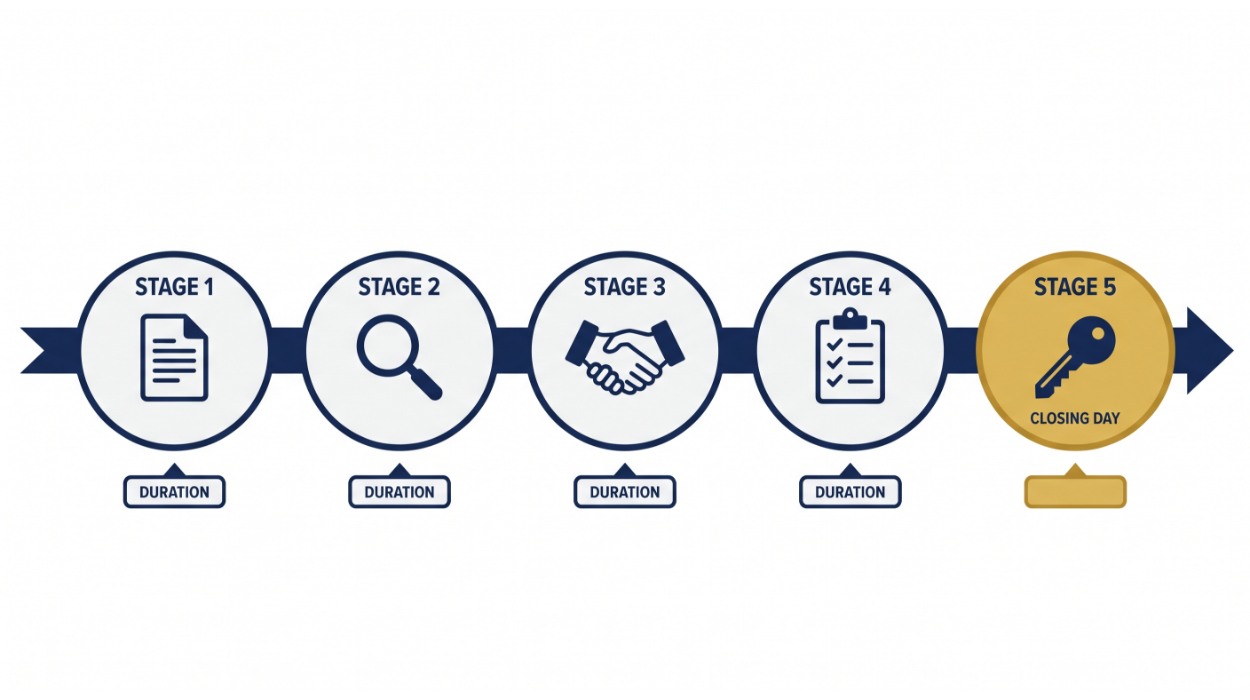
Co-op boards slow everything down. Board package preparation takes 2 to 3 weeks. Boards require debt-to-income ratios of 25% to 28%, stricter than most lenders. They want 12 to 24 months of post-closing liquidity. Rejection rates run 3% to 5% citywide and climb to 10% to 20% in premium buildings.
Where to Browse Houses for Sale in Queens, NY
When you're ready to start browsing active listings, use these platforms. Each has different strengths.
- StreetEasy — the best platform for Queens-specific house listings. Set price, neighborhood, and property type filters to houses or multi-family only. Days-on-market data helps you spot motivated sellers.
- Zillow — largest inventory, good for saved searches and automatic price-drop alerts.
- Redfin — most accurate sold price history and days-on-market data. Use it to check whether a listing is priced realistically before you make an offer.
- OneKey MLS (onekeymls.com) — the official MLS for Queens. More complete data than third-party aggregators and fewer stale listings.
Three filters to set before you start browsing
- Property type: Select "single family" or "multi-family." Without this filter, co-ops and condos flood your results and distort your price expectations.
- Price ceiling: Set your maximum 5% to 10% below your true buying power. That gap covers closing costs so you don't run short at the table.
- Days on market: Start with listings sitting 30 or more days. Fresh listings will appear regardless; older listings often have room to negotiate.
One thing no listing site shows you: co-op maintenance fees and board financial health. For any co-op in Queens, ask your agent for the building's audited financials before you fall in love with a unit. For more on finding the right Queens neighborhoods, see our best neighborhoods for families guide and the complete Queens homes for sale guide.
Frequently Asked Questions About Buying a House in Queens
Is Queens a good place to buy a house?
Yes, for buyers who want an actual house with reasonable proximity to Manhattan. The sold-to-list ratio gives you negotiation room. Inventory leans toward sellers but isn't extreme. Year-over-year appreciation is consistent. Property taxes at roughly 0.88% effective rate are significantly lower than Long Island suburbs. Queens rewards buyers who hold 5+ years.
How much do you need to make to buy a house in Queens?
For a single-family home in the $850,000 to $1,100,000 range, you generally need a household income of $130,000 to $180,000 or more, depending on your down payment and existing debt. For a two-family home with an FHA loan where 75% of projected rental income counts toward qualifying, the threshold drops to roughly $110,000 to $140,000.
What is the difference between a co-op and a house in Queens?
A house is real property you own outright, including the land. A co-op is shares in a corporation that gives you a proprietary lease. Houses have higher purchase prices but no board approval, no monthly maintenance fees, and no restrictions on renovations or subletting. Co-ops skip the mortgage recording tax (1.925% on loans over $500,000), making them cheaper to close on.
Can you get down payment assistance for a house in Queens?
Yes. NYC HomeFirst offers up to $100,000 as a forgivable grant for households earning under roughly $107,300. SONYMA DPAL provides $15,000 at 0% interest with deferred repayment for households earning under roughly $172,000. A purchase price cap applies to the SONYMA program. Both have income limits and application requirements — apply before you find a home.
What are closing costs on a house in Queens?
Expect 2% to 6% of the purchase price. The biggest surprise is the mortgage recording tax at 1.925% on loans over $500,000. On a mortgage in the $800,000 range, that runs roughly $15,000 to $16,000. If you're buying at or above $1,000,000, you also owe the 1% mansion tax. These costs come on top of your down payment.
Where can I find houses for sale in Queens, NY?
StreetEasy has the strongest coverage of Queens houses. Zillow has the largest inventory with price-drop alerts. Redfin has the most accurate sold price and days-on-market data. OneKey MLS is the official Queens MLS with the freshest listings. Always filter by property type before browsing so co-ops don't crowd out house results.