
Queens has a median home price roughly 23% lower than Brooklyn's. That gap is why more first-time buyers with kids are heading east rather than deeper into Brooklyn. But Queens spans 109 square miles. Picking the wrong pocket means a 20-minute commute difference, a significant price swing, or a school pipeline that falls apart after fifth grade. You need more than a top-ten list — you need the full picture.
This guide covers seven neighborhoods, each broken down by price range, school pipeline, commute, and monthly cost. If you're a first-time buyer with a household income between $100,000 and $180,000, this was written for you. For a broader view of what's on the market, start with our complete guide to homes for sale in Queens, NY.
Co-ops vs. Single-Family Homes: What First-Time Buyers Must Know
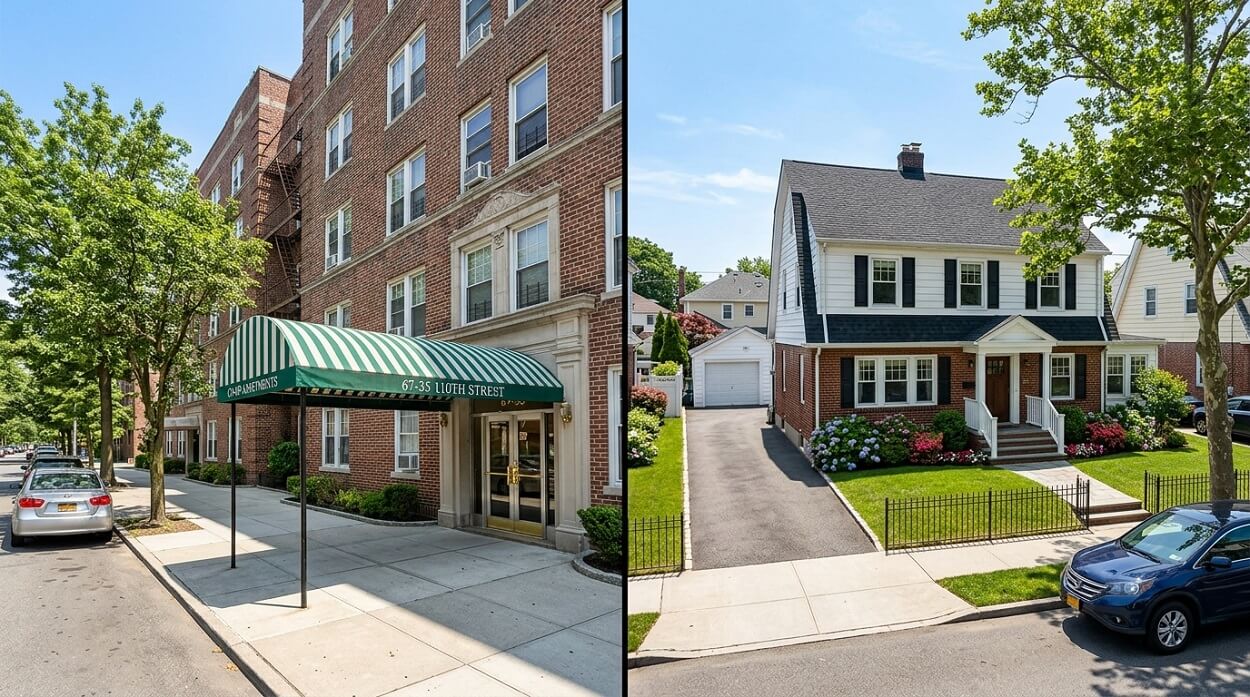
You find a two-bedroom listing in Forest Hills at a price that makes your heart rate spike. Then your agent explains it's a co-op with $800 per month in maintenance fees, and a board of strangers gets to decide whether you're worthy of buying it. No explanation required if they say no.
That's the co-op reality check every Queens buyer needs before touring.
Co-ops in Queens average significantly below comparable condos — often 15 to 25 percent lower. Closing costs run 1 to 3 percent versus 3 to 6 percent for condos and houses. But co-ops charge monthly maintenance fees, typically in the $550 to $800 range in northeast Queens, covering property taxes, heat, and water. That number has been climbing. Some buildings have seen 8 to 12 percent annual increases over recent years.
Co-op boards set strict financial requirements. Expect to put down 20 percent or more, with a minimum credit score in the 680 to 700 range. Many boards require one to two years of post-closing liquidity.
"Today co-ops are more affordable for first-time buyers, especially in Queens where you can find well-maintained buildings with solid financials," says Lou Matinale, a broker who specializes in Queens co-ops.
When does a co-op win? When you need the lowest entry price, plan to stay five-plus years, and can handle the board process. When does a single-family home win? When you want full control, outdoor space, and long-term equity in the land itself.
School Pipelines in Queens: Why Elementary Ratings Aren't Enough
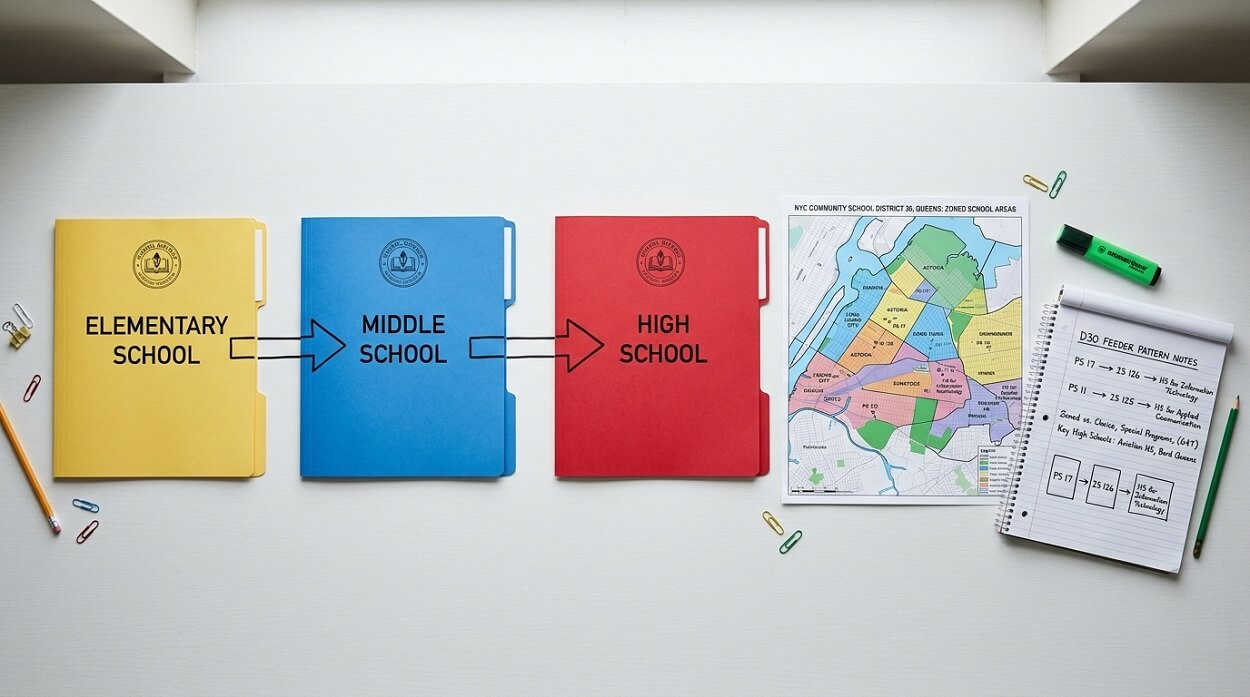
A neighborhood might have an 8-out-of-10 elementary school. You buy there feeling confident. Then your child finishes fifth grade and feeds into a middle school rated 5 out of 10, with 130 percent capacity utilization. That's not a hypothetical. It happens in Queens.
Your child's elementary school zone determines the middle school they feed into. Middle school performance shapes which high schools become realistic targets through the city's application process. A strong elementary school feeding into an overcrowded, underperforming middle school is a pipeline problem.
District 26 covers Bayside, Douglaston, and Fresh Meadows. It's the highest-rated school district in all of New York City — not just Queens. The pipeline leads to schools like Townsend Harris High School, one of the most competitive public high schools in the country.
District 28 covers Forest Hills and Kew Gardens Hills. Elementary schools rate around 7 to 8. But documented overcrowding at the middle school level affects class sizes and resources.
District 30 covers Jackson Heights and Astoria. Quality varies dramatically from school to school. You must research the specific elementary school for the block you're considering.
"Ratings alone aren't enough," says Nitin Gadura, an education consultant who works with Queens families. "You need to look at the feeder patterns, the middle school capacity, and the high school options that open up from each pathway."
Total Cost of Ownership: What You'll Actually Pay Each Month
Start with your mortgage payment. At prevailing 30-year fixed rates, a loan in the $550,000 range (assuming 10 to 20 percent down on a $600,000–$700,000 home) typically runs in the $3,500 to $3,900 per month range. Rate changes can shift this meaningfully — always model at current rates, not historical averages.
Add property tax. Queens has an effective rate of approximately 0.88 percent. On a $700,000 house, that works out to roughly $513 per month. The STAR exemption saves primary-residence owners $1,400 to $2,500 per year.
If you're buying a co-op, your maintenance fee of $550 to $800 per month typically covers property tax, heat, water, and building upkeep. That simplifies the math but reduces your control over costs.
Check your FEMA flood zone. Flood insurance runs $1,200 to $3,000 per year if your property sits in a designated flood area. Parts of Flushing, Howard Beach, and the Rockaways fall into high-risk zones. Verify the FEMA flood map for any specific block before making an offer — not just the neighborhood in general.
Factor in commuting. An unlimited MetroCard runs approximately $132 per month. An LIRR monthly pass costs roughly $234 to $308 depending on the zone. Two LIRR commuters could add more than $600 per month to household expenses.
NYC's HomeFirst program offers up to $100,000 as a forgivable down-payment assistance loan for buyers earning at or below 80 percent of the Area Median Income. SONYMA's Down Payment Assistance Loan adds $15,000 at zero percent interest. Both programs are currently funded and available. See our full NYC down payment assistance guide for income limits, application timelines, and how to stack programs.
Buying in Queens with a growing family? Let's map out your actual monthly cost before you tour.
NestIt agents specialize in Queens family neighborhoods and can walk you through co-op boards, school zones, and total-cost modeling — at no cost to you.
Mon – Sat · 9 AM – 7 PM ET
Bayside: The Gold Standard for Families Who Prioritize Schools
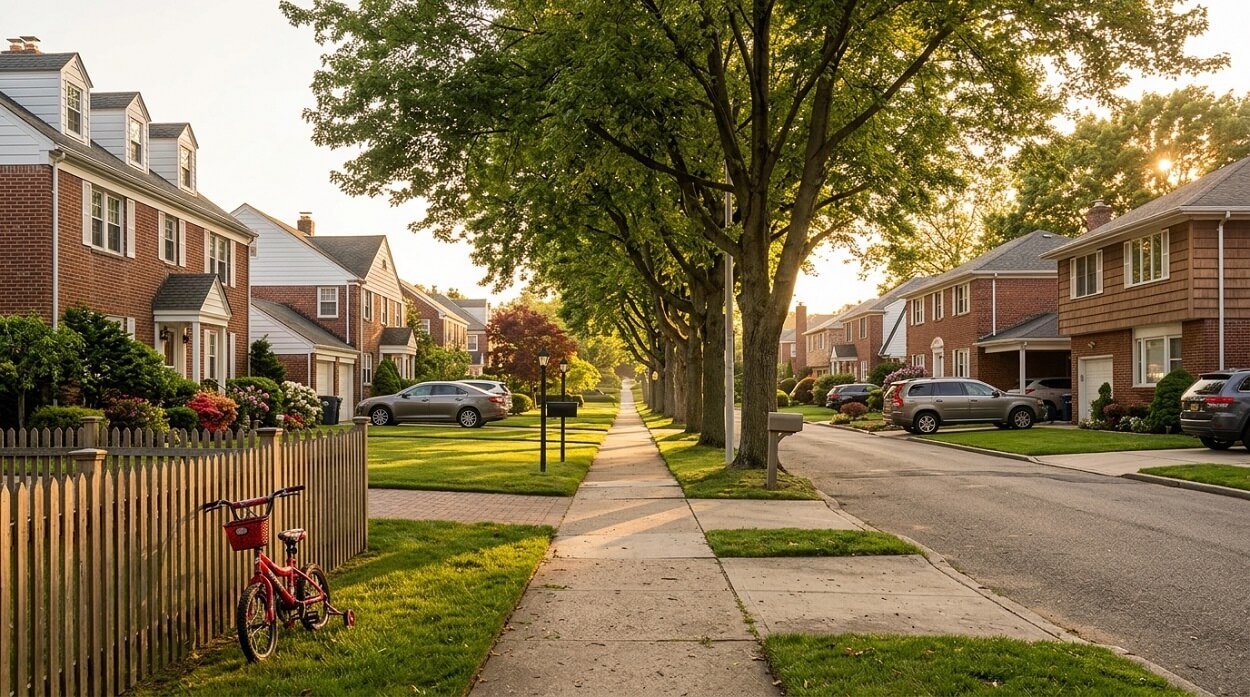
Bayside sits in District 26, the highest-rated public school district in all of New York City. Not just Queens. The entire city. That fact alone puts it at the top of most family buyers' lists.
Single-family homes in Bayside typically range from the upper $800,000s to above $1 million, depending on size, condition, and block. The housing stock is mostly detached and semi-detached homes: colonials, split-levels, and the occasional Tudor on tree-lined streets. The area feels suburban. Kids ride bikes. Neighbors know each other.
Schools
Schools rate around 8.5 out of 10 across the pipeline. Elementary schools are strong. Middle schools maintain quality. The high school pathway includes access to Townsend Harris, a nationally ranked magnet school that draws students from across Queens.
Commute
The commute runs through the LIRR, with Bayside Station offering 28 to 35-minute rides to Penn Station. There is no subway service here. Budget for a monthly LIRR pass if both adults commute to Manhattan.
Neighborhood life
Bell Boulevard is the commercial spine: Korean barbecue, dim sum, coffee shops, and family-run businesses. Crocheron Park offers 47 acres of waterfront green space on Little Neck Bay. Fort Totten has walking trails and a pool.
Best for: School-priority families with higher household income and the flexibility to build schedules around the LIRR.
Watch for: Household income requirements are higher here to comfortably carry a single-family home. Properties near Little Neck Bay require flood map checks, as some blocks trigger mandatory flood insurance.
"Visit any neighborhood you're considering at multiple times of day," says Julian Armas, a Queens buyer's agent. "Drive through on a Tuesday evening, walk around on a Saturday morning."
Forest Hills: Co-op Central With Strong Schools and a Real Downtown
Forest Hills has the most family-friendly co-op inventory in Queens. But maintenance fees have risen steadily for three years, changing the buying math for first-time purchasers.
Single-family homes range from the $600,000s to the $900,000s. Co-ops start significantly lower — especially north of Queens Boulevard, where two-bedroom units can be found starting in the $300,000s. The neighborhood has one of the highest co-op concentrations in the borough, giving buyers more inventory options.
Schools
Schools fall under District 28 with ratings averaging around 7.8 out of 10. Elementary schools are solid. The documented issue is middle school overcrowding — several District 28 middle schools operate above design capacity, which affects class sizes and resources. Research the specific feeder school for any block you're considering.
Commute
Excellent. E and F express trains reach Midtown in 25 to 30 minutes from 71st-Continental Avenue, one of Queens' major transit hubs. Among family-friendly neighborhoods in Queens with subway access, Forest Hills ranks at the top.
Neighborhood life
Austin Street is the heart of Forest Hills — a genuinely walkable downtown with restaurants, boutiques, a movie theater, and real sidewalk life. You can grab dinner, pick up groceries, and get the kids ice cream without a car. That's rare in Queens.
Best for: Subway-access families comfortable with co-op ownership who want a walkable neighborhood with real commercial life.
Watch for: Maintenance fees trending upward. Request the building's financial statements and recent board meeting minutes before making an offer. The private Forest Hills Gardens enclave (homes well above $2M) can skew neighborhood price averages online.
"Rising maintenance is creating a buyer opportunity in some buildings," says Gerard O'Connell. "Sellers are pricing lower to attract offers, but buyers need to look at the building's financial health, not just the listing price."
Fresh Meadows: District 26 Schools at a Lower Price, With a Commute Trade-off
Fresh Meadows shares Bayside's top-ranked District 26 schools but costs considerably less for comparable housing. So why don't more buyers talk about it? The commute.
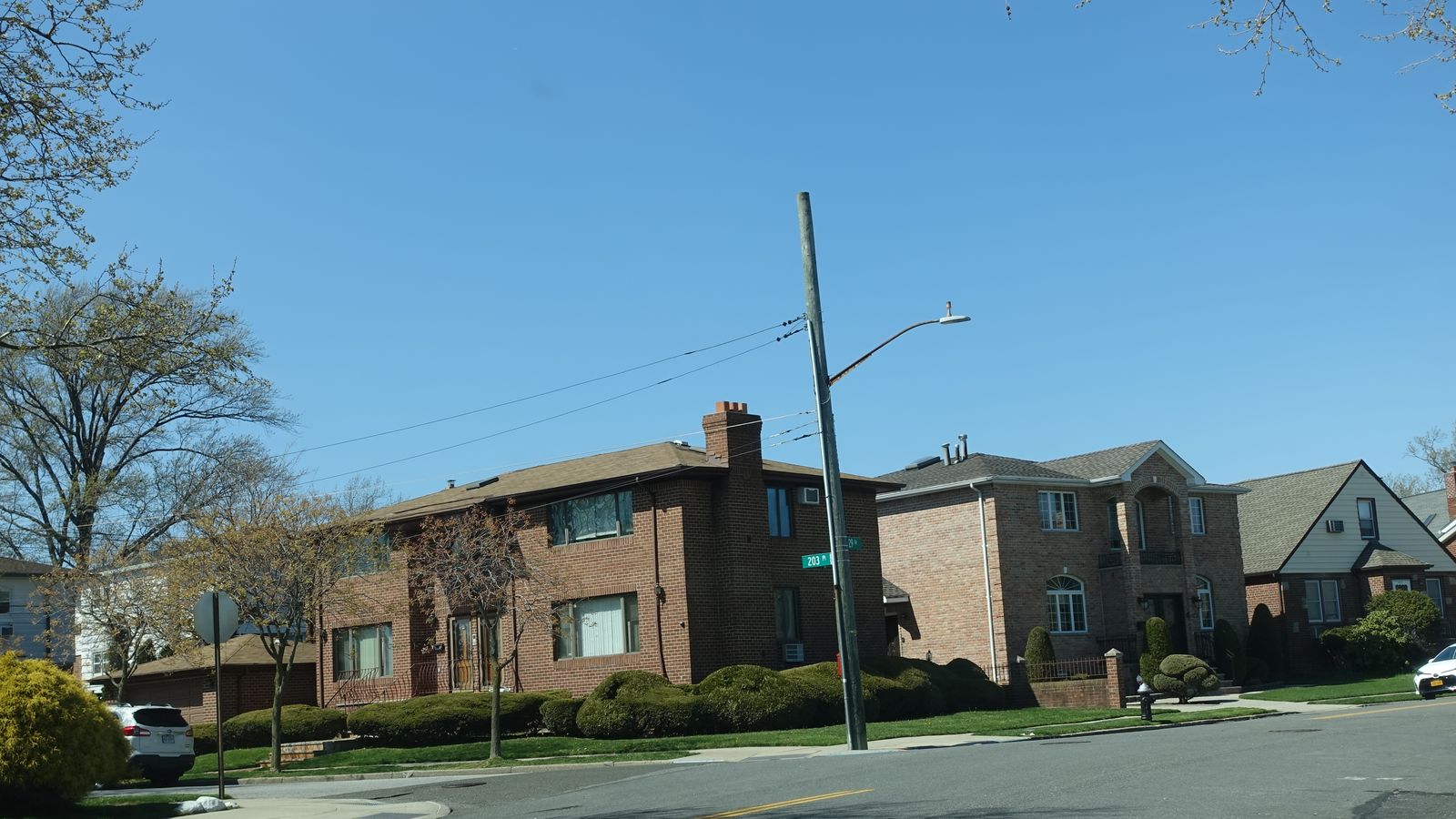
Single-family homes in Fresh Meadows range from the low $700,000s to the mid-$900,000s. The housing stock mixes detached single-family homes with attached row houses — brick colonials, ranches, and cape cods on quiet residential streets. Co-ops are also available in several well-maintained complexes, offering entry points well below single-family prices.
Schools
Schools rate around 8.2 out of 10. Because Fresh Meadows sits in District 26, your child enters the same high-performing pipeline as Bayside and Douglaston. Same district, same schools, same Townsend Harris pathway. This is the single biggest selling point of this neighborhood relative to its price.
Commute
The trade-off. No subway station. No LIRR stop. You rely on Q17 and Q88 bus lines, which take 40 to 55 minutes to reach Midtown depending on traffic and transfers.
Best for: Remote or hybrid workers, single-commuter families, or buyers who prioritize schools above all else and can structure work around a longer travel time.
Watch for: If both adults commute to Manhattan five days a week, Fresh Meadows will test your patience. A car becomes close to essential for daily errands and school pickups.
Jackson Heights: The Best Subway Commute in Queens on a First-Time Buyer Budget
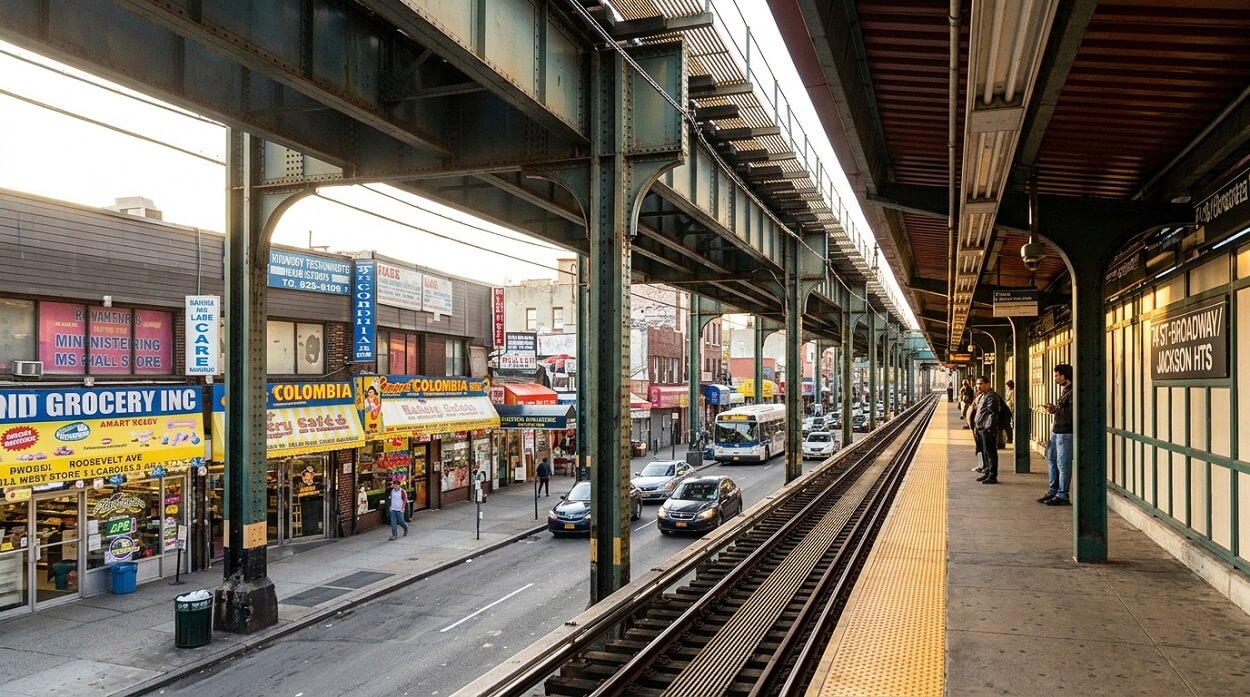
About 22 minutes on the E express to Midtown. Co-ops available well under $450,000. If your top priorities are commute time and entry price, Jackson Heights is the neighborhood to investigate first.
Homes here are predominantly co-ops, with two-bedroom units regularly listing in ranges that put homeownership within reach for households that cannot yet qualify for single-family financing. The overall range runs from around $350,000 to $600,000 depending on property type and condition.
Schools
Schools fall under District 30 with an average rating around 6.5 out of 10. That average masks enormous variation. Some District 30 elementary schools perform well above the mean. Others fall behind. Pull the specific school for your target block on MySchools.nyc and read parent reviews before committing to a block.
Commute
The Roosevelt Avenue-Jackson Heights station is the commute advantage. The 7, E, F, M, and R trains all serve the area, giving you multiple backup options. The E express to Midtown takes approximately 22 minutes — faster than most of Brooklyn.
Neighborhood life
Jackson Heights is one of the most ethnically diverse neighborhoods in the world. The 37th Avenue food corridor offers Colombian bakeries, Tibetan momos, Indian chaat, Nepali dumplings, and Mexican taquerias within walking distance. The historic Garden Apartments, a landmarked 1920s co-op complex, feature shared gardens and Tudor-style architecture.
Best for: Families with moderate household incomes who want the shortest commute to Manhattan and the lowest entry price into homeownership in a transit-rich neighborhood.
Watch for: Co-op board approval can be unpredictable, though the July 2026 law requiring 45-day decisions helps. District 30 school quality requires block-by-block research. You trade space and quiet for access and affordability.
Flushing: Affordable Entry With a Major Park and Improving Infrastructure
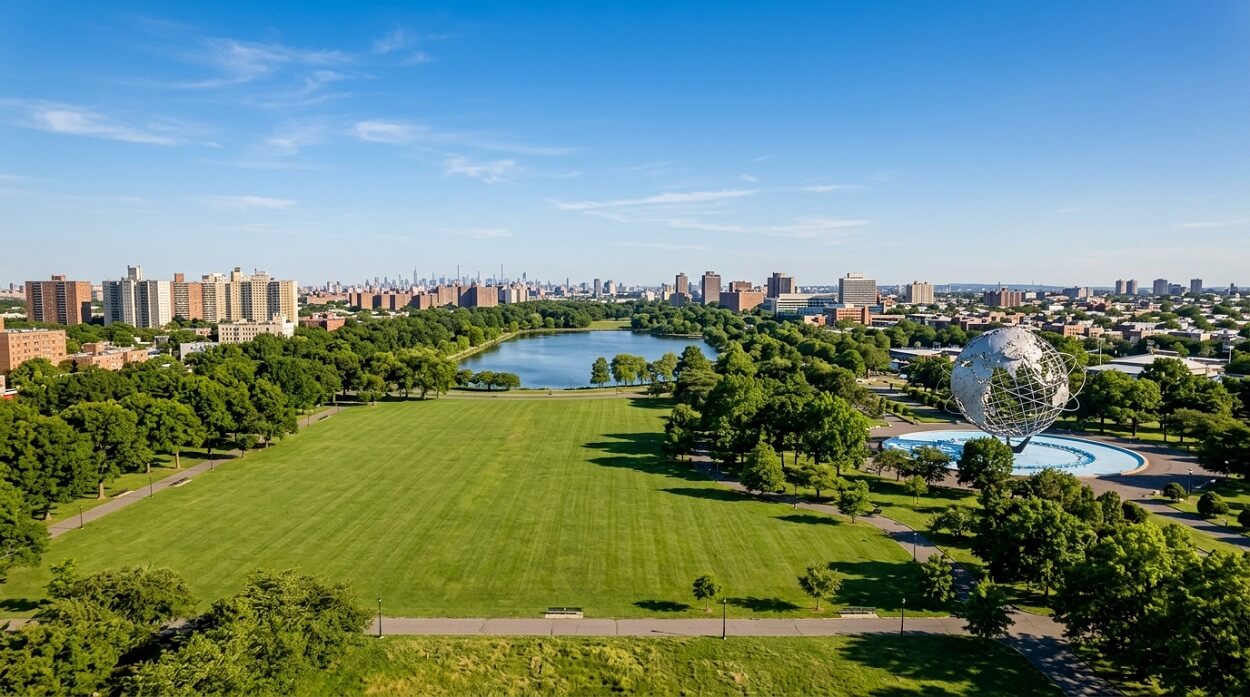
Flushing Meadows-Corona Park covers 897 acres — larger than Central Park by nearly 50 acres. Your kids can grow up with a zoo, a science museum, a lake, and the US Open grounds in their backyard.
Homes range from around the mid-$400,000s to the mid-$700,000s. Near downtown Flushing, condos dominate. As you move east toward Kissena Park, single-family homes become more common.
Schools
Schools fall under District 25 with ratings averaging around 7.0 out of 10. Performance is solid, though not at District 26 levels. Several elementary schools have strong reputations, particularly those drawing from residential blocks east of Main Street.
Commute
The 7 train runs through Flushing with a 35 to 45-minute commute to Times Square. Main Street-Flushing is the end of the line, so you're guaranteed a seat on the morning ride in. The city has also invested in bus rapid transit improvements along Main Street.
Neighborhood life
Flushing is the Asian food capital of New York City. Night markets, dumpling houses, hot pot restaurants, and bakeries along Main Street and Roosevelt Avenue draw visitors from across the region. The Queens Museum sits inside the park. The USTA Billie Jean King National Tennis Center hosts the US Open every September.
Best for: Families wanting affordability, cultural richness, and access to one of the largest urban parks in the country.
Watch for: Flood zones near Flushing Creek affect several blocks — verify the FEMA map for any property near the waterway. Main Street congestion and parking difficulty are real near downtown.
Middle Village and Rego Park: Two Under-the-Radar Options
Every best neighborhoods in Queens for families guide covers Bayside, Forest Hills, and Jackson Heights. These two usually get skipped.
Middle Village
Middle Village averages in the mid-to-upper $800,000s for single-family homes. The housing stock is almost entirely detached and semi-detached houses on clean, quiet blocks. Juniper Valley Park anchors the neighborhood with 55 acres of ball fields, playgrounds, and a running track. The vibe is old-school Queens: longtime families, block associations, Italian delis. Catholic school options are particularly strong here.
The M train provides subway access with a 35 to 45-minute ride to Midtown. But Middle Village is car-oriented. Commercial options are limited to strips along Metropolitan Avenue.
Middle Village is best for families who want a single-family house on a quiet block and don't mind car dependency.
Rego Park
Rego Park has a lower median price, driven by heavy co-op inventory. The M and R trains provide 30 to 35-minute commutes to Midtown. The neighborhood sits directly adjacent to Forest Hills, giving residents easy access to Austin Street's restaurants and shops without Forest Hills prices.
Housing is predominantly co-ops in mid-rise buildings along Queens Boulevard. Entry points here are lower than almost anywhere else with comparable subway access.
Rego Park best for: Budget-conscious families who want subway access and Forest Hills proximity at a lower price.
Watch for: Rego Park's streetscape is less charming than Forest Hills. Queens Boulevard is a wide, car-heavy corridor. Co-op boards are a factor in every purchase.
For a full picture of affordable entry points across Queens, see our guide to the most affordable neighborhoods in Queens for first-time buyers.
How to Evaluate Any Queens Neighborhood Before You Buy
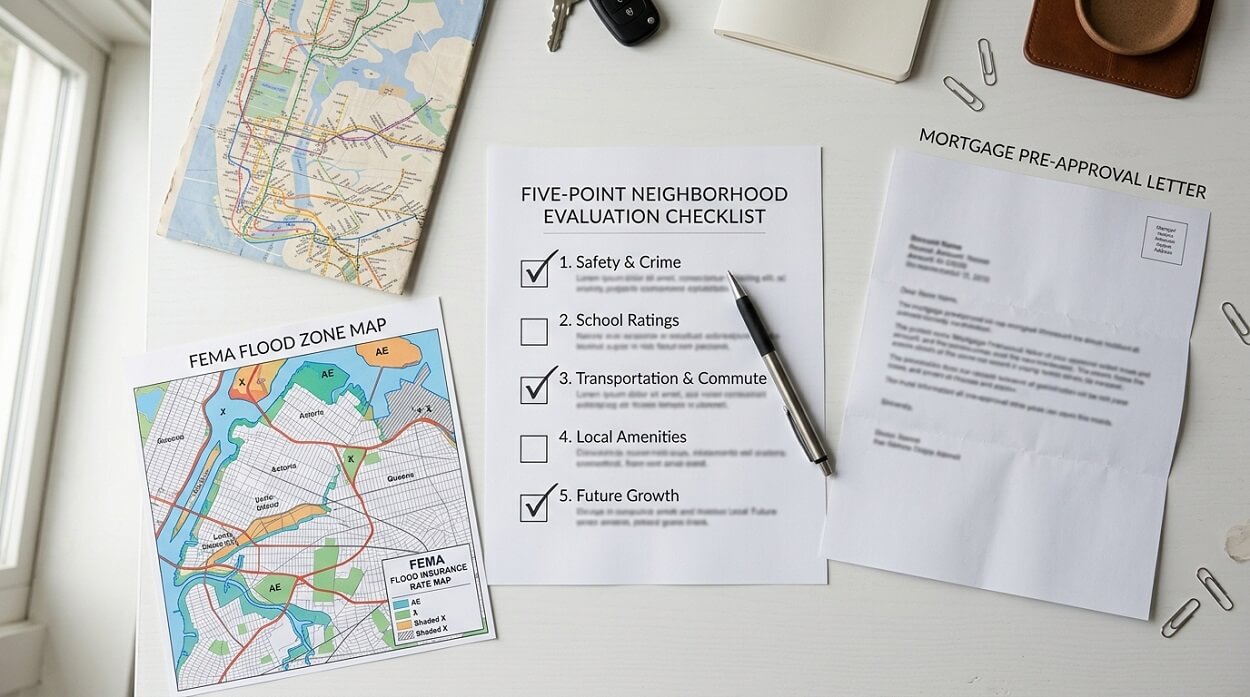
Not every family lands in the same neighborhood, and that's expected. This five-point checklist works for any block in the borough, including ones not covered above.
1. Check the full K–12 pipeline. Go to MySchools.nyc and look up the elementary school zone for your target address. Trace the middle school feeder pattern. Research the high school options from that pathway. An 8-out-of-10 elementary school means nothing if the middle school is overcrowded.
2. Test the commute at 8 AM — in person. Not on Google Maps. Take the actual train or bus on a Tuesday morning. Time it from your front door to your office door. The difference between estimated and actual commute times in Queens can exceed 15 minutes.
3. Visit on a Saturday morning and a weekday evening. Walk the blocks. Listen to the noise level. See how families use the parks. Check if the commercial strip has what you need day to day.
4. Check FEMA flood maps for the specific block. Not the neighborhood. The specific block. Flood zones in Queens can change from one street to the next near Flushing Creek, Little Neck Bay, and Jamaica Bay. Use the official FEMA Flood Map Service Center to check any address.
5. Get pre-approved before you tour. In the $450,000 to $650,000 range, expect three to five competing offers on desirable properties. Have your mortgage pre-approval, tax returns, bank statements, and employment verification ready before your first showing. If you qualify, apply for HomeFirst and SONYMA DPAL before you start looking — these programs take time to process.
For safety data by neighborhood, including crime rates per 1,000 residents and precinct-level breakdowns, see our complete guide to the safest neighborhoods in Queens.
Frequently Asked Questions About Buying a Family Home in Queens
What is the safest neighborhood in Queens for families?
Bayside, Douglaston, and Fresh Meadows consistently rank among the lowest-crime neighborhoods in Queens. All three sit in the 111th Precinct, which reports some of the lowest crime rates in New York City. See our full breakdown in the Queens safety guide.
Can I buy a home in Queens with $50,000 saved?
Yes. Co-ops with lower down-payment requirements exist, and NYC's HomeFirst program offers up to $100,000 in forgivable down-payment assistance for income-eligible buyers. SONYMA adds $15,000 at zero percent interest. See the full breakdown in our down payment assistance guide.
How long does co-op board approval take in 2026?
A new NYC law effective July 28, 2026, requires boards to confirm receipt within 15 days and issue a decision within 45 days. Previously, timelines were open-ended.
Which Queens neighborhood has the best commute to Manhattan?
Jackson Heights. The E express train reaches Midtown in approximately 22 minutes — one of the fastest subway commutes from any outer-borough family neighborhood.
Are Queens property taxes higher than Long Island?
No. Queens has an effective property tax rate of approximately 0.88 percent. Nassau County averages around 2.2 percent. On a $700,000 home, that difference exceeds $9,000 per year.
What is the best school district in Queens?
District 26, covering Bayside, Douglaston, and Fresh Meadows. It consistently ranks as the top-performing public school district in New York City across elementary, middle, and high school levels.
What household income do I need to buy in Queens?
A household earning around $130,000 annually can typically afford a purchase in the $550,000–$600,000 range at current rates. That opens co-ops across the borough and single-family homes in several neighborhoods covered in this guide. Income-based assistance programs can extend buying power further.
Sources & References
- NYC Department of Education — School District 26 performance data
- NYC Department of Finance — Queens property tax rate (effective rate ~0.88%)
- NYPD CompStat — Queens borough crime statistics
- NYC HPD HomeFirst Down Payment Assistance Program
- SONYMA Down Payment Assistance Loan program details
- NYC Local Law — Cooperative Application Timeline Act (effective July 28, 2026)
- MTA — Subway and LIRR schedule and fare data
- FEMA Flood Map Service Center — Queens flood zone designations
- GreatSchools.org — Queens school ratings and parent reviews
- MySchools.nyc — NYC DOE school zone assignments and feeder patterns