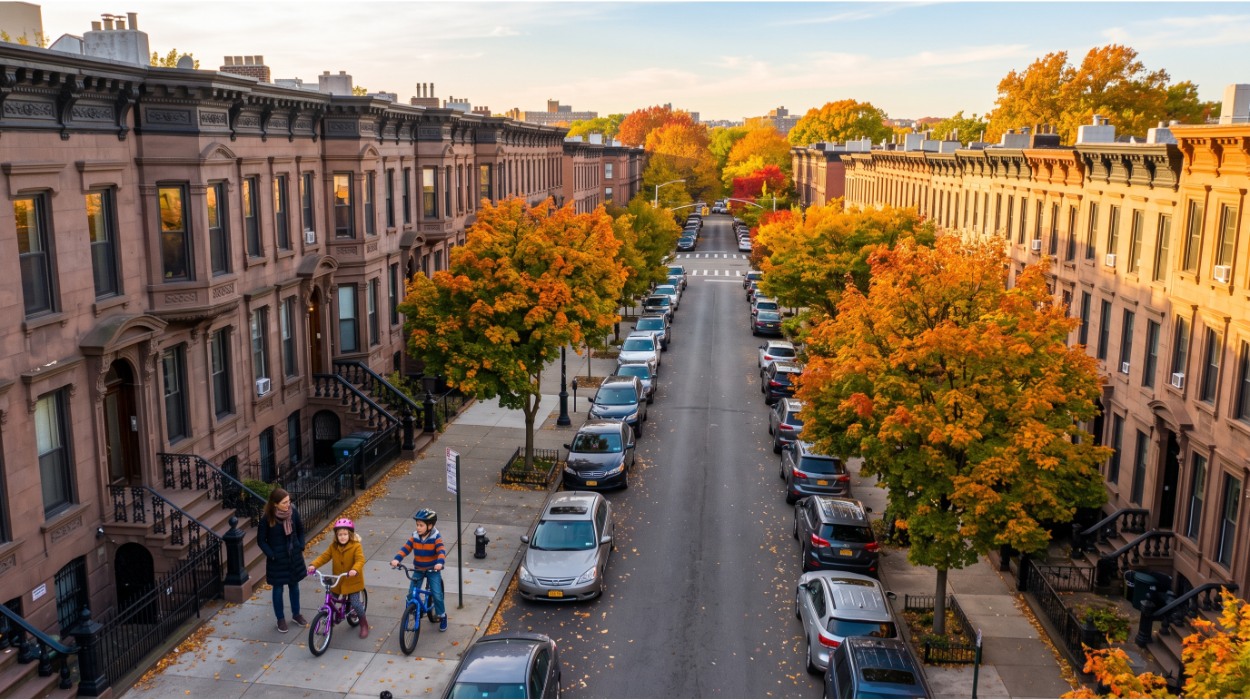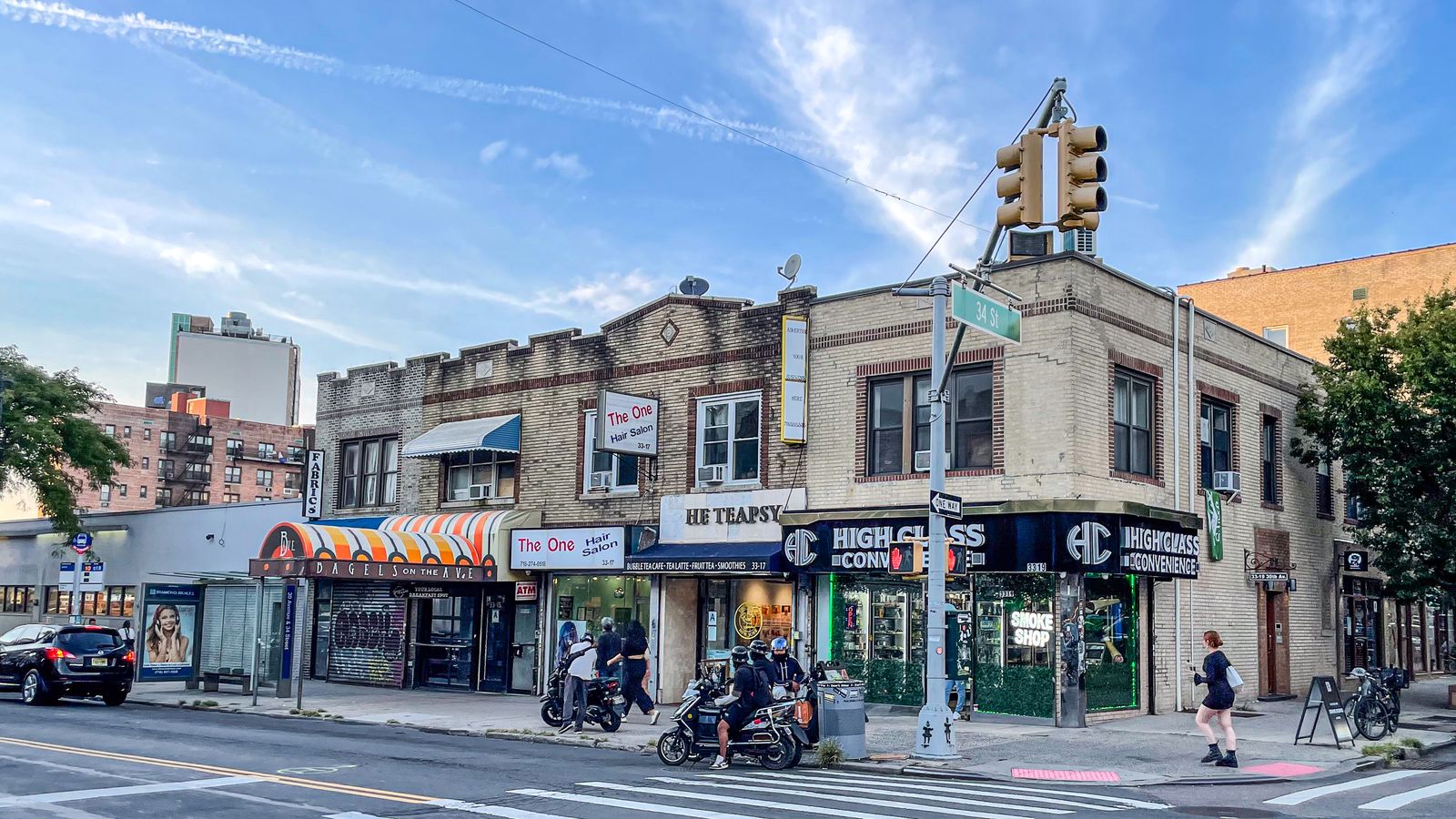

Queens spans 109 square miles, holds 90+ neighborhoods, and averages around $760K in median home price as of early 2026. A Queens neighborhood map only tells you where things are. It won't tell you that prices range from $180K co-ops in South Queens to well over $1.2M in Long Island City, or that your commute could be 5 minutes or 60 depending on which block you pick.
The borough stretches from the Manhattan-facing waterfront in the west to the Nassau County border in the east, and from LaGuardia Airport in the north to the Atlantic Ocean beaches of the Rockaways in the south. Each pocket has its own identity, price floor, school quality, and transit reality. Two neighborhoods 10 minutes apart can differ by $500K in median price and 3 points in school rating.
This guide covers 10 key neighborhoods across every region of the borough, from the western waterfront to the Rockaways, with current prices, transit times, school ratings, and honest takes on who each area actually suits. Whether you're a first-time buyer hunting co-ops under $400K, a family prioritizing District 26 schools, or an investor targeting multi-family yields above 5%, the right Queens neighborhood exists. If you're ready to start your search, our complete guide to homes for sale in Queens NY covers the buying process step by step.
Long Island City: Manhattan Views Without Manhattan Prices

LIC sits one stop from Midtown on the 7 train. Five minutes, door to platform. You step out of the subway and you're looking at the Chrysler Building across the East River.
On the Queens neighborhood map, LIC anchors the western waterfront. It borders Astoria to the north and Sunnyside to the east. The vibe is glass towers, waterfront parks like Gantry Plaza State Park, and a growing gallery scene. Gantry Plaza alone stretches 12 acres along the waterfront with direct Manhattan skyline views, restored gantry cranes, and playground space. Young professionals and couples dominate the demographics here.
Transit is a major selling point. The 7, E, M, G, N, and W trains all serve LIC, making it one of the best-connected neighborhoods in the entire borough. That connectivity shows up in the price. The median purchase price averages between $1.1M and $1.4M, up roughly 30% year over year. One-bedroom rents typically run $3,200 to $4,300. New luxury condo inventory continues to hit the market, which keeps rental supply relatively high compared to older neighborhoods.
Those numbers still save you money compared to equivalent Manhattan units. But this isn't a value play anymore. Schools are average at best, and families with school-age kids usually look further east for better options. For a full breakdown of LIC's luxury condo market alongside the other priciest pockets in the borough, see our guide to the 7 most expensive neighborhoods in Queens.
Astoria: Culture, Food, and a Quick Commute

Walk down Broadway near 31st Street in Astoria and you'll pass Greek tavernas, Egyptian bakeries, Colombian arepas spots, and Bengali grocery stores within three blocks. No other neighborhood in Queens packs this much culinary range into such a small stretch.
Astoria sits in northwest Queens, facing the East River, with LIC to the south. The streets are tree-lined and filled with rowhouses, pre-war walk-ups, and a mix of long-time residents alongside newer transplants. Astoria Park offers 60 acres of waterfront green space, and its public pool — the largest in New York City — draws crowds all summer.
The N and W trains get you to Midtown in about 20 minutes. The M and R also stop at Steinway Street, which doubles as a busy commercial corridor with big-box retail alongside independent shops. That accessibility has pushed prices up sharply. The median purchase price averages between $900K and $1.2M, up roughly 40% year over year. Studio rents average $2,500 to $3,000, and one-bedrooms typically run $2,900 to $3,400.
The Ditmars-Steinway pocket at the northern end skews more residential and family-friendly. Schools rate mid-range, better than LIC but not close to Northeast Queens. Compared to LIC, Astoria offers a similar commute with more neighborhood character and slightly lower prices. But that gap is closing fast.
Sunnyside: The Hottest Value Play in Queens
StreetEasy searches for Sunnyside jumped 43.7% in 2026, making it the 7th hottest neighborhood in all of New York City. Asking prices average between $420K and $530K.
Sunnyside sits in central-west Queens along the 7 train corridor, sandwiched between LIC and Woodside. It's quieter than its neighbors to the west. Sunnyside Gardens, a historic planned community built in the 1920s, gives entire blocks a suburban feel with shared green courtyards behind the houses. But you're still walkable to restaurants, coffee shops, and the subway. Most of the housing stock is pre-war co-ops and attached brick homes, with co-op boards that tend to be more flexible than Manhattan equivalents.
The 7 train gets you to Grand Central in about 15 minutes. That's a shorter commute than most of Brooklyn offers. Trains run every 3 to 5 minutes during rush hour. One-bedroom rents average $2,500 to $2,900, and asking prices averaging $420K to $530K (up roughly 10%) sit at a significant discount compared to Astoria's average of $900K to $1.2M and LIC's average of $1.1M to $1.4M.
Young professionals, first-time buyers, and remote workers who need occasional Midtown access are driving the demand here. For a full breakdown of the most affordable neighborhoods across Queens — including Sunnyside, Kew Gardens, and South Queens — see our most affordable Queens neighborhoods guide.
Jackson Heights: NYC's Most Diverse Neighborhood
Jackson Heights is home to speakers of 167 languages. That makes it the most linguistically diverse neighborhood on the planet, not just in New York.
On the Queens neighborhood map, Jackson Heights occupies central Queens, south of Astoria, along both the 7 and E/F/M/R corridors. The streets are dense, vibrant, and loud. South Asian and Latin American commercial strips run along Roosevelt Avenue and 74th Street, where you can find everything from sari shops to taco carts to Himalayan grocery stores within a single block. The Jackson Heights Historic District preserves rows of pre-war co-op garden apartments with interior courtyards that feel completely different from the busy avenues.
Transit access is strong. The 7, E, F, M, and R trains put Midtown about 25 minutes away. And the prices reflect genuine affordability. Co-ops run $250K to $450K, with monthly maintenance fees typically between $600 and $1,100. Single-family homes range from $650K to $950K. One-bedroom rents average $2,000 to $2,400, with studios typically in the $1,600 to $2,000 range.
Schools score around 6.5 out of 10, below the Queens average. That's a real tradeoff. Families focused on school quality will find better options further east or north. After-school programs and cultural enrichment options are widely available, but the public school numbers lag behind Forest Hills and Bayside by a significant margin.
The right agent in Queens can save you $40,000. The wrong one costs you the deal.
Buyers and sellers — talk to a licensed Queens agent today. We match you in minutes, at no cost.
Mon – Sat · 9 AM – 7 PM ET
Forest Hills: The Family-Friendly Middle Ground

Forest Hills gives families something Western Queens can't deliver: a 7.8 out of 10 school rating without the $800K-plus averages you'll find in Bayside and Douglaston.
The neighborhood sits in central Queens, south of Rego Park and north of Kew Gardens, along the E/F/M/R lines. Forest Hills Gardens, a private planned community, features Tudor-style homes on winding streets that look nothing like the rest of the borough. Austin Street serves as the main commercial strip with restaurants, boutiques, and a movie theater. Walk the full stretch and you'll count 40+ storefronts in under half a mile.
The E and F trains reach Midtown in about 30 minutes. The LIRR Forest Hills station offers an alternative for Penn Station commuters, cutting the trip to about 20 minutes. Purchase prices range from $600K to $900K overall, with solid co-op stock available in the $400K to $600K range. One-bedroom rents average $2,500 to $2,900.
Schools rate 7.8 out of 10, solidly above average and strong enough that families stay long-term. You won't get the top-tier District 26 numbers here, but you also won't pay District 26 prices. I consider Forest Hills the best all-around pick for families who need transit, schools, and mid-range pricing in one package. For a deeper comparison of Queens family neighborhoods side by side, our best Queens neighborhoods for families guide covers costs, school pipelines, and commute times for each.
Flushing: Queens' Second Downtown
Step out of the 7 train at Main Street-Flushing and you're in a commercial district that rivals Manhattan's Chinatown in density and energy. Dim sum halls, hot pot restaurants, herbal medicine shops, and bubble tea storefronts crowd the blocks around the station.
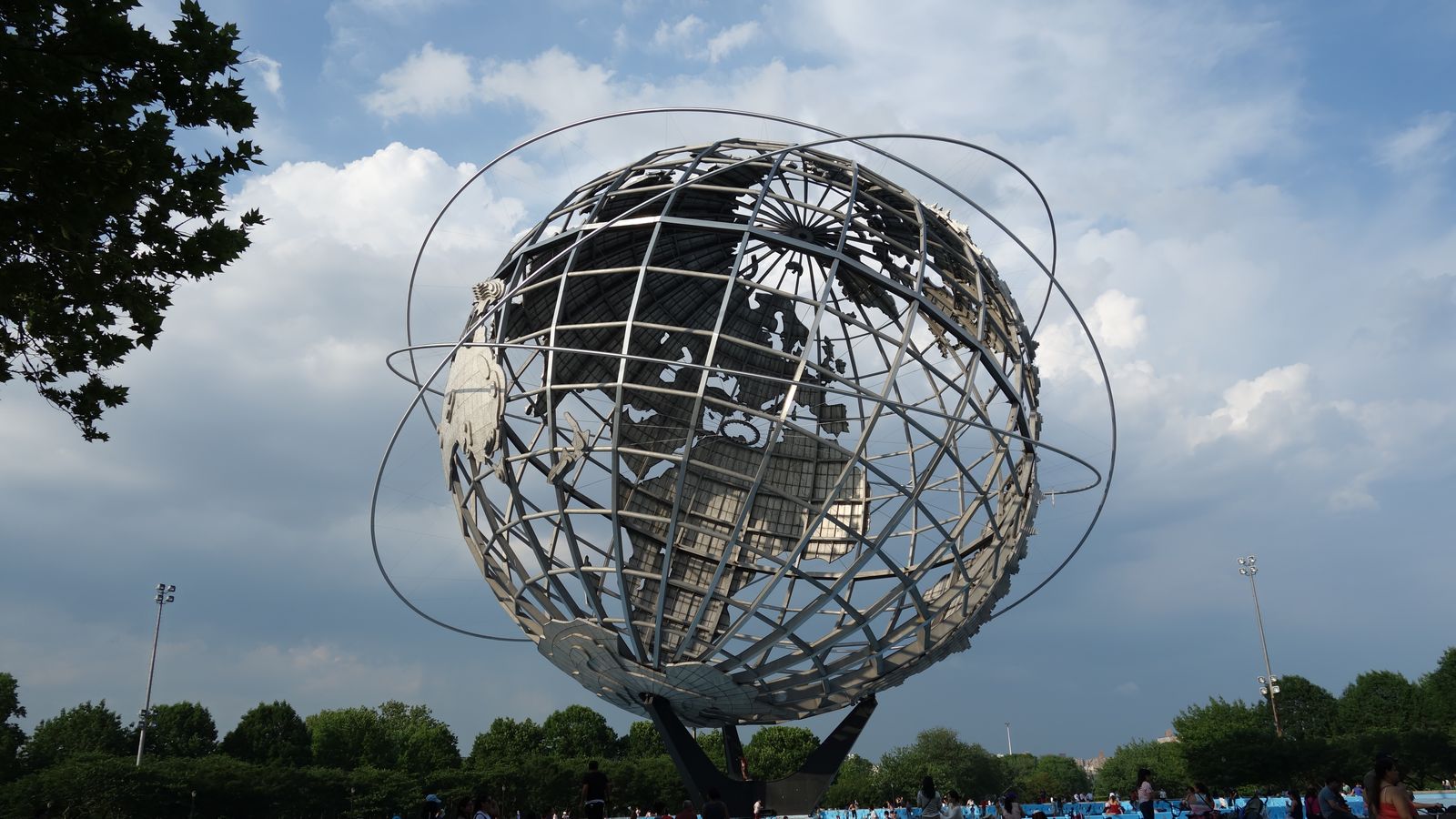
Flushing sits in north-central Queens at the 7 train's terminus. It borders Bayside to the east and Fresh Meadows to the south. Citi Field and the USTA Billie Jean King National Tennis Center are nearby in Flushing Meadows-Corona Park, which covers 898 acres, larger than Prospect Park. The park hosts the Queens Museum, the Unisphere, and pickup soccer games on dozens of fields every weekend.
The 7 train ride to Times Square takes about 40 minutes. The LIRR also serves Flushing, and the neighborhood functions as a bus hub connecting eastern Queens. Prices vary widely by building type. The overall median averages between $550K and $780K. Co-ops typically start in the $300K to $400K range, while luxury condos can reach $2M and above. One-bedroom rents average $2,100 to $2,600. District 25 schools earn an A-minus rating, which makes Flushing one of the few neighborhoods that combines urban energy with strong academics.
Bayside and Douglaston: Queens' Top School Districts
District 26 covers Bayside and Douglaston, ranks #101 in all of New York State, and earns an A rating. Douglaston's school score hits 8.7 out of 10, the highest in Queens. Bayside follows closely at 8.5. You can verify your exact zoned school for any address using the NYC DOE School Search tool.
These neighborhoods sit in northeast Queens, bordering Little Neck and the Nassau County line. Douglaston hugs Little Neck Bay with a waterfront feel and a village-like atmosphere. Its small commercial strip near the LIRR station has a few restaurants and shops but nothing resembling a busy urban center. Bayside has more commercial activity along Bell Boulevard, with restaurants, bars, and retail drawing foot traffic.
Both neighborhoods are suburban by New York City standards. Detached houses with driveways, quiet tree-lined streets, and yards. The LIRR Port Washington Branch reaches Penn Station in about 35 minutes, but subway access is limited. You'll rely on bus connections to the Flushing 7 train for most subway travel.
Bayside averages between $800K and $1.1M, with the full range running from the high $600Ks to $1.5M. Douglaston typically runs $900K to $1.4M. Fresh Meadows, nearby, offers a slightly cheaper alternative in the $700K to $950K range with an 8.2 out of 10 school rating. If schools are your non-negotiable, this is where you land. Families in District 26 rarely leave. For a full breakdown of what family life looks like in each of these neighborhoods, including monthly ownership costs and school pipeline data, read our families guide to Queens neighborhoods.
Ridgewood: Brooklyn Energy on a Queens Budget

Ridgewood straddles the Queens-Brooklyn border so closely that many residents genuinely debate which borough they belong to. The M and L trains cross back and forth between the two. StreetEasy searches for the neighborhood climbed 43.4% in 2026.
On the Queens neighborhood map, Ridgewood sits in southwest Queens, directly east of Bushwick. Pre-war brick rowhouses line the residential streets, many with original limestone detailing and intact interior woodwork. Coffee shops, galleries, and natural wine bars have been filtering in from Bushwick over the past few years. The neighborhood still holds onto its old-school German and Eastern European roots through bakeries and beer halls that have been around for decades.
The M and L trains reach Union Square in about 30 minutes. Rents for a one-bedroom average $2,900 to $3,500, and asking prices average between $1.1M and $1.4M. Artists, freelancers, and young professionals make up the bulk of new arrivals, drawn by the same creative energy that fueled Bushwick a decade ago.
Here's the price paradox worth noting: Ridgewood gets marketed as the affordable Brooklyn alternative, but purchase prices now exceed Astoria's average of $900K to $1.2M. The deal that existed five years ago has largely evaporated for buyers. Renters still find slightly better value than comparable Bushwick apartments.
Jamaica: South Queens' Transit Hub With Investment Upside

Jamaica is one of only three Queens neighborhoods where the LIRR, subway, and AirTrain all converge at a single station. That makes it the borough's most connected transit hub south of Flushing.
Jamaica sits in south-central Queens at the crossroads of the Van Wyck Expressway, Jamaica Avenue, and Archer Avenue. The area is commercial, busy, and rapidly developing around Jamaica Station. Caribbean, South Asian, and African-American communities shape the culture, food, and retail landscape. Jamaica Avenue itself stretches over a mile of continuous storefronts, from discount retailers to Caribbean restaurants to electronics shops.
The E, J, and Z subway lines serve the neighborhood alongside the LIRR and AirTrain to JFK. The median home price averages between $650K and $800K, but the real draw for investors is two-family homes typically ranging from $880K to $1.2M. These are popular for house-hacking — you live in one unit and rent the other. Nearby South Ozone Park offers two-bedroom rents in the $1,800 to $2,200 range with gross yields of 5.6% to 6.2% on multi-family properties.
A $13 billion transportation hub redevelopment is underway in Jamaica, which could reshape the area over the next decade. Buyers in qualifying areas can also access the NYC HPD HomeFirst program, which provides up to $100,000 in down-payment assistance for first-time buyers purchasing one- to three-family homes. For a full breakdown of how to stack HomeFirst with other city programs, see our NYC down payment assistance guide.
Kew Gardens and the Rockaways: Affordability and Beach Living
Asking prices averaging between $300K and $430K in Kew Gardens and beach town listings averaging $900K to $1.1M in Belle Harbor sit just 12 miles apart. That range captures what makes a Queens neighborhood map so useful. The borough contains multitudes.
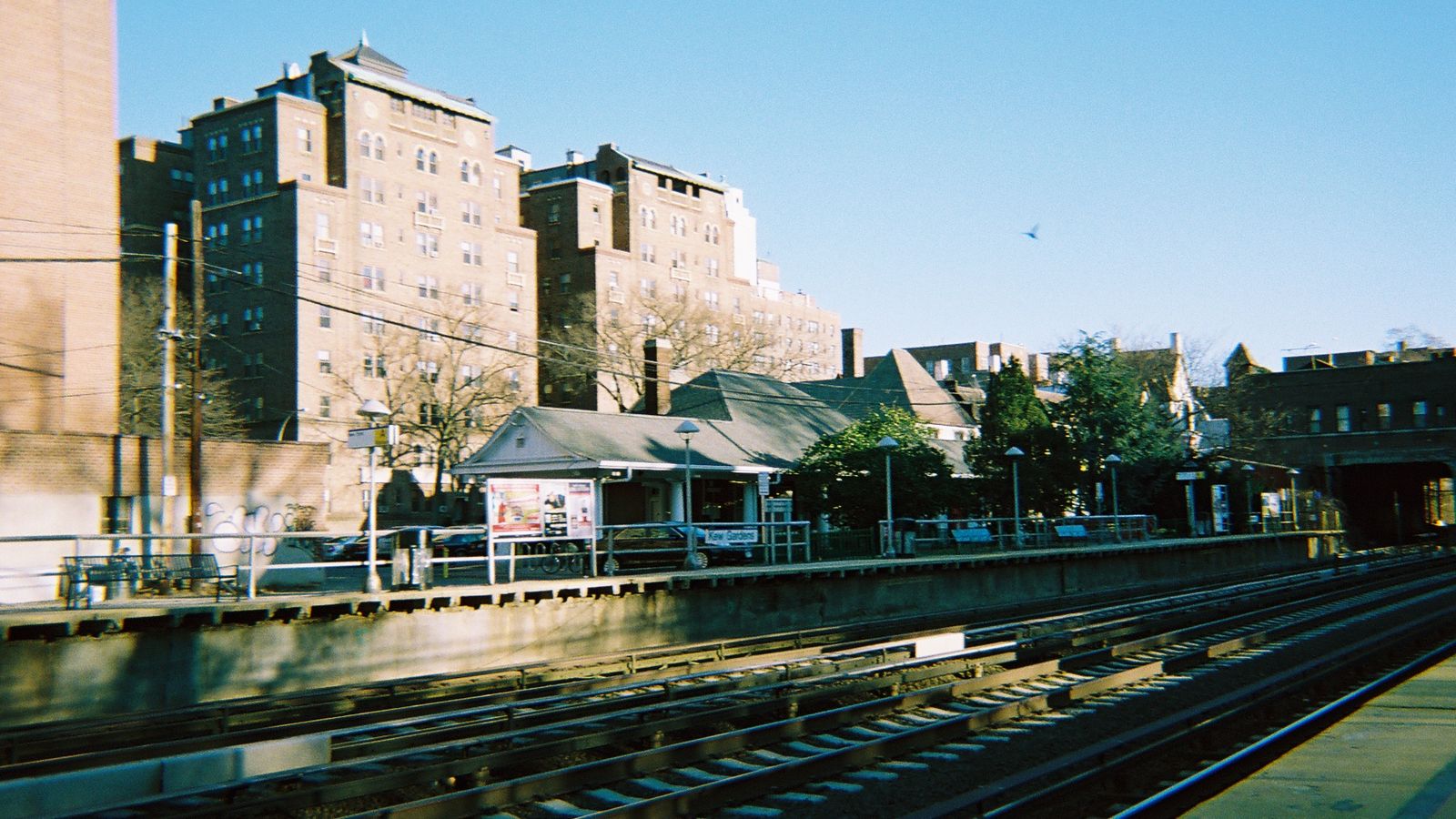
Kew Gardens is tucked south of Forest Hills along the E and F lines, with LIRR access as well. The vibe is quiet and residential, centered around the Queens County courthouse area. Co-op-heavy streets keep prices low, and prices averaging between $300K and $430K represent the most affordable entry point among the neighborhoods covered here. Transit is solid, and the neighborhood rarely appears on "hot market" lists — which is exactly why it stays affordable.
The Rockaways stretch along Queens' southern peninsula, accessible via the A train. Belle Harbor offers beachfront single-family homes averaging $900K to $1.1M. Far Rockaway, at the eastern end, is more affordable and undergoing significant redevelopment, with new mixed-use projects adding hundreds of units. The lifestyle is unlike anywhere else in the borough. Surfing, boardwalk runs, and seasonal beach energy define daily life here.
Across all of South Queens, co-ops range from $180K to $380K. These are the absolute floor for buyers looking anywhere in the borough. Kew Gardens is the quiet value pick that most guides overlook entirely. The Rockaways are a lifestyle bet. You're trading a 60-plus-minute A train commute for sand between your toes. Both choices make sense for the right buyer. For a broader look at the safest areas across Queens — including South and Northeast Queens — our Queens safety guide breaks down crime data by neighborhood.
Frequently Asked Questions: Queens Neighborhood Map
What is the cheapest neighborhood in Queens to buy?
Kew Gardens leads with asking prices averaging between $300K and $430K. South Queens co-ops in South Ozone Park and Jamaica can start below $200K. These are primarily co-op units in older buildings. Factor in maintenance fees ($500 to $900 per month) and board approval requirements when budgeting.
What is the best neighborhood in Queens for families?
Bayside and Douglaston in District 26, which ranks #101 in New York State. Douglaston scores 8.7 out of 10 for schools, the highest in Queens. Forest Hills at 7.8 out of 10 offers a mid-price alternative with better transit access. For families who need both strong schools and a sub-$700K budget, Fresh Meadows (8.2 out of 10) is the compromise pick.
How much is rent in Queens compared to Manhattan?
The average Queens one-bedroom rents in the $2,600 to $3,000 range versus Manhattan's $3,800 to $4,600. That gap saves you $15,000 to $25,000 per year. Jackson Heights offers the cheapest option with good transit, with one-bedrooms averaging $2,000 to $2,400. Sunnyside runs $2,500 to $2,900 and Flushing $2,100 to $2,600, both delivering strong value.
Which Queens neighborhoods have the best subway access?
LIC, Astoria, and Jackson Heights have the most subway lines converging in one area. Jamaica is the top hub overall when you include LIRR and AirTrain connections. Sunnyside and Forest Hills also offer strong single-line access with fast commute times.
Is Queens a good place to invest in real estate?
South Ozone Park multi-family properties yield 5.6% to 6.2% gross returns. Jamaica two-family homes ranging from $880K to $1.2M are popular for house-hacking. Douglas Elliman reported Queens hit an all-time median high in Q4 2025, with inventory down 27.1%, signaling continued price pressure.
What are the up-and-coming neighborhoods in Queens?
Sunnyside (43.7% search increase), Ridgewood (43.4%), and LIC (43.3%) are the three hottest Queens neighborhoods on StreetEasy in 2026. Sunnyside offers the best value of the three, with asking prices averaging $420K to $530K, while Ridgewood and LIC have already seen significant price appreciation. Jamaica's $13 billion transit hub redevelopment makes it a long-term appreciation play.
How long is the commute from Queens to Manhattan?
LIC: 5 minutes on the 7 train. Astoria: 20 minutes on the N or W. Sunnyside: 15 minutes on the 7. Jackson Heights: 25 minutes on the 7, E, F, M, or R. Forest Hills: 30 minutes on the E or F. Flushing: 40 minutes on the 7. Bayside: 35 minutes on the LIRR. Rockaways: 60-plus minutes on the A train.