



Total Closing Costs at Every Price Point: $500K to $2M
Every table below shows estimated buyer-side closing costs. Find your price range and property type. These figures apply to both 2026 and 2027 — the key taxes (mansion tax, mortgage recording tax) are unchanged for the current period.
~$550K Co-op Purchase
Co-ops skip the two biggest buyer costs: no mortgage recording tax, no title insurance. The cheapest property type to close on in NYC.
| Cost | Typical Range |
|---|---|
| Attorney fees | $2,500 – $4,000 |
| Lien search | $350 – $450 |
| Application & board fees | $1,500 – $3,000 |
| Lender costs | $2,000 – $4,000 |
| Miscellaneous co-op fees | $500 – $2,000 |
| Total closing costs | ~$6,350 – $15,450 (1–3%) |
| 20% down payment | ~$110,000 |
| Total cash to close | ~$116,350 – $125,450 |
~$750K Brooklyn Condo (Financed)
No mansion tax at this price. But the mortgage recording tax is the single biggest line item at this range.
| Cost | Approximate Amount |
|---|---|
| Mortgage recording tax | ~$11,550 |
| Title insurance (owner + lender) | ~$3,375 |
| Attorney fees | ~$3,000 |
| Lender costs | ~$3,500 |
| Miscellaneous | ~$1,000 – $2,000 |
| Total closing costs | ~$18,000 – $22,000 (2.5–3%) |
| 20% down payment | ~$150,000 |
| Total cash to close | ~$168,000 – $172,000 |
~$1M Purchase: Co-op vs. Condo vs. New Development
This is where property type creates the biggest spread. The $1M mansion tax cliff also kicks in here — crossing it by $1 adds $10,000 to your bill.
| Property Type | Closing Cost Range | % of Price |
|---|---|---|
| Co-op | ~$20,000 – $30,000 | 2 – 3% |
| Resale condo | ~$38,000 – $42,000 | 3.8 – 4.2% |
| New development condo | $60,000+ | 6%+ |
New development buyers typically pay the seller's transfer taxes: roughly $18,250 on a $1M deal. That's in addition to all standard buyer costs.
~$1.5M Resale Condo
| Cost | Approximate Amount |
|---|---|
| Mansion tax (1%) | ~$15,000 |
| Mortgage recording tax | ~$21,656 |
| Title insurance | ~$6,750 |
| Attorney fees | ~$5,000 |
| Lender costs | ~$3,500 |
| Total closing costs | ~$54,000 – $61,000 (3.6–4%) |
| 25% down payment | ~$375,000 |
| Total cash to close | ~$429,000 – $436,000 |
~$2M Resale Condo
At $2M, the mansion tax jumps to 1.25% — a $25,000 tax bill. The MRT and title insurance both scale up as well.
| Cost | Approximate Amount |
|---|---|
| Mansion tax (1.25%) | ~$25,000 |
| Mortgage recording tax (80% LTV) | ~$30,800 |
| Title insurance | ~$9,000 |
| Attorney fees | ~$5,000 – $7,500 |
| Lender costs | ~$4,000 – $5,000 |
| Total closing costs | ~$76,000 – $82,000 (3.8–4.1%) |
| 20% down payment | ~$400,000 |
| Total cash to close | ~$476,000 – $482,000 |
Cash to Close vs. Closing Costs: What's the Actual Difference?
These two terms are not interchangeable, and confusing them is one of the most common reasons buyers show up at closing short on funds.
Closing Costs
- Attorney fees
- Title insurance & search
- Mortgage recording tax
- Mansion tax
- Lender origination & underwriting
- Co-op board & admin fees
- Transfer taxes (if applicable)
Cash to Close = Closing Costs + These
- Down payment (biggest item)
- Prepaid homeowners insurance (1 year upfront)
- Property tax escrow (2–6 months)
- Prepaid mortgage interest (days to end of month)
- Initial escrow reserve
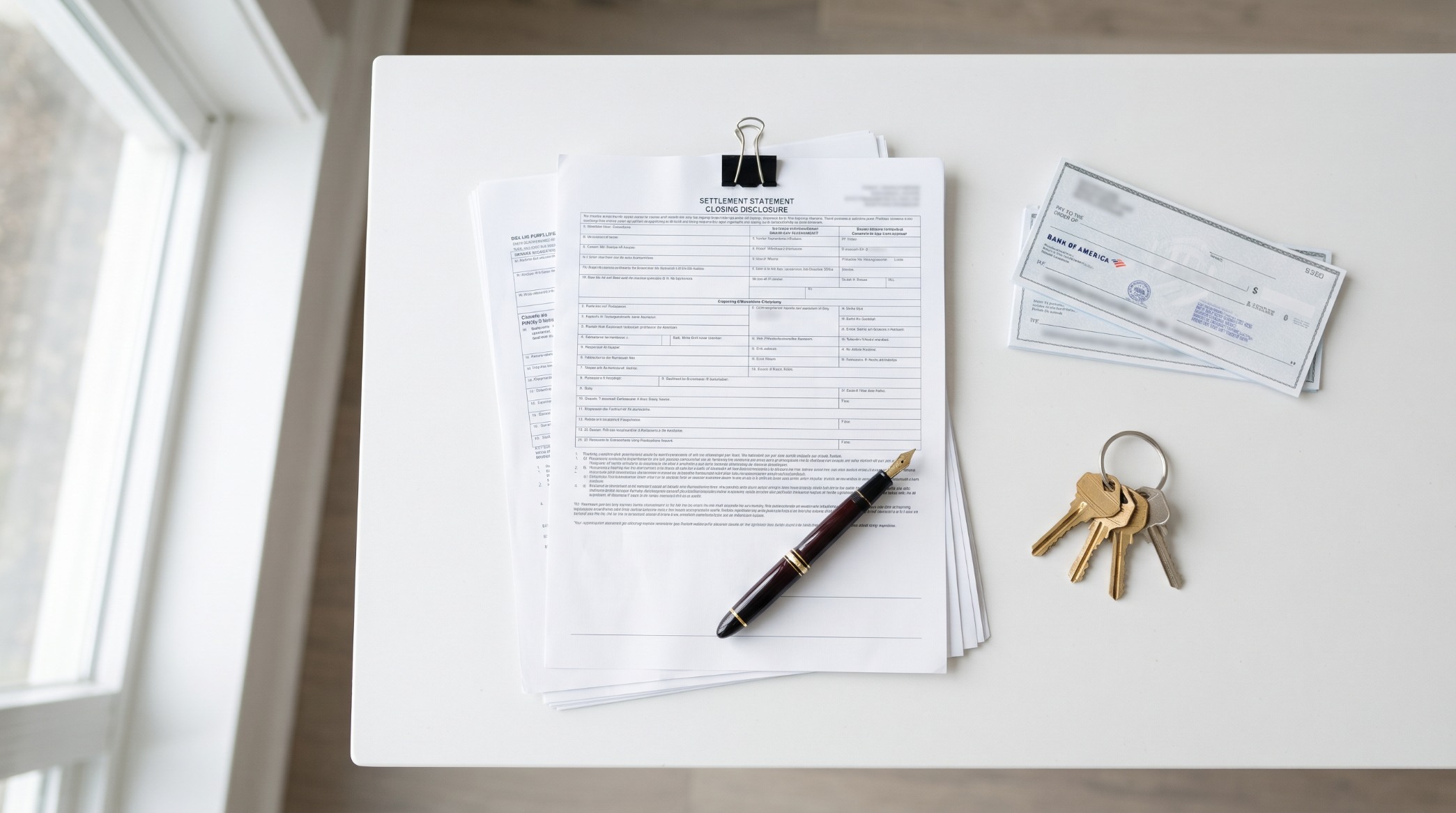
Your Closing Disclosure — delivered by law at least three business days before closing — shows the exact cash-to-close figure on page one. That's the number to wire. Do not rely on estimates. Wire the exact Closing Disclosure amount after confirming the instructions by phone with your attorney.
Prepaids typically add $3,000–$8,000 to your closing costs total. Budget for them separately from the tables above.
NYC Mansion Tax 2026–2027: Rates, Cliffs, and How to Negotiate Around Them
$999,999 costs $0 in mansion tax. $1,000,000 costs $10,000. A single dollar triggers a five-figure bill. This is the sharpest cliff in NYC real estate.
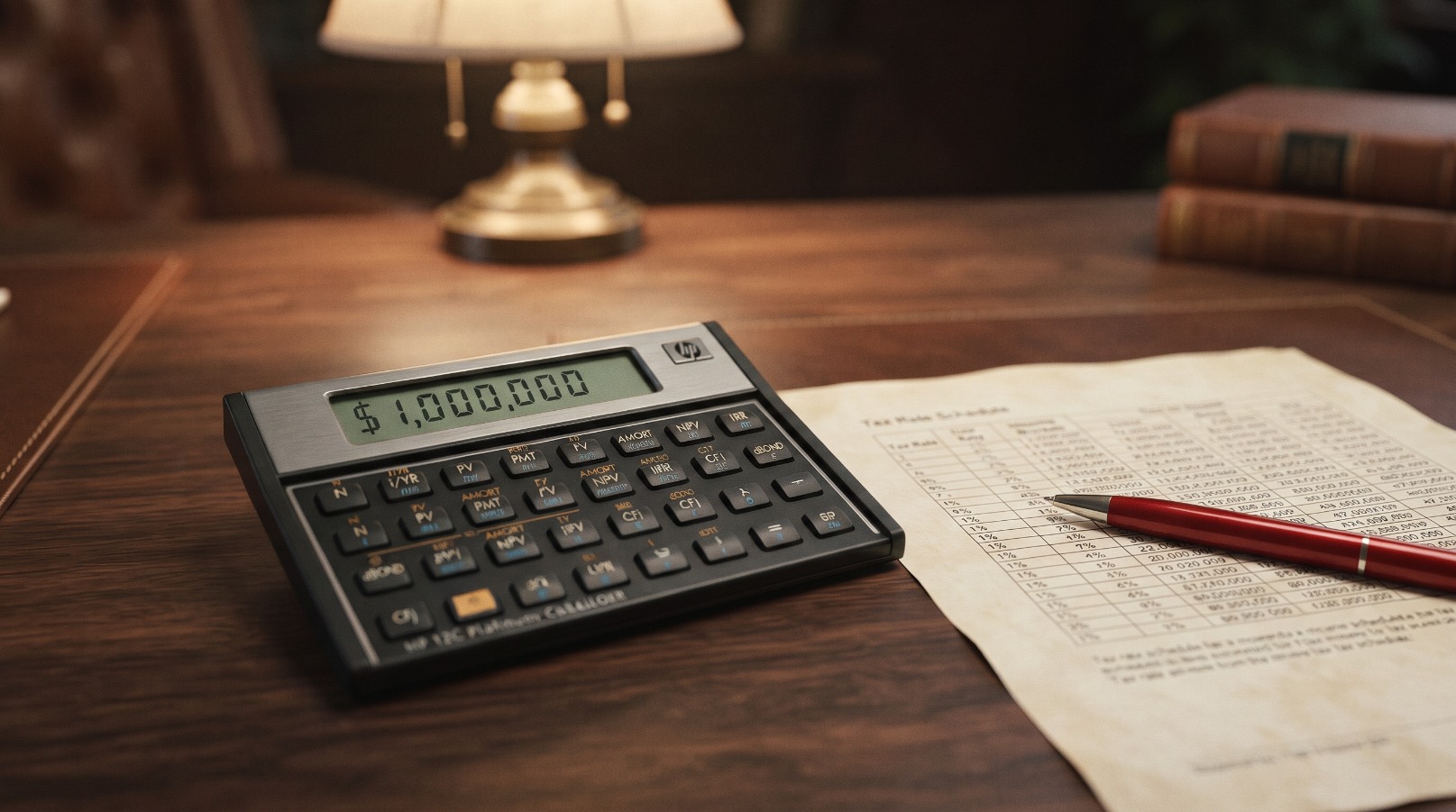
The mansion tax is cliff-based, not marginal. The full rate applies to the entire purchase price the moment you cross a threshold. For a full breakdown of how the NYC mansion tax works, including negotiation strategy and historical context, read our dedicated guide. For a quick reference, here is the 2026–2027 rate schedule:
| Purchase Price | Tax Rate | Tax at Threshold |
|---|---|---|
| Under $1,000,000 | 0% | $0 |
| $1,000,000 – $1,999,999 | 1.0% | $10,000 on $1M |
| $2,000,000 – $2,999,999 | 1.25% | $25,000 on $2M |
| $3,000,000 – $4,999,999 | 1.5% | $45,000 on $3M |
| $5,000,000 – $9,999,999 | 2.25% | $112,500 on $5M |
| $10M – $14,999,999 | 3.25% | $325,000 on $10M |
| $15M – $19,999,999 | 3.5% | $525,000 on $15M |
| $20M – $24,999,999 | 3.75% | $750,000 on $20M |
| $25,000,000+ | 3.9% | $975,000 on $25M |
A proposed rate hike was removed from the final 2026 city budget. These brackets are confirmed through 2027. Because they haven't been indexed for inflation since 2019, rising prices push more buyers into taxable territory each year.
A second tactic: ask the seller for a closing cost credit instead of a price reduction. Or, with attorney sign-off, allocate part of the purchase price to personal property (furniture, appliances). Side payments outside the contract to reduce taxable consideration are illegal — don't go there.
NYC Mortgage Recording Tax: Why Co-op Buyers Catch a Break
On a $750K condo financed with 80% LTV, the mortgage recording tax alone runs around $11,550. Co-op buyers pay exactly $0 on this line item — and it's one of the biggest financial advantages of co-op ownership in NYC.
For a complete treatment of how this tax works and how to calculate it for your loan amount, see our NYC mortgage recording tax guide. The short version:
- Rate: 1.8% on loans under $500,000 / 1.925% on loans of $500,000+
- Who pays: The buyer, always
- Co-ops: Exempt. Co-op financing uses share loans, not mortgages recorded against real property. No recorded mortgage = no recording tax.
| Purchase Price (80% LTV) | Loan Amount | Condo MRT | Co-op MRT |
|---|---|---|---|
| $500,000 | $400,000 | ~$7,200 | $0 |
| $750,000 | $600,000 | ~$11,550 | $0 |
| $1,000,000 | $800,000 | ~$15,400 | $0 |
| $1,500,000 | $1,200,000 | ~$23,100 | $0 |
| $2,000,000 | $1,600,000 | ~$30,800 | $0 |
That gap is $11,550–$30,800 across these price points — just on the MRT alone. Add title insurance (co-ops also skip this) and the total co-op advantage at $1M is typically $15,000–$20,000 over an equivalent condo.
Condo vs. Co-op Closing Costs: Full Side-by-Side
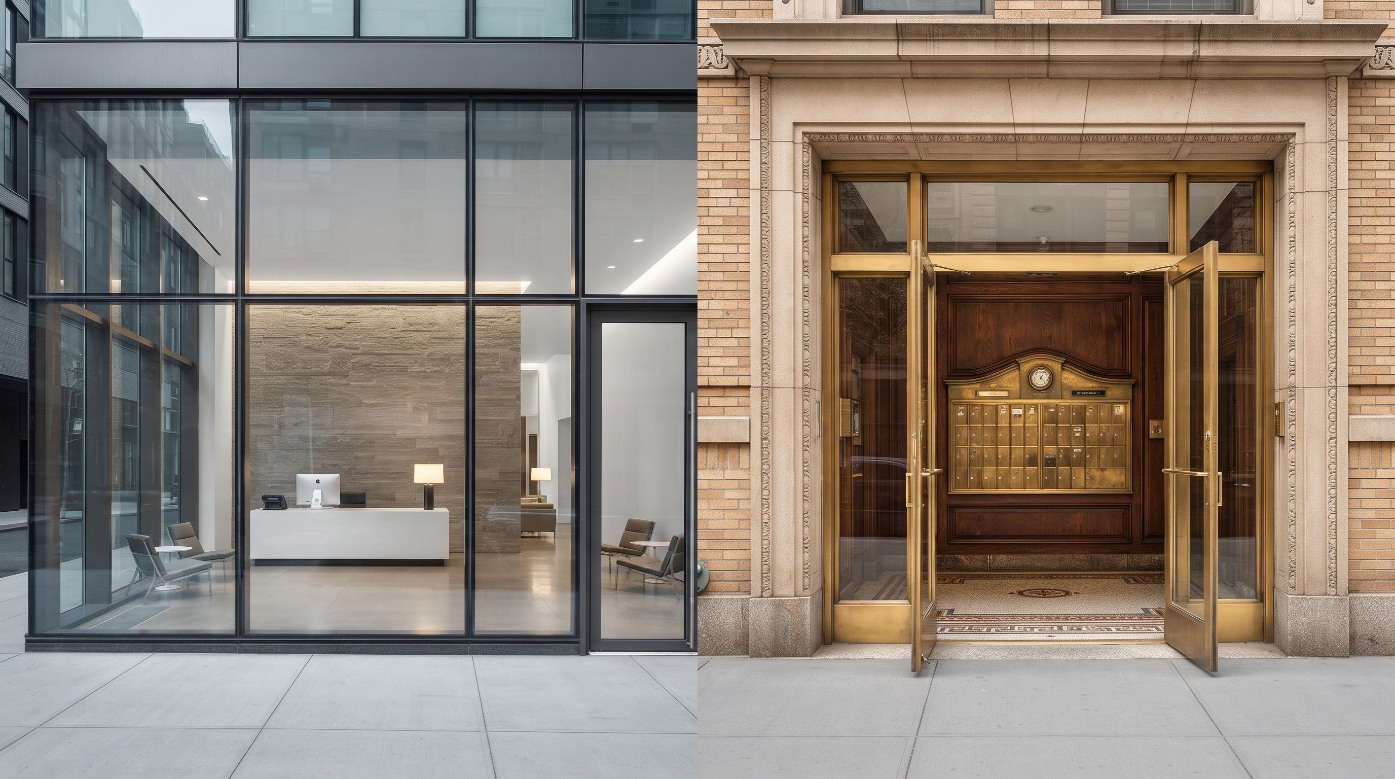
Same building. Same price. One unit costs $20,000 more to close on. Here's why.
What Condo Buyers Pay
- Mortgage recording tax (1.8–1.925% of loan)
- Owner's title insurance (~0.45% of price)
- Lender's title insurance (included with owner's policy)
- Title search fee (~$200–$500)
- Transfer taxes (new dev only — shifted from seller)
- Attorney fees ($2,500–$7,500)
- Lender costs ($3,000–$5,000)
What Co-op Buyers Pay Instead
- No mortgage recording tax
- No title insurance
- Lien search ($350–$450)
- Application fee ($500–$1,000)
- Move-in deposit, refundable ($500–$2,000)
- Credit check ($100–$200)
- Recognition agreement ($200–$500)
- Managing agent transfer fee ($200–$500)
- UCC-1 filing ($75–$150)
- Bank attorney ($500–$1,000)
- Attorney fees ($2,500–$4,000)
- Lender costs ($2,000–$4,000)
Co-op extras total roughly $2,000–$5,000. That compares to $15,000–$30,000 a condo buyer pays in MRT and title insurance at the same price. The co-op board approval process adds time and uncertainty — but not cost. Our guide to NYC co-op board approval covers exactly what boards look for and how to prepare your application package.
Confused by the condo vs. co-op closing cost math? Our agents break it down in plain terms — and can help you find listings that fit your total budget, not just the sticker price.
NestIt connects you with top NYC buyer's agents at lower commission rates.
Mon – Sat · 9 AM – 7 PM ET
Attorney Fees, Title Insurance, and Lender Costs: What's Negotiable
These are your most shoppable closing costs. Most buyers accept the first number they're given. That's a mistake.
Attorney Fees
NYC effectively requires a real estate attorney for every transaction — there's no standard closing agent or escrow officer like in other states. Expect to pay:
- Standard resale (condo or co-op): $2,500–$5,000
- Complex or high-value purchase: $5,000–$7,500
- New development (offering plan review required): Higher end of the range
Do not shop purely on price. A good real estate attorney catches contract problems, negotiates repair credits, and handles title issues that can save multiples of their fee. Get two or three quotes and choose on experience and responsiveness, not just cost.
Title Insurance
Required for condos and houses. Not required for co-ops (there's no deed transfer).
You'll need both an owner's policy and a lender's policy. Together they typically run 0.4–0.45% of the purchase price — roughly $4,500 on a $1M condo. Title insurance rates in New York are not state-regulated for negotiation, but different title companies quote different rates. Get quotes from at least two companies. A $500–$1,500 saving on a large purchase is achievable with minimal effort.
Lender Costs
Origination fees, appraisal, credit report pull, underwriting. The typical total runs $3,000–$5,000. Some are shoppable (origination fee, which some lenders waive in exchange for a slightly higher rate). Some are not (appraisal fee is set by the appraiser).
Always compare the Loan Estimate documents from at least two or three lenders line by line — not just the interest rate. A lender with a marginally higher rate but lower origination fees can be cheaper over the life of a 5–7 year hold.
CEMA Assignments: How to Save Thousands on Mortgage Recording Tax
A legal workaround called a CEMA can save you $7,000–$15,000 or more on mortgage recording tax. So why doesn't every condo buyer use one? Because it requires cooperation from two lenders, adds 30–45+ days to your timeline, and costs money upfront.
How a CEMA Works
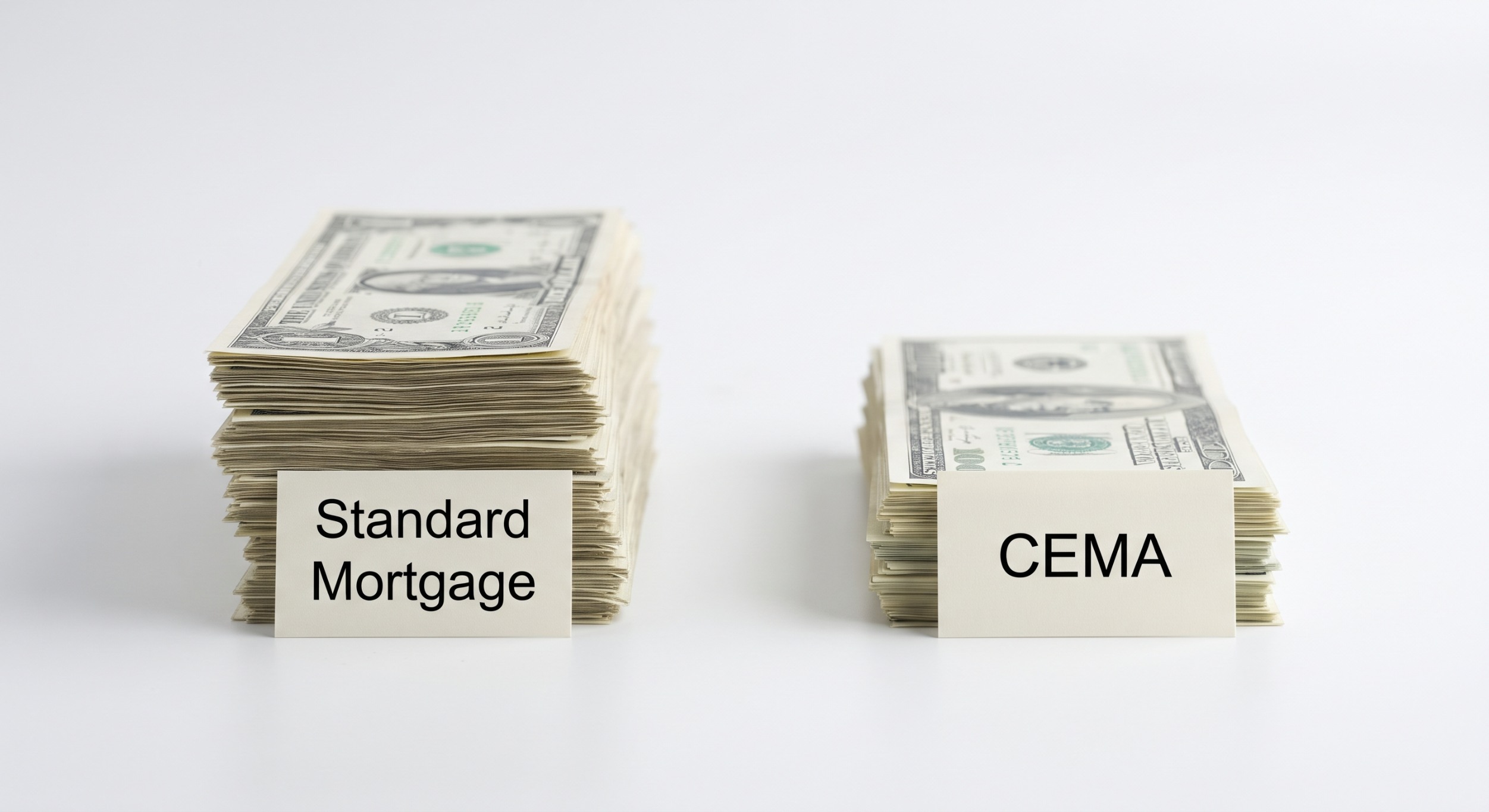
CEMA stands for Consolidation, Extension, and Modification Agreement. Instead of paying MRT on your entire new loan, a CEMA assigns the seller's existing mortgage to your new lender. You pay MRT only on the difference between your loan amount and the seller's remaining balance.
Example: $750K Condo, $600K New Loan
Without CEMA
MRT on $600,000 loan
~$11,550
With CEMA (seller balance: $400K)
MRT on $200,000 difference only
~$3,850
Saving: ~$7,700
CEMA processing fees: $1,500–$3,600. Net saving after fees: $4,000–$6,000+
When to Pursue a CEMA
Pursue it when: your loan exceeds $500K, your closing timeline is flexible (add 30–45+ days), and both your lender and the seller's lender are cooperative. Ask your attorney to check CEMA eligibility before going into contract — seller cooperation must be agreed to in writing.
Skip it when: your lender won't participate, you're in a competitive deal with a hard close date, or the seller's lender is uncooperative. Processing fees eat into savings on smaller loans.
First-Time Buyer Programs That Offset NYC Closing Costs
NYC offers up to $100,000 in forgivable, 0%-interest assistance for first-time buyers. Stacked with a state program, that climbs to $115,000. Most eligible buyers don't apply.
For the complete guide to stacking these programs — including step-by-step application timelines and income limit tables — see our NYC down payment assistance guide. Here's the quick version:
HomeFirst (HPD)
- Up to $100,000 toward down payment or closing costs
- 0% interest — forgivable after 10 years (≤$40K) or 15 years (>$40K)
- Income limits: ~$142,560 (1 person) to ~$203,520 (family of 4)
- 3% down from buyer's own funds required
- HPD-approved homebuyer education course required
- Primary residence only. All five boroughs eligible.
SONYMA DPAL
- Up to $15,000 (or 3% of price, whichever is greater) at 0% interest
- No monthly payments — repaid at sale, refinance, or payoff
- NYC purchase price cap: approximately $795,000
- Mortgage rate roughly 0.375–1.00% below conventional
- Minimum 620 credit score. First-time buyer required.
- 8-hour education course required
What Sellers Pay at Closing in NYC
Understanding seller closing costs matters to buyers for two reasons: it tells you what credits are realistic to negotiate, and in new development deals, some seller costs get shifted directly to you.
| Cost | Rate / Typical Amount | Who Pays |
|---|---|---|
| NYC transfer tax (RPT) | 1% under $500K / 1.425% above | Seller (sometimes shifted in new dev) |
| NYS transfer tax (TP-584) | 0.4% of price | Seller (sometimes shifted in new dev) |
| Broker commission | Negotiable (traditional 5–6%) | Seller |
| Seller's attorney | $2,500–$5,000 | Seller |
| Co-op flip tax (if applicable) | Varies — often 1–3% of sale price | Seller (co-op buildings only) |
| Mortgage payoff & satisfaction fee | ~$450–$650 | Seller |
On a $1M sale, a seller's total costs (excluding commission) typically run $25,000–$35,000. If you're also selling a home to fund your purchase, our complete NYC seller cost guide covers every line item in the same detail. Understanding both sides of the closing table also helps you model true equity and net proceeds when moving up in price.
Closing Day: What to Expect and One Warning You Must Read
Closing day is a conference room, a stack of documents, and six people you barely know. It typically lasts one to three hours. Here's what happens.
Who's in the Room
The buyer. The seller (sometimes remote or separate). Buyer's attorney. Seller's attorney. A lender representative or bank attorney. For condos: a title closer. For co-ops: a managing agent representative.
Key Documents
Condo: Mortgage note, deed, closing disclosure, title affidavit, NYC transfer tax forms, and anywhere from 40 to 200 pages of lender documents.
Co-op: Proprietary lease assignment, stock certificate endorsement, recognition agreement (the Aztech form), and UCC-1 filing.
The 3-Day Closing Disclosure Rule
Your lender must deliver the Closing Disclosure at least three business days before closing. Three specific changes reset that clock: an APR change, a loan product change, or a prepayment penalty being added. Compare every line to your original Loan Estimate and flag discrepancies with your attorney before closing day — not at the table.
How Funds Transfer
Certified bank checks or wired funds only. Personal checks are not accepted. Your attorney will provide exact amounts a few days before closing — typically via email, but always confirm by phone.

Once you own, property taxes become an ongoing cost. Our Queens property tax guide explains how NYC property taxes are calculated, how to appeal your assessment, and which exemptions most buyers miss.
Quick Closing Cost Estimator
Enter your purchase price and property type for an instant ballpark. These are estimates — your actual costs depend on your specific lender, attorney, and deal terms.
Enter a price above to see your estimate.
Want an exact estimate for your deal? Talk to an agent who knows the numbers.
Mon – Sat · 9 AM – 7 PM ET · Free, no commitment
Frequently Asked Questions
How much are closing costs in NYC for a buyer?
The NYC buyer average sits around $23,500 — about 62% above the national average. Co-op buyers typically pay 1–2% of the purchase price. Resale condo buyers pay 3–4%. New development condo buyers can pay 5–6%+ because they often absorb the seller's transfer taxes on top of all standard buyer costs.
Are closing costs higher for condos or co-ops in NYC?
Condos cost significantly more. The two biggest reasons are the mortgage recording tax (1.8–1.925% of the loan amount) and title insurance (~0.45% of the purchase price) — neither of which co-op buyers pay. At a $1M price, the gap is typically $15,000–$20,000 in favor of the co-op.
What is the NYC mansion tax in 2026 and 2027?
The mansion tax starts at 1% on purchases of $1,000,000 or more and rises to 3.9% above $25M. It is cliff-based: crossing any threshold by $1 triggers the full rate on the entire purchase price. The 2026 budget left rates unchanged, and they remain in effect through 2027. For a full strategy guide, see our NYC mansion tax 2026 guide.
Can you negotiate closing costs in NYC?
Yes. Attorney fees, title insurance premiums, and lender origination fees are all negotiable or shoppable. You can also negotiate the purchase price below a mansion tax threshold — a seller who drops from $1,010,000 to $999,999 loses about $10,000 in price but saves the buyer $10,000 in mansion tax. A CEMA assignment can reduce mortgage recording tax by $7,000–$15,000. Seller closing cost credits are another option.
What is a CEMA and how much does it save?
A CEMA (Consolidation, Extension, and Modification Agreement) assigns the seller's existing mortgage to your lender so you only pay mortgage recording tax on the difference between your loan amount and the seller's remaining balance. On a $600K loan with a $400K seller balance, savings are roughly $7,700. CEMAs add 30–45+ days to closing and cost $1,500–$3,600 in fees. They're worth pursuing on loans above $500K when both lenders cooperate and your timeline is flexible.
What first-time buyer programs reduce NYC closing costs?
The HomeFirst program provides up to $100,000 in 0%-interest forgivable assistance for down payment and closing costs. SONYMA DPAL adds up to $15,000 more. Both can be stacked for up to $115,000 in total assistance. Income limits apply — see our full guide to NYC down payment assistance for qualification details.
What is the difference between closing costs and cash to close?
Closing costs are the fees and taxes paid at settlement. Cash to close is the total you need to wire on closing day: closing costs plus your down payment plus prepaid items (homeowners insurance, property tax escrow, prepaid interest). Your Closing Disclosure — delivered three business days before closing — shows the exact figure. Always verify wire instructions by phone before sending any money.
Do NYC closing costs apply the same way in 2027?
Yes. The mortgage recording tax rates (1.8%/1.925%), the mansion tax brackets, and the transfer tax rates are all unchanged for 2027. Attorney fees and title insurance premiums can shift with market conditions but the underlying tax structure is stable. HomeFirst and SONYMA programs are funded through 2027 as of current appropriations — verify income limits and caps before applying, as they are updated annually.
Sources & References
- 1 NYC Department of Finance Residential Deed Transfers & Mansion Tax
- 2 NYC HPD — HomeFirst Down Payment Assistance HomeFirst Program Details
- 3 SONYMA — New York State Homes and Community Renewal SONYMA Down Payment Assistance Loan